


About the Client
Founded in 2011, CapStorm has grown into one of the most technologically advanced Salesforce data management platforms on the market.
Billions of records flow through their software every day, serving multiple organizations, including 60% of the world's largest pharmaceutical companies, and many Fortune 20 and Fortune 500 enterprises. across credit card companies, global banks, telecom providers, insurance agencies, energy providers, and more.
In late 2025, CapStorm merged with Grax, a leading complementary Salesforce data platform, combining two best-in-class solutions into a single powerhouse offering.
CapStorm came to Softjourn in May 2025 after finding themselves without a dedicated frontend engineer, leaving a gap on the team at a critical time for the product. They needed experienced frontend developers who could integrate quickly and take real ownership of the UI work.
Softjourn stepped in with two frontend engineers and a dedicated project manager, working alongside CapStorm's internal developers and product stakeholders to get things moving.
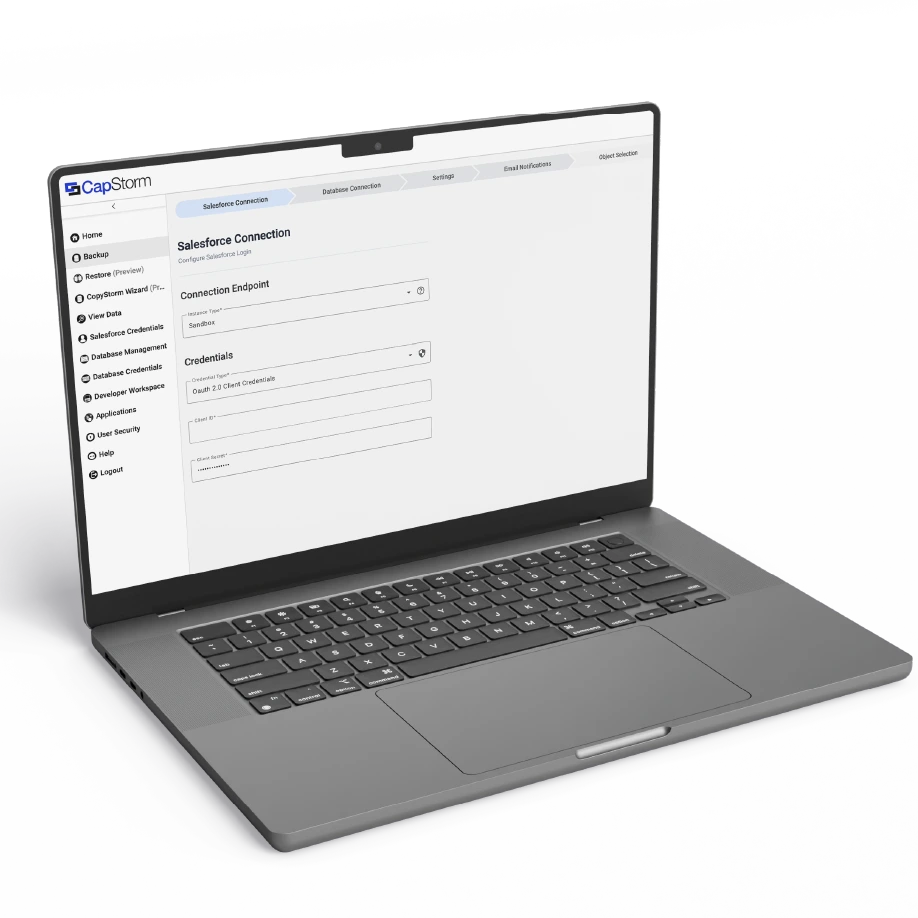
Your team has provided us with outstanding service and outcomes. We couldn't be happier with your work or our progress. All of the members of your team have each shown themselves experts in their respective areas and have been a pleasure to work with.— Ben Melton, Product Owner at CapStorm
The Challenge
With their frontend team suddenly short a key player, CapStorm needed developers who could step in quickly, get up to speed, and take genuine ownership of the UI work. The product still needed to move forward, and expectations around user experience were rising, as their platform needed to be approachable for non-technical users, not just the engineers who built it.
The work ahead involved more than building new features. The existing codebase had accrued technical debt, with patterns and practices that made it harder to maintain and scale. The application was functional but designed with technical users in mind; making it accessible to a broader audience would require rethinking the interface from the ground up.
The timeline for this project was ambitious, and the scope of what needed to be done was significant.
The Solution
UI/UX
Our team hit the ground running with a UI/UX audit. Rather than waiting for tasks to come to us, we reviewed the interface ourselves to identify pain points and opportunities, then turned those findings into a structured set of tickets and cleared them. This proactive approach set the tone for how the engagement would run.
On the technical side, the codebase had significant room to grow. Our engineers identified outdated patterns and areas that could be brought in line with current best practices, and we got to work.
We refactored the core modules and, as part of the broader effort, initiated an Angular upgrade spanning four major versions. This was not a routine maintenance task; it addressed a number of security vulnerabilities and made the entire UI more responsive and stable. The upgrade was our recommendation, and CapStorm was receptive.
Restore Wizard
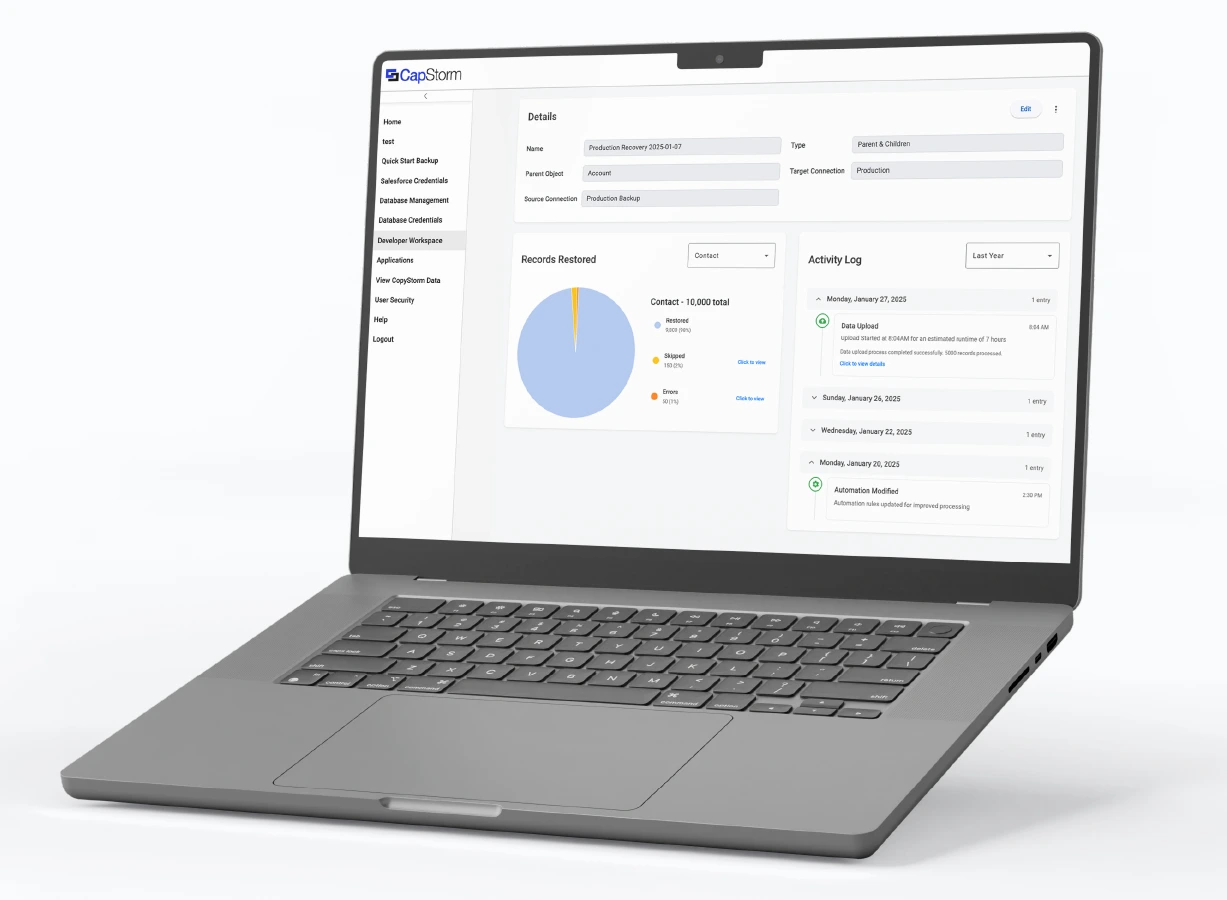
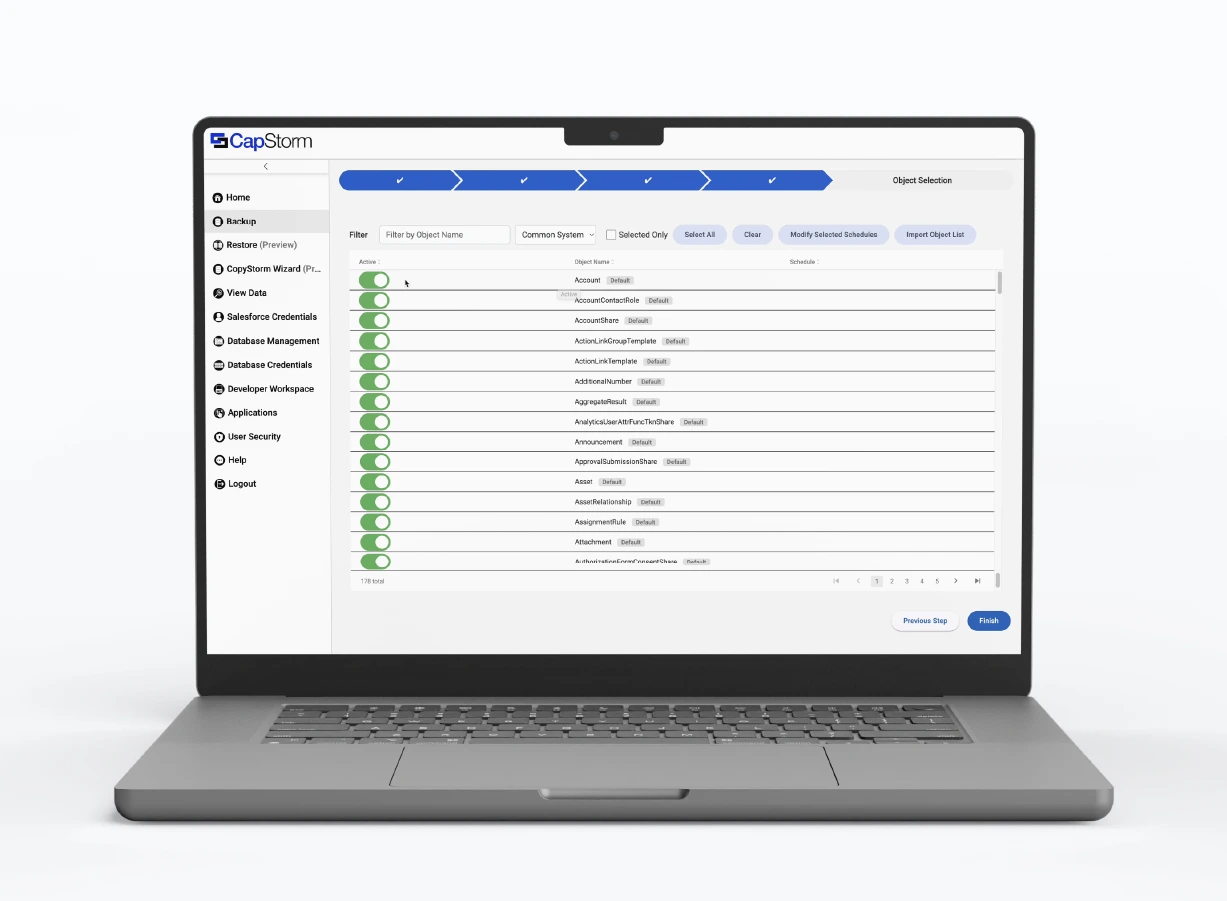
In parallel, we worked on the Restore Wizard, a guided, multi-step tool that walks users through restoring their Salesforce data from a backup. The wizard required coordinating closely with CapStorm's backend team, which operated on a separate sprint cycle with its own Jira board.
To keep the teams moving efficiently, our engineers recommended API documentation tooling like Swagger to ensure the frontend and backend stayed aligned throughout development.
We also established a pre-planning meeting process, where our team reviewed upcoming tickets, prepared questions in advance, and sent them to CapStorm's project manager and tech lead before the main planning session, a straightforward change that reduced time spent in planning meetings.
When a tight deadline for the Restore Wizard came up mid-project, our PM was transparent immediately. We outlined exactly what was achievable within that timeline, proposed ways to increase capacity where possible, and agreed with the client to focus on the MVP scope rather than a fully polished release. The stakeholders were informed throughout, and when the demo finally landed, the reception was enthusiastic.
Project Oversight
One aspect of how Softjourn works that CapStorm hadn't anticipated: we assigned a project manager to the engagement in addition to the two developers requested. Our PM held regular one-on-ones with CapStorm's project manager, facilitated communication across teams, and helped coach Agile practices where they were useful.
That layer of dedicated project oversight made a real difference in how the work was managed and how the relationship developed. As Softjourn's project manager put it: "We were not just working; we wanted it to succeed."
And CapStorm noticed – Jessica Toon, CapStorm's project manager, told us: "We are so happy to have the Softjourn team onboard, you are a great addition to our team."
The Benefits
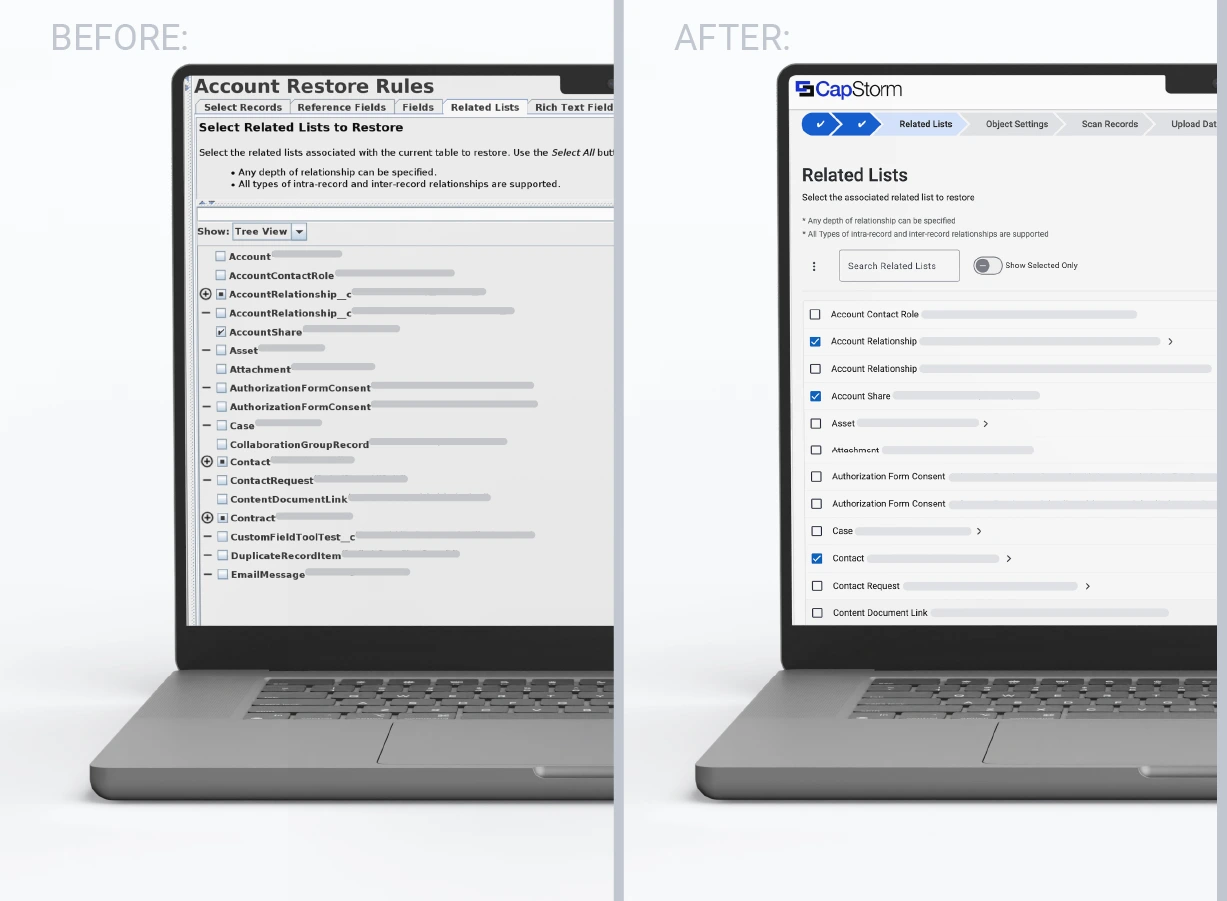
By the end of the engagement, CapStorm had a product that looked and worked differently than it had when we arrived. The Restore Wizard was built and demonstrated successfully, earning positive feedback from both the tech lead and the CEO.
The Angular upgrade resolved security vulnerabilities and made the UI substantially more responsive. And the codebase itself, refactored, cleaned up, and brought in line with current best practices, was left in a state that makes future development faster and less painful.
In CapStorm's own words, the difference was stark.
"The code base is unrecognizable." – Ben Melton, Product Owner, CapStorm
Beyond the deliverables, CapStorm noted tangible improvements to development velocity. The refactoring work done in the early sprints cleared the way for faster feature development going forward, a benefit that would continue to pay off well after our engagement ended.
The client also noted something that speaks to the quality of the collaboration itself: Softjourn team's discipline around requirements helped CapStorm sharpen their own processes.
The feedback from CapStorm's broader team reflected just how strong the working relationship had become. Jessica Toon, CapStorm's Project Manager, shared: "The Softjourn team was always willing to help me personally, like help plan things out if needed. They were always very responsive, and I think they overall did a great job with what we tested. Fantastic!"
Conclusion
Working with CapStorm was a genuinely satisfying engagement. The team came in with a clear problem, trusted us to take real ownership of the frontend, and were open to the improvements and recommendations we brought to the table.
The partnership went beyond the original scope in the best way: from a proactive UI/UX audit to an Angular upgrade we initiated ourselves, to the project management support that helped keep everything moving.
Since the completion of this project, CapStorm has merged with Grax, a Salesforce data platform that complements everything CapStorm has built. We're cheering them on every step of the way, and hope to be part of what comes next.
If your team is looking for a frontend development partner who brings more than just code, contact Softjourn to learn how we can support your product goals.