
Architecture Assessments: How They Work
Elevate Your Software's Performance with Softjourn's Architecture Assessments

Technical debt is now the norm, not the exception. Only 21% of U.S. IT decision-makers report no significant technical debt, while 30% are dealing with high or critical levels, and the average firm spends 20% of its IT budget addressing it (Forrester).
The cost goes beyond budgets: 74% of organizations say technical debt is a challenge, and 42% call it a significant obstacle (CompTIA), underscoring the need for proactive measures.
An architecture assessment is one such measure, offering a holistic view of a system's structure and design. While sometimes confused with a code audit, an architecture assessment dives deeper into the underlying framework of an application.
But what exactly does an architecture assessment entail, and how can it benefit your organization? How do you know when it's the right time to conduct one, and what should you expect from the process?

Code Audit Services vs. Architecture Assessment
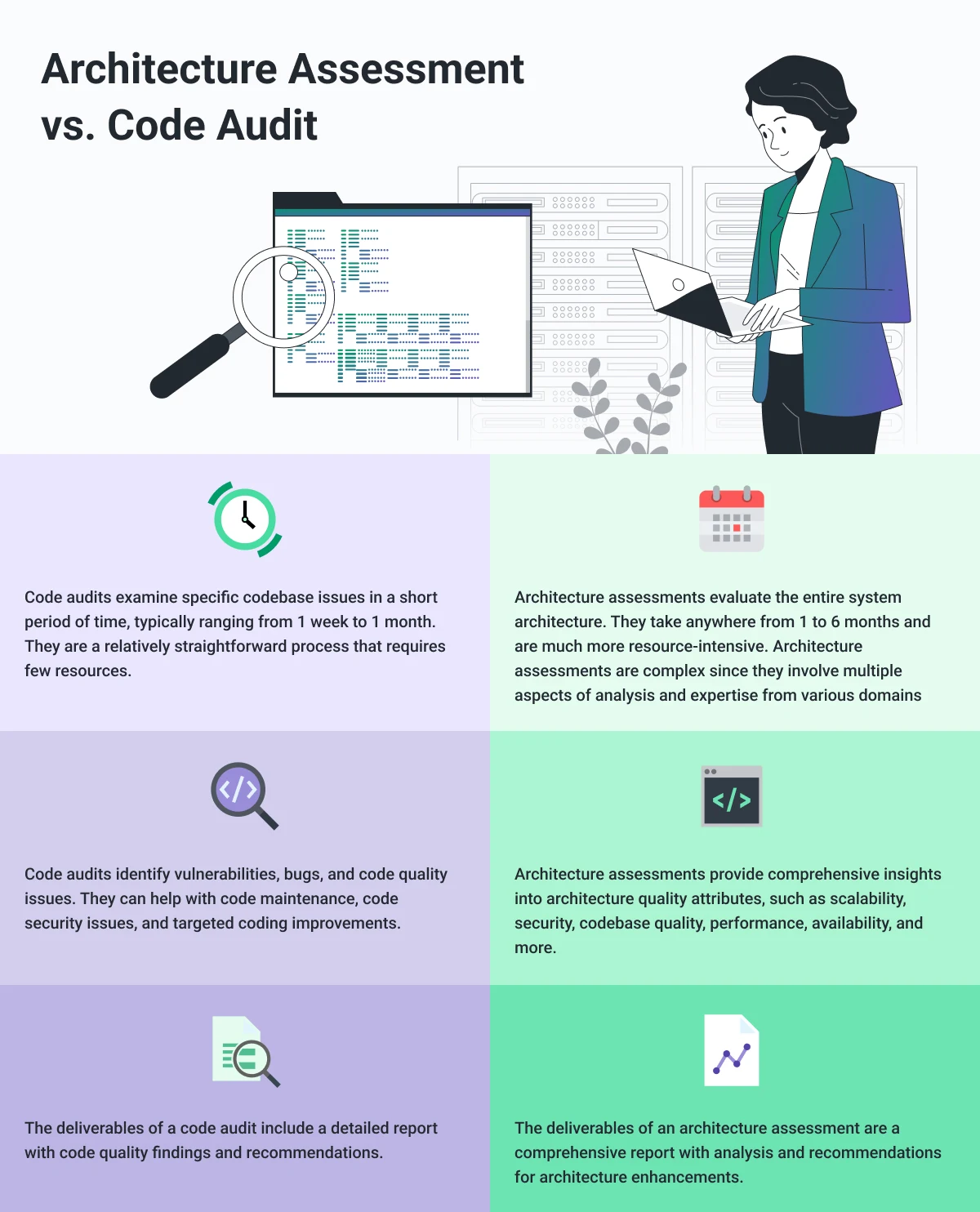
Code Audits primarily focus on examining your source code to identify vulnerabilities, bugs, and code quality issues.
On the other hand, an Architecture Assessment takes a holistic approach, covering various aspects of the system's architecture.
It provides valuable insights into the current state of the architecture and its quality attributes, including scalability, availability, security, performance, maintainability, and more.
While the code audit process may be part of an architecture assessment, the latter goes beyond the codebase to encompass the entire system's architecture, making it a more comprehensive evaluation.
Comparison of Code Audits and Software Architecture Assessments
Code Audit | Software Architecture Assessment | |
Scope | Examines specific codebase issues. | Evaluates entire system architecture. |
Timeline | Relatively short, typically 1 week to 1 month. | Longer, ranging from 1 month to 6 months. |
Resource Requirements | Requires fewer resources. | Resource-intensive; involves a multidisciplinary team. |
Focus | Identifies vulnerabilities, bugs, and code quality issues. | Provides comprehensive insights into architecture quality attributes (e.g., scalability, security). |
Targeted Improvements | Addresses specific coding issues. | Allows for holistic improvements based on a comprehensive understanding of the system. |
Security Assessment | Identifies code vulnerabilities. | Conducts a detailed security review, including penetration testing. |
Maintenance Insights | Identifies code maintenance needs. | Assesses architecture maintainability and modularity. |
Scalability Evaluation | Doesn't assess scalability. | Assesses the system's scalability for current and projected growth. |
Performance Assessment | Doesn't focus on system-level performance. | Evaluates system performance, including load testing and response times. |
Availability Analysis | Doesn't analyze system availability. | Reviews availability history and implements redundancy mechanisms. |
Comprehensive Insights | Limited in evaluating system attributes. | Offers a comprehensive view of architecture and system attributes. |
Complexity | Relatively straightforward process. | Can be complex, involving multiple aspects and expertise from various domains. |
Deliverables | Provides a detailed report with code quality findings and recommendations. | Provides a comprehensive report with analysis and recommendations for architecture enhancements. |
Types of Audits
Code Audit – A code audit involves reviewing the source code of a software application to identify security vulnerabilities, inefficiencies, and adherence to best practices. This process helps uncover potential bugs, improve maintainability, and ensure compliance with coding standards, making it a crucial step before launching a product or after a security breach.
Technology Audit – A technology audit assesses an organization's IT infrastructure, software systems, and digital assets to evaluate security, performance, and compliance. It helps identify outdated technologies, security risks, and inefficiencies, ensuring that the organization's tech stack aligns with its business objectives and industry standards.
Startup Audit – A startup audit evaluates the core aspects of a startup, including its business model, financials, product development, and scalability. This type of audit helps identify legal, operational, and market risks, providing investors and stakeholders with insights into the startup's viability, growth potential, and areas for improvement.
Architecture Assessment – An architecture assessment examines the design and structure of a system, ensuring it meets scalability, security, and performance requirements. It helps organizations optimize their software or infrastructure, improve efficiency, and align with industry best practices, making it essential for long-term system stability and growth.

Common Issues Uncovered in Architecture Assessments
Architecture assessments frequently reveal issues that hinder system stability and scalability, such as:
- Performance Bottlenecks: Inefficient code or outdated infrastructure components can slow down response times, which impacts user experience and limits growth potential.
- Security Vulnerabilities: Weak points in authentication, data encryption, or access controls can leave systems exposed to breaches, putting sensitive data at risk.
- Scalability Constraints: Systems that aren't optimized for scaling often struggle to accommodate growth, leading to service interruptions or reduced performance.
- Maintenance Challenges: Code structure, dependencies, or lack of documentation can complicate maintenance, making updates slower and more resource-intensive.
By identifying and addressing these issues, organizations can enhance their systems' resilience, security, and readiness for future expansion.
The Advantages of an Architecture Assessment
An Architecture Assessment brings significant advantages to organizations:
- Maximum Value: It covers a wide range of aspects critical to system performance and reliability, providing comprehensive insights.
- Holistic Improvements: It allows for targeted improvements based on a holistic understanding of the system.
- Enhanced Risk Mitigation: Identifies vulnerabilities and areas of technical debt that could lead to costly failures, allowing organizations to proactively manage risks.
- Increased Innovation Capacity: By reducing technical debt and optimizing the architecture, organizations free up resources and bandwidth to focus on new initiatives and innovations.
- Streamlined Operations: The assessment reveals inefficiencies within the system's architecture, leading to streamlined processes, reduced operational costs, and improved system reliability.
What an Architecture Assessment Requires
A thorough assessment is an investment, and knowing what it involves up front helps you get the most from it.
- Cross-Domain Expertise: An assessment covers infrastructure, code, security, data, and performance, so it draws on specialists from each area rather than a single reviewer.
- Time for Depth: Scope depends on your system's size, complexity, and documentation. Simpler, well-documented systems move faster, while complex systems with gaps take longer to map accurately.
- Collaboration from Your Team: Our team works best with access to your developers, documentation, and infrastructure. Interviews and working sessions with your engineers make the findings specific to your system rather than generic.

Understanding the ROI of Architecture Assessments
An assessment pays off in two ways: it helps you make big technical decisions with confidence, and it catches costly problems before they become expensive to fix. Two recent Softjourn client engagements show how.
Choosing the Right Architecture Before Scaling
A Toronto-based technology company had just adopted a new architecture and tech stack, but its leadership questioned whether the setup would scale and whether it was cost-effective. Softjourn assessed the company's codebase, AWS infrastructure, and CI/CD pipeline. We found that the chosen stack couldn't support the company's evolving product requirements. With a clear recommendation in hand, the client rebuilt on AWS, PostgreSQL, and microservices instead of investing further in the wrong foundation.
Catching a Critical Risk Before a Sale
An industrial commerce platform hired Softjourn to audit its codebase before selling the business. In two weeks, our team identified a security bottleneck related to sensitive data access, an issue that could have caused serious financial damage. Because we found it early, the client fixed it before buyers could raise it during negotiations.
In both cases, the client came away with a prioritized roadmap. Whether an assessment confirms your direction or changes it, your team can focus on the right work instead of reacting to problems.
When You Need an Architecture Assessment
An architecture assessment is a valuable tool for organizations facing major technical and business shifts. Some key moments when an assessment is particularly useful include:
- Mergers & Acquisitions (M&A): Ensure system compatibility, reduce technical debt, and assess scalability before integrating or acquiring a company.
- Scaling a Startup: Evaluate if your infrastructure can handle rapid growth and prevent bottlenecks before they impact users.
- Planning Major Updates or Integrations: Before introducing significant new features or restructuring your platform, assess potential risks and opportunities.
- Modernizing Legacy Systems: Identify inefficiencies, outdated components, and security risks that may be holding your system back.
- Enhancing Security & Compliance: Strengthen security measures and ensure compliance with industry regulations.
The Process of a Comprehensive Architecture Assessment
A comprehensive architecture assessment often follows a structured process:
1. Gathering Information:
- Conduct interviews with key stakeholders.
- Review existing documentation.
- Understand the business model and user flows.
- Gather typical pain points.
- Plan the next steps.
2. Architecture Reverse Engineering:
- Review and analyze the infrastructure setup.
- Conduct a high-level review of the codebase.
- Create missing documentation of the architecture.
- Analyze system quality attributes.
3. Security Assessment:
- Perform a detailed security review to identify potential vulnerabilities.
- Analyze access control mechanisms, authentication, and authorization processes.
- Evaluate data encryption and privacy measures.
- Perform penetration testing by authorized partners.
4. Scalability Assessment:
- Assess the system's scalability based on current usage and projected growth.
- Build a lab environment and perform load/stress testing.
- Identify opportunities for horizontal and vertical scaling.
5. Maintenance Evaluation:
- Review the code repository to assess codebase quality and structure.
- Evaluate the codebase for maintainability, modularity, and best practices adherence.
- Identify areas for potential refactoring or improvement.
6. Availability Analysis:
- Analyze the system's availability and downtime history.
- Review disaster recovery plans and redundancy mechanisms.
- Examine the implementation of availability tactics.
7. Performance Assessment:
- Conduct load testing and performance testing.
- Review response times, throughput, and resource utilization.
- Assess the effectiveness of caching and performance-enhancing mechanisms.
8. Preparing Report and Recommendations (optional):
- Document findings from each assessment phase.
- Provide a comprehensive report with analysis and recommendations.
9. Presentation and Review:
- Present assessment results and recommendations to stakeholders.
- Address questions and concerns.
- Offer assistance and support for implementing improvements.

Key Considerations for Organizations
Before embarking on an architecture assessment, it's essential for organizations to:
- Set Clear Objectives: Determine what you want to achieve—whether it's improving scalability, enhancing security, or reducing technical debt—and communicate these goals to all stakeholders.
- Engage Key Stakeholders: An architecture assessment affects multiple departments, including IT, DevOps, product management, and executive leadership. Ensuring buy-in from each group helps facilitate a smoother, more impactful process.
- Allocate Necessary Resources: An assessment requires dedicated time and expertise. Ensure that all necessary internal resources and personnel, such as developers, DevOps, and project managers, are available for collaboration throughout the assessment.
These considerations help align teams and create a foundation for a successful and impactful architecture assessment.
Softjourn's Comprehensive Architecture Assessment
At Softjourn, we specialize in delivering comprehensive architecture assessments that empower organizations to optimize their software systems. Our assessments are tailored to your unique needs and challenges, ensuring that you receive actionable insights to enhance your system's performance and reliability.
Team Composition:
Depending on the needs of your architecture assessment, our experienced team can include:
- Solution Architects: Leading the assessment and providing expert guidance.
- Business Analysts: Gathering critical business insights and pain points.
- Project Managers: Ensuring smooth coordination and efficient project execution.
- Senior Developers: Analyzing the codebase for quality and maintainability.
- DevOps Engineers: Evaluating infrastructure setup and deployment processes.
- Database Engineers: Assessing database architecture and performance.
- DevSecOps Experts: Conducting comprehensive security assessments.

The Timeline of an Architecture Assessment
The timeline of our architecture assessments is flexible and depends on the complexity of your system and specific needs. It can range from one month for relatively simple systems with adequate documentation to six months for complex systems with limited documentation and extensive issues.
We work closely with you to determine the most suitable timeline for your assessment.
Softjourn's Unique Approach to Architecture Assessments
At Softjourn, we combine deep technical expertise with a customized approach to architecture assessments. Our assessments are uniquely tailored to address each client's specific goals and challenges.
Using proprietary tools and proven methodologies, we get into all critical aspects of a system—scalability, security, performance, and maintainability—to provide actionable insights that support immediate improvements and long-term growth.
With Softjourn's collaborative approach, you'll gain access to a team that's committed to helping you maximize the value of your system investments and drive lasting results.
Trusted by Top Companies
Softjourn has helped companies across fintech, ticketing, Edtech, and technology services understand exactly where their systems stand and what to do next, through architecture assessments, gap analyses, and code audits. That includes:
- Acquisitions: A three-week due diligence audit gave a payroll software company full visibility into thousands of dependencies before it acquired a target platform.
- Pre-sale preparation: A two-week audit helped an industrial commerce platform find and fix issues before buyers could raise them at the negotiating table.
- Architecture decisions: An objective assessment helped a growing technology company choose a more scalable stack before committing to the wrong one.
- Market expansion: A UK ticketing platform learned whether its codebase could support the features North American audiences expected.
- Adding new features: For Superstar, a code review before new development showed that a framework modernization, rather than a full rewrite, would support their roadmap.
- Knowing when to rebuild: A company with runaway maintenance costs got a clear, evidence-based recommendation to rewrite its aging Magento platform, plus an estimate of what that would require.
With Softjourn's comprehensive architecture assessment, you gain the confidence to make informed decisions about your software system's future.

Know Your System Before You Make Your Next Move
Every major technical decision, from scaling and acquisitions to modernization and new features, rests on your system's architecture. If you don't know where that foundation is strong and where it's fragile, you're making those decisions on assumptions.
An architecture assessment replaces those assumptions with evidence. You'll know what's holding your system back, which risks need attention now, and which improvements will deliver the most value. You'll also have a prioritized roadmap your team can act on.
Softjourn has helped companies across fintech, ticketing, and technology services make these calls with confidence. Talk to our team about our Software Architecture and Code Audit Services, and find out where your system stands.

Frequently Asked Questions
An architecture assessment is a comprehensive evaluation of a software system's structure, covering areas such as scalability, security, and performance. It's essential for identifying technical debt, improving system efficiency, and supporting future growth.
Architecture assessments often reveal performance bottlenecks, security vulnerabilities, scalability constraints, and maintenance challenges that may impact the system's stability and readiness for growth.
Various teams benefit, including CTOs, IT leaders, development teams, DevOps, and product managers. Each team gains specific insights that help them make more strategic, data-driven decisions.
The timeline varies depending on system complexity and documentation availability. It can range from one month for straightforward systems to six months for complex ones.
It depends on the growth and complexity of the system, but generally, organizations should conduct an assessment before major upgrades, M&A activities, or when experiencing performance bottlenecks.
Any industry with complex software infrastructure benefits, including fintech, healthcare, e-commerce, and SaaS companies managing large-scale applications.