
Software Development Audits: A Strategic Approach for Tech Leaders
What a software development audit covers, who runs it, and how long it takes.


A software development audit is an independent review of your software and the way your team builds it. It shows where code quality, security, and maintainability stand today, and which problems deserve attention first.
Most companies order one after something has already gone wrong: a release that broke checkout, an acquisition stalled in due diligence, a vendor handover that left no documentation behind. The best time to review your software was yesterday. The second best time is now.
This guide covers the main types of audits, how the process works, and the situations where an audit pays for itself.
What is a Software Development Audit?
A software development audit is a thorough review of a software program or development process. It involves a detailed examination of various aspects, including code quality, development practices, security measures, and compliance with industry standards and regulations.
The ultimate goal of a software development audit is to identify potential problems, vulnerabilities, or areas for improvement in both the software product and the development process.
Why Conduct a Software Development Audit?
Open-source vulnerabilities per codebase rose 107% in a single year as AI tools sped up code creation, according to Black Duck's 2026 OSSRA report. Conducting regular software development audits can provide numerous benefits for your organization:
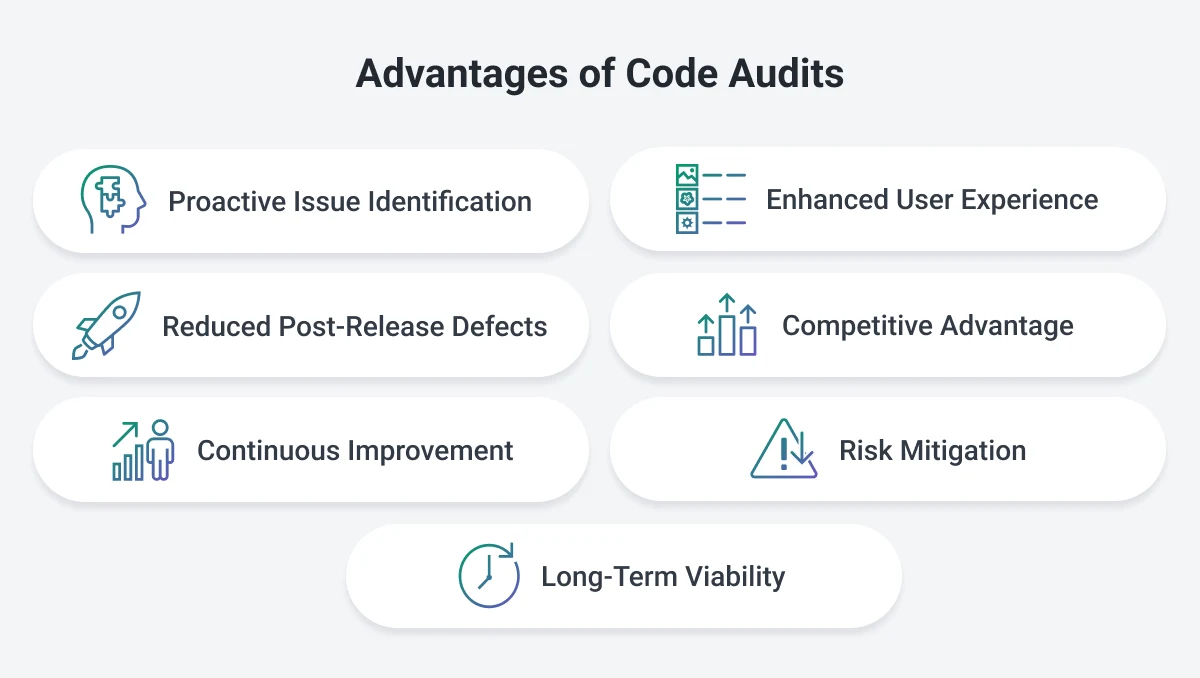
- Improved Software Quality: Audits help identify potential problems in the code and development process, which can be addressed to enhance overall software quality.
- Enhanced Security: Regular audits can uncover security vulnerabilities, allowing teams to fix them before they can be exploited.
- Better Maintainability: Audits often reveal areas in the code or process that may be difficult to maintain, leading to improvements that make future development more efficient.
- Compliance Assurance: Audits ensure that your software and development practices adhere to industry standards and legal regulations.
- Cost Savings: Identifying and fixing issues early in the development process can save significant time and resources compared to addressing them after deployment.
- Optimized Resource Utilization: Audits can help identify unused or underutilized software licenses, potentially reducing costs.
- Improved Team Collaboration: Audits often lead to standardized coding practices, enhancing collaboration among team members.
Types of Software Development Audits
"Software development audit" is an umbrella term. Most engagements combine two or three of the audit types below, depending on what prompted the audit in the first place.
Audit type | What it examines | When it fits | Learn more |
|---|---|---|---|
Code audit | Code structure, maintainability, test coverage, third-party dependencies, error handling | You inherited a codebase, or releases are slowing down and nobody can say why | |
Architecture assessment | How the whole system handles scale, performance, and security, beyond the code itself | You're planning for growth or weighing a major rebuild | |
Frontend audit | UI code quality, page performance, accessibility, bundle size | Users complain about speed, or the frontend has become hard to change | |
Security assessment | Vulnerabilities, authentication, data exposure, attack surface | Before launch, after an incident, or when handling payments or personal data | |
QA audit | Testing processes, test coverage, release quality, defect trends | Bugs keep reaching production despite a testing team | |
Technical due diligence | Code, architecture, team, and IP risk ahead of a transaction | Before buying, selling, investing in, or merging with a software company | |
Compliance audit | Whether code and development practices meet standards like PCI DSS, SOC 2, or GDPR | Before a certification, or when entering a regulated market |
To see what these audits tend to turn up in practice, look at common issues found in code audits and the code audit tools that catch them.
The Importance of Unbiased Auditors
When conducting software development audits, particularly in situations involving third-party providers or transitions between development teams, the importance of an unbiased auditor cannot be overstated. Here's why:
- Objectivity: An independent auditor can provide an impartial assessment without being influenced by internal politics or past decisions.
- Fresh Perspective: Unbiased auditors bring a fresh set of eyes to your project, often identifying issues or opportunities that internal teams might overlook.
- Specialized Expertise: External auditors often have broad experience across multiple projects and industries, bringing valuable insights and best practices.
- Conflict of Interest Avoidance: When evaluating work done by a third-party provider, an independent auditor ensures that the assessment isn't colored by the provider's interests.
- Credibility: An audit conducted by an unbiased third party often carries more weight, both internally and with external stakeholders.
- Comprehensive Evaluation: Independent auditors are more likely to conduct a thorough, no-holds-barred examination of all aspects of your software and development processes.
By leveraging unbiased auditors, especially in complex situations involving multiple parties or significant transitions, you can ensure a more thorough, objective, and valuable software development audit.
When Should You Conduct a Software Development Audit?
While regular audits are beneficial for maintaining software quality and compliance, there are specific situations when conducting a software development audit becomes particularly crucial. Let's explore these scenarios in depth.
1. Before Major Releases or Updates
Major releases or significant updates are critical junctures in a software's lifecycle. Conducting an audit before these events helps ensure that the new version meets quality standards and doesn't introduce new vulnerabilities. It allows you to:
- Verify that new features are properly integrated and don't negatively impact existing functionality
- Ensure that the updated codebase maintains or improves upon the quality of the previous version
- Identify and address any potential security issues before they reach end-users
- Confirm that the release meets all necessary compliance requirements
2. After Significant Changes to the Development Team or Processes
When your development team undergoes substantial changes, or you implement new development processes, an audit can help maintain consistency and quality. This is important because:
- New team members may introduce different coding styles or practices that need to be aligned with existing standards
- Changes in development processes might inadvertently create gaps in quality control or security measures
- An audit can help identify any knowledge transfer issues or training needs for new team members
- It ensures that best practices are maintained despite organizational changes
3. When Planning to Scale Your Software or Enter New Markets
Scaling your software or expanding into new markets often requires meeting additional requirements or handling increased loads. An audit at this stage can:
- Identify potential bottlenecks or performance issues that may arise with increased usage
- Ensure that the software architecture is suitable for scaling
- Verify compliance with regulations specific to new markets (e.g., GDPR for European markets)
- Assess the software's localization capabilities for international markets
4. If You Haven't Conducted an Audit in Over a Year
Regular audits are crucial for maintaining software quality. If it's been more than a year since your last audit:
- There may be new industry standards or best practices that your software should adopt
- Security vulnerabilities may have emerged that need to be addressed
- The software's performance might have degraded over time due to various updates and patches
- Compliance requirements may have changed, necessitating updates to your software or processes
5. Before Applying for Compliance-Based Certifications
If you're seeking specific certifications (e.g., ISO 27001, SOC 2), a pre-certification audit is essential. This helps:
- Identify any gaps in your current practices that need to be addressed before certification
- Ensure that your software and development processes meet all necessary standards
- Prepare documentation required for the certification process
- Increase the likelihood of passing the certification audit on the first attempt
6. After Experiencing Security Breaches or Other Incidents
In the wake of a security breach or significant software failure, an audit is crucial for:
- Identifying how the incident occurred and what vulnerabilities were exploited
- Ensuring that all affected areas of the software have been properly addressed
- Implementing additional security measures to prevent similar incidents in the future
- Reviewing and updating incident response procedures based on lessons learned
7. When Preparing for Potential Acquisition or Merger Activities
If your company is considering an acquisition or merger, or if you're preparing for a potential sale, an audit can:
- Provide a clear picture of your software assets and their quality
- Identify any potential liabilities or risks in your software or development processes
- Demonstrate the value of your software and development practices to potential buyers or partners
- Highlight areas for improvement that could increase the value of your software assets
- After the deal closes, align the merged systems and find vulnerabilities neither side knew about
8. Before Integrating Third-Party Components or APIs
Licensing is where many teams get caught off guard. Black Duck found open source license conflicts in 68% of the 947 codebases it audited, up from 56% the year before, a jump the researchers linked to AI-assisted coding (Black Duck, 2026). When planning to integrate significant third-party components or APIs into your software, an audit can help:
- Assess the security and reliability of the third-party elements
- Ensure compatibility with your existing codebase and architecture
- Identify any licensing issues that could affect your software's distribution or use
- Evaluate the long-term maintainability of the integrated components
9. When Transitioning to New Technologies or Platforms
If you're planning to migrate your software to new technologies, frameworks, or platforms, an audit can:
- Identify parts of the codebase that may need refactoring for the new environment
- Ensure that security measures remain effective in the new technology stack
- Verify that performance standards can be maintained or improved with the transition
- Highlight any skills gaps in your team that need to be addressed for the new technologies
10. When Uncertain About Technical Decisions
If you or your team are unsure about certain technical decisions, an audit can provide valuable insights:
- Evaluate the pros and cons of different technical approaches objectively
- Assess the long-term implications of various technical choices
- Provide data-driven recommendations for architectural decisions
- Identify potential risks or limitations in proposed technical solutions
- Offer expert opinions on emerging technologies and their suitability for your project
11. When Evaluating Third-Party Provider Suggestions
When a third-party provider suggests significant technical changes or new implementations, an audit can help:
- Verify the necessity and appropriateness of the suggested changes
- Assess the impact of proposed changes on your existing systems and processes
- Evaluate the cost-effectiveness of the suggestions
- Identify any potential conflicts of interest in the provider's recommendations
- Ensure that suggested changes align with your long-term technical strategy
12. When Transitioning from a Third-Party Development Team
When moving development in-house or switching to a new development partner, it's crucial to conduct an audit with an unbiased auditor. This helps:
- Objectively assess the quality and state of the codebase you're inheriting
- Identify any technical debt or issues that need to be addressed
- Ensure all necessary documentation and knowledge transfer has occurred
- Evaluate the alignment of the existing code with your internal standards and practices
- Identify any potential licensing or compliance issues with third-party components
13. Before Scaling an MVP or Pitching Investors
Moving from a minimum viable product to a market-ready one is when shortcuts taken for speed start to cost money. An audit at this stage can:
- Catch quality and security issues before real customers find them
- Show whether the current tech stack can support the next stage of growth
- Give investors an independent view of the technology they're funding
- Separate the technical debt worth fixing now from what can wait
For early-stage companies, startup audit services pair the technical review with investor preparation and growth planning.
14. When Bugs or Performance Problems Keep Coming Back
If the same kinds of issues keep reaching production, the cause is usually deeper than any single fix. An audit can:
- Trace recurring bugs back to the code or process causing them
- Find performance bottlenecks that monitoring alone doesn't explain
- Check whether testing covers the areas that keep breaking
When the problem sits in the testing process itself, a QA audit is the more targeted option.
The Software Development Audit Process
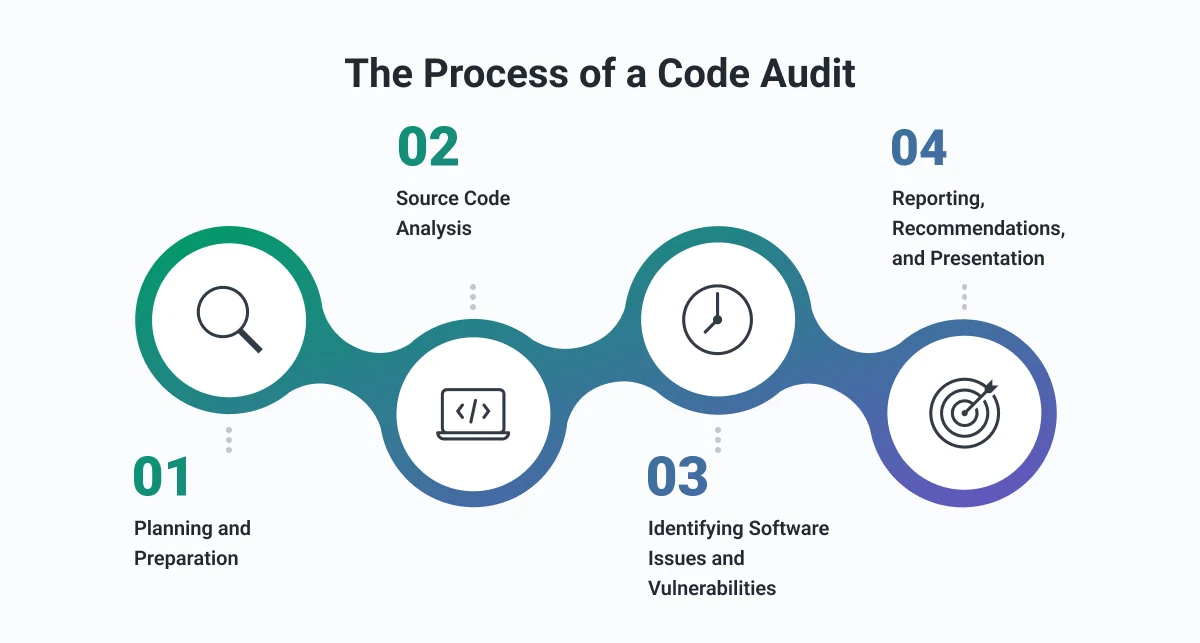
The code audit process involves several crucial steps:
1. Gathering Information
- Conduct interviews with key stakeholders.
- Understand the business model and user flows.
- Identify typical pain points.
- Define the audit's scope, objectives, and timeline. Identify key stakeholders and their roles in the audit process.
2. Code Audit
- Set up the application locally by cloning the code repository.
- Explore the application by going through major user flows.
- Get familiar with the codebase through a high-level review.
- Analyze the repository, including branching models, git history, contributors, and technologies used.
- Review security measures, including authentication, data handling, and known vulnerability patterns.
- Check compliance with the standards and regulations that apply to your industry.
- Review documentation, code-level documentation, and onboarding materials for new developers.
- Assess the testing process, including unit tests, e2e tests, and their quality and coverage.
- Analyze tooling, such as the build process, static code analysis, and environment-specific configurations.
- Review 3rd-party dependencies, identifying outdated, unused, unmaintained, or vulnerable dependencies and license issues.
- Evaluate code quality against industry standards and best practices, including code structure, maintainability, and overall quality. Identify code smells, duplicate code, and unnecessary complexity.
- Check the quality of comments, coding standards, conventions, and consistency.
- Ensure proper handling of errors and exceptions, as well as input validation and sanitization.
3. Prepare and Present the Report
- Summarize the findings, highlighting key issues and recommendations.
- Discuss the audit findings with key stakeholders and develop an action plan to address identified issues.
- Implement recommended changes and monitor progress. Plan for future audits to ensure ongoing improvement.

Timeline and Team Composition for Code Audits
The timeline and team composition for a code audit can vary depending on the complexity of the project. Here's a rough outline:
Timeline
For a small codebase with good documentation and readily available code owners, a code audit can be completed in as little as one week.
For larger codebases with multiple technologies, reverse-engineering requirements, and limited documentation, it may take up to four weeks.
Team Composition
When you receive a quick code audit from Softjourn, our code audit expert team typically consists of the following:
- Solution Architect: Responsible for overseeing the audit and providing architectural insights.
- Business Analyst: Gathers information about the business model and user flows.
- Project Manager: Manages the audit process and ensures timely completion.
- Senior Developers: Conduct the code audit and provide technical expertise.
Conducting Code Audits
Once you have planned your code audit, the next step is conducting the audit. The following are the best practices for conducting successful code audits:
Use appropriate tools for code analysis
Code analysis tools can help automate the review process and provide a more comprehensive view of the code. Some popular code analysis tools include static analysis tools, dynamic analysis tools, and code review tools. It's important to choose the right ones for your audit based on the objectives, scope, and resources available.
Assign clear roles and responsibilities
Before the audit begins, it's important to assign clear roles and responsibilities to each member of the audit team. This includes the lead auditor or solution architect and any support staff. Roles and responsibilities within a team should be clear and communicated in a timely manner to ensure everyone understands their responsibilities.
Follow a structured approach to code review
A structured approach to code review helps to enable the most effective code analysis. This may include a review of the code architecture, coding style checkup, and implementation audit.
By hiring third-party code auditors, you can have your code checked by well-versed experts outside of your team. An outside team can bring much more value by revealing additional issues to be fixed. At Softjourn, we have tested more than 200 products by following agile methodologies and best industry practices.
Document and track findings and issues
As the audit progresses, it's essential to document and track findings and issues. This includes any security vulnerabilities, performance issues, or code quality problems. The documentation should be organized and easily accessible to ensure the audit findings are communicated effectively to all stakeholders. If you reviewed your code before, the documentation will show the history of issues and where they might be found.
Communicate findings and recommendations
The final step in conducting a code audit is communicating the findings and recommendations to all stakeholders. They should be presented clearly and concisely so that everyone can understand the issues and act. It is always easier to fix issues before they lead to significant security vulnerabilities and bugs.
Audit your code regularly
Here at Softjourn, we recommend our clients perform code audits regularly. With periodic reviews, you'll have more chances to detect significant problems and solve them on the spot. Don't forget that the later you discover a bug, the harder it becomes to fix it.
Following most of these best practices will improve the quality of your future code audits. They will be more efficient and aligned with your business objectives. A well-conducted code audit should provide valuable insights to improve the quality of future code.
Benefits of Software Development Auditing

Improved Code Quality
Timely identification of various bugs and vulnerabilities ensures the high quality of the code. If the problematic code gets into production, it will create more problems that would take more time to be resolved. Instead, developers can use regular audits to spot problems when it's still possible to solve them.
Optimized code for better performance
Code audits help ensure that the code follows all requirements, reducing the likelihood of performance issues arising in the future. Even the most experienced developers can overlook some mistakes, and it's important to eliminate them by inviting a fresh pair of eyes to review the code.
Better Team Collaboration
Every developer can have a unique programming style. When multiple developers are working on the same project, progress can stall. The code review enforces all team members to follow certain coding practices and keep the code standardized.
Code audits also allow new team members to learn about the product they're developing. Also, the team can share knowledge and work more efficiently even when the whole team changes.
Increased Security
Security is often one of the highest priorities for software development teams. Code audits are crucial to identifying potential security threats and reducing the risk of data leakage. As cyber-attacks become more frequent, code audits help improve software protection. AI coding tools raise the stakes. In Veracode's 2025 GenAI Code Security Report, 45% of AI-generated code samples introduced OWASP Top 10 vulnerabilities across more than 100 models tested. An audit catches these before they reach production.
Software Development Audits and Compliance
For companies in finance, payments, and other regulated industries, compliance gaps rarely show up in policy documents. They show up in the code: how card data is stored, what gets logged, where customer records travel. An audit checks the software against the rules it has to meet.
Regulation or standard | What the audit checks |
|---|---|
PCI DSS | How cardholder data is stored, encrypted, transmitted, and logged |
AML and KYC | Whether identity checks and transaction monitoring work as intended, and leave a usable audit trail |
GDPR and data privacy laws | How personal data is collected, stored, retained, and deleted |
SOC 2 and ISO 27001 | Access controls, change management, and the security practices certifiers will ask about |
Regulations change, so compliance can drift even when the code doesn't. Auditing before a certification, after a regulatory update, or before entering a new market catches gaps while they're still cheap to close.
Critical Challenges in Conducting Effective Software Code Audits
Conducting a software code audit is crucial for ensuring your software's quality, security, and efficiency. However, this task is often beset with numerous challenges that can hamper its effectiveness. Knowing these potential pitfalls can help you navigate the auditing process more successfully.
- Unclear Objectives: One common challenge is the absence of well-defined objectives. Before starting a code audit, it's crucial to clearly outline what you're trying to achieve. This might involve identifying security vulnerabilities, enhancing code efficiency, or verifying compliance with coding standards. Clear goals will steer the auditing process and render the results more meaningful and valuable.
- Lack of Expertise: Code audits require a profound comprehension of the programming language and the software's architecture. If your team lacks the requisite expertise, engaging an external code audit service provider might be beneficial. Such experts can deliver an impartial review and possess the skills and experience to spot even the most intricate issues.
- Inadequate Tools: The success of a code audit mainly relies on the tools deployed. Many static code analysis tools exist that are capable of automatically pinpointing potential issues, such as code smells, bugs, and security vulnerabilities. It is crucial to select a tool that best aligns with your specific needs.
- Ignoring the Big Picture: While delving deep into the code during an audit is essential, it's also crucial to grasp the software's architecture and the interaction among its various components. This comprehensive view can facilitate the identification of design issues that might not be evident when examining individual lines of code.
- Neglecting Documentation: While good code should be self-explanatory, verifying that it's adequately documented is equally vital. Proper documentation simplifies code comprehension and maintenance, and can also help pinpoint areas where the code's behavior isn't instantly discernible.
- Not Following Up: A code audit's utility diminishes significantly if its findings aren't addressed. It's vital to prioritize the issues highlighted during the audit and integrate them into your development backlog. This could entail fixing bugs, refactoring code, or revising your coding standards.
By recognizing these challenges and taking proactive measures to mitigate them, you can maximize the effectiveness of your code audits.
Follow-up and Continuous Improvement After Code Audit
The final step in the code audit process is follow-up and continuous improvement. The following is our advice on follow-up and continuous improvement to make sure that the benefits of the audit are sustained and improved over time:
Create a comprehensive audit report
Once all the findings are outlined, they should be gathered in a detailed report. Code audit reports are usually helpful in planning product upgrades, fixing issues, or future improvements.
Review and implement recommendations
The first step in the follow-up process is to review the recommendations from the audit and determine which recommendations should be implemented immediately and which should be implemented later. Recommendation prioritization should be based on two different criteria:
- the potential impact on the project
- resources required
Establish a continuous improvement plan.
Once the recommendations are ready, the next step is to establish a continuous improvement plan. This plan should include a timeline for implementing the recommendations, the roles and responsibilities of each team member, and any performance metrics that will be used to monitor future progress. Softjourn can create a detailed correction plan for all discovered issues. We also offer product maintenance services and support to all our clients.
Oversee and track progress
The continuous improvement plan should include regular monitoring and tracking of progress to ensure that the recommendations are being implemented as planned. This may include regular status reports, performance metrics, and customer feedback.
Evaluate and adjust the process
As the continuous improvement plan is implemented, evaluating and adjusting the process is essential. This may include changing the timeline, revising the roles and responsibilities of team members, and adjusting the performance metrics. Sometimes, you may have to add more technical support to your team, which we can help with through our IT Staff Augmentation Services. Ultimately, the goal of this process is to ensure that the continuous improvement plan is effective and aligned with the objectives of the audit.
Repeat the audit process
The final step in the follow-up process is to repeat the audit process. This may include conducting periodic code audits, updating the code analysis tools, and revisiting the recommendations from previous audits. Repeating the audit process ensures that the code remains of high quality. The most significant benefits of the audit are sustained and improved over time.
By following these best practices for follow-up and continuous improvement, you can see whether the benefits of the code audit are sustained and improved over time. A well-designed continuous improvement plan will help to ensure that the code remains of high quality and that the objectives of the audit are achieved and sustained over time.
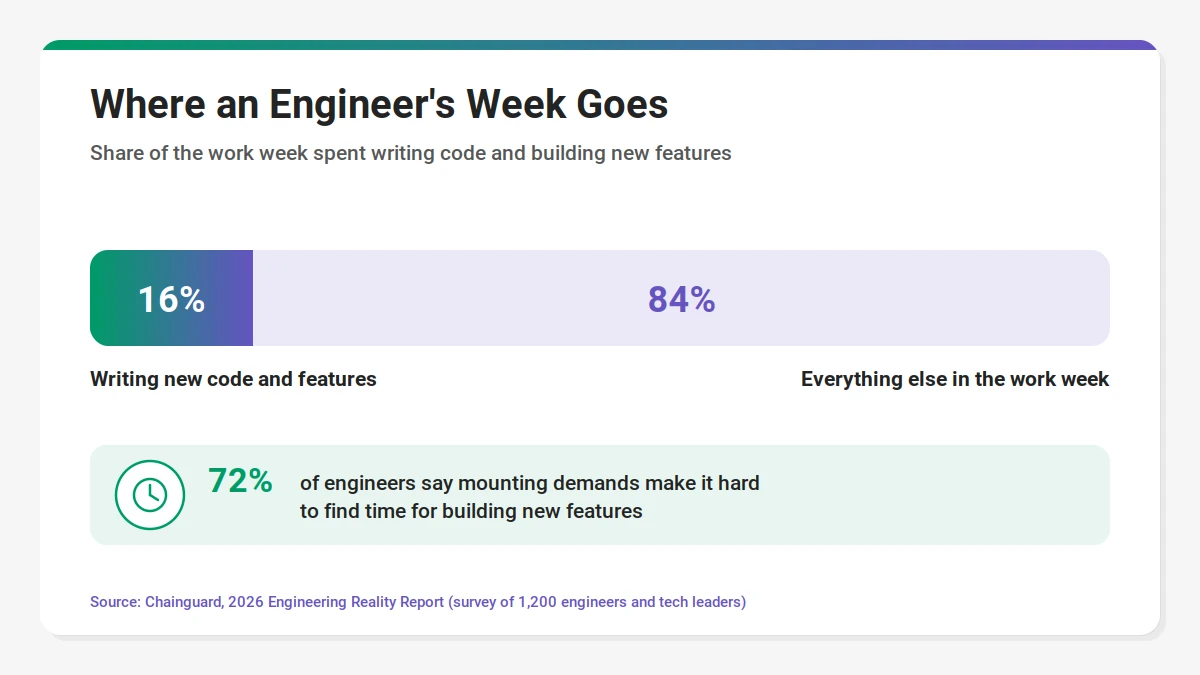
Most teams know they should audit more often but can't find the hours. Engineers spend just 16% of their week writing new code, and 72% say mounting demands make it hard to find time for new features, according to Chainguard's 2026 Engineering Reality Report. An outside audit team takes that work off their plate.
Final Word
Software rarely fails all at once. Problems build up quietly in dependencies no one updates, code no one fully understands, and shortcuts that made sense at launch. A software development audit brings those problems to the surface while they're still cheap to fix, and gives leadership a clear, ranked picture of where the product stands.
Audits can be run by internal teams or by an outside firm. When the stakes are high, such as a transaction, a vendor change, or a certification, an independent auditor gives you findings everyone can trust.
Contact Softjourn to get started on a software development audit and find out what's really in your codebase.

Frequently Asked Questions
A code audit focuses on the codebase itself: structure, maintainability, dependencies, and test coverage. A software development audit is broader and can also cover architecture, security, QA processes, and how the team works. A code audit is often one part of it.
Cost depends on codebase size, the number of technologies involved, and how many audit types are combined. A scoping call is usually enough to give a fixed estimate.
An independent review of a software product and the process behind it. It looks at code quality, architecture, security, testing, and development practices, and ends with a ranked list of what to fix.
Usually one to four weeks. A small, well-documented codebase with code owners on hand can be reviewed in about a week. Larger systems with several technologies and limited documentation take longer.
Internal reviews work well for routine checks. An outside auditor is the better choice when you need an unbiased view: evaluating a vendor's work, inheriting a codebase, preparing for a sale, or settling a technical disagreement.
A written report that ranks each issue by severity and the effort needed to fix it, followed by a walkthrough with your stakeholders to agree on next steps.
Yes, and vibe coding is becoming one of the main reasons companies request one. According to Black Duck's 2026 OSSRA report, only 24% of organizations evaluate AI-generated code for IP, license, security, and quality risks together. An audit covers all four.
In most cases, at least once a year. Also before major releases, certifications, or transactions, and after security incidents or big team changes.