Thinking Several Moves Ahead
From childhood tournaments to boardroom strategy — how chess taught Bogdan patience, perspective, and the joy of long-term thinking.


I learned to play chess when I was about six or seven. My father taught me how to play. Back then, chess was a big deal, with numerous world-class players. The chess community was highly developed, and many resources were invested in it. I remember joining a chess school soon after, in second grade. I still can recall the day they announced the opening of the chess program. My friends and I decided to sign up, and that's how it all started. | 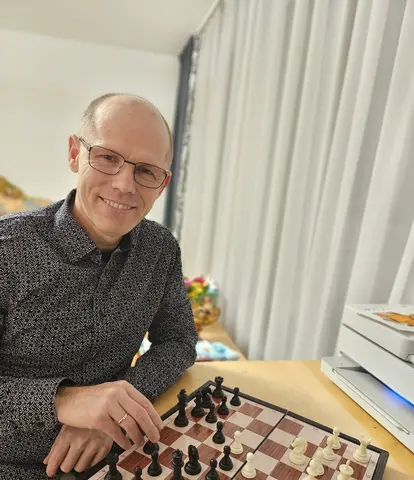 |
What kept you engaged in the game over the years?
I've thought about that a lot — even from a psychological perspective — because I was curious about why it stuck with me. I think there are a few reasons.
First, I genuinely enjoyed playing, and I could see my progress, which kept me motivated. Second, at that time, there weren't many other things to do. There was no internet, and TV or movies were limited to about once a day. Chess filled that gap.
I can't pinpoint exactly what drew me in the most. But the moment I started a game, it felt like stepping into an entirely different world. It was a way to disconnect from the mundane reality I was living in.
What's interesting is that I hardly played chess in the summer. The summer was vibrant and full of life. But in the autumn, when everything turned grey, chess became an escape. It was a space where you are in control. You can plan, make decisions, and shape the game.
Have you participated in any chess competitions?
Yes, I was very active in competitions and achieved quite good results.
Initially, we participated in various tournaments within our region. Since we lived in the Carpathian area of Ukraine, the tournaments in nearby Yaremche were my favorite. At the time, Yaremche was the best place for such events.
It was thrilling — the travel, the tournaments, and the overall experience. The excitement only grew as I started winning. Later in my career, I started qualifying for national competitions.
Which is more important for you in a game: to win or to feel challenged?
It's important to enjoy the process of the game. Playing beautiful games, even if they end in a draw, is a great pleasure. But there's a unique joy in winning. The emotional high from a victory, especially a significant one, like a regional championship, or when I was a young schoolboy, and I took home third place among adults in our city, is unforgettable.
I didn't pay attention to or chase winning. But when I started to win my first victories and progressed to the point where even adults started consulting with me, it was a different kind of joy. It's a feeling of recognition, a sense of achievement that stays with you. It's a bit like a taste of fame, a good feeling that's hard to replicate.
Do you have any advice on how to handle failures and grow from them?
My approach to failures is pretty much the same as in any sport or area of my life. One game is not the whole battle - or even one game is not the whole match.
There were nuances, of course, as tournaments were divided by age group, and it was important to stay in the game to make it to the next level, which added some psychological pressure.
It was important to understand that the game was just a continuation of my training.
Back then, we recorded every move on paper, as there were no electronics. In a calm setting—whether in a hotel with my coach or back at home—we would review and analyze the games. Or I would sit by myself - it can be hard because you want to hear other opinions. Now it's easy; computers can analyze games and calculate all the options.
Part of chess is the ability to lose. I remember that many of my friends gave up chess at that time. When you start playing, you lose over and over again, and it's very challenging.
It's hard psychologically, especially for a child, and that's why many give up chess quite quickly because you fail instantly. You cannot learn to play chess beautifully overnight. It all requires training.
You learn to endure the fact that you've lost and that you're not the best. But that is okay. In fact, in any area of life, you don't become the best immediately.
What is the most important thing to focus on while playing chess? How does one learn to play chess?
I think there are two approaches here. In chess, there is strategic thinking, when you see the entire situation and think in terms of positions. Another is the ability to calculate, which is logic.
Learning chess involves theory and practice. Back when we didn't have the internet, I studied books, analyzed games of world champions, and read their explanations to understand their decisions. This theoretical foundation, combined with regular practice, was essential.
Of course, natural ability also plays a role. I've met people with incredible intellectual capacity who excelled without much training.
Personally, patience helped me the most. I wasn't impulsive and took my time to make decisions. For example, I could easily play a game for two hours with full focus. Nowadays, when I play online or casually, I sometimes rush and lack that same perseverance.
Can you think of a book or material that helped improve your game?
Chess Strategy by Alekhine had a big impact. I was already playing at a high level but needed to progress. I came across this book and immersed myself completely. At home, I locked myself in my room with a chessboard by my side, reading and analyzing every detail. It completely changed how I approached the game.
Do you have a favorite strategy for starting a game?
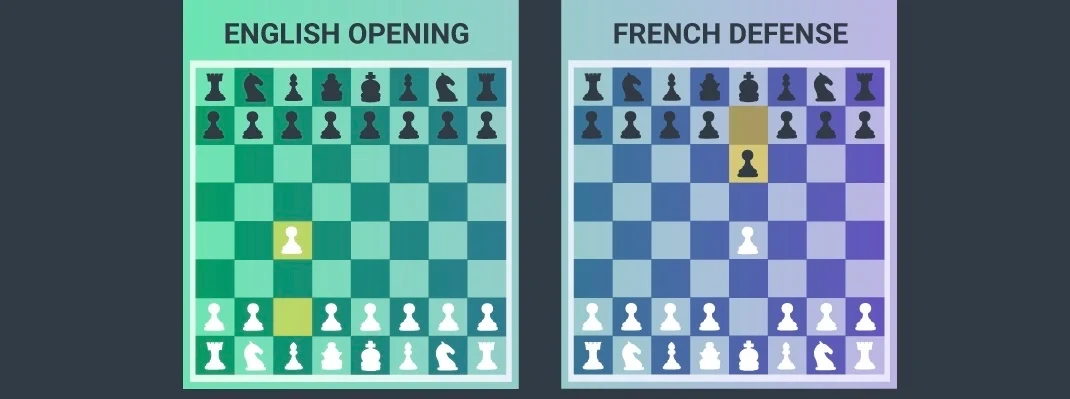
Yes, I always play the English Opening as White and the French Defense as Black. I perfected these over time, and they consistently work well for me.
Do you have any chess players who influenced your game?
Yes, though I admired Kasparov, I didn't play in his attacking style. My approach was playing from defense. I think it matched my personality better as I was rather introverted as a child. I liked staying in control and avoided breaking positions if the outcome was uncertain. But I still experiment in low-stakes games.
You mentioned that in chess, it's important to think strategically and adapt to unexpected moves. Do you apply this knowledge in your life or work?
Yes, these skills are very practical and apply throughout life. The only thing that stops us, perhaps, is our laziness, which can sometimes prevent us from applying all these approaches and knowledge. But I've realized that, in a way, I've always played chess in life. The pieces, board, and complexity are different, being much more unpredictable, but the principles are similar.
Life, like chess, is full of unpredictability. I once read in a Harvard business publication that middle managers play checkers while top managers play chess, emphasizing the need for big-picture and strategic thinking. This has been true in my experience.
In chess, you calculate scenarios—just like in business. There is chess when you have time to think, for example, two hours per game. And there is fast chess, five minutes for the game, or hyper-fast chess, one minute for the whole game.
It's the same in business. When you make strategic decisions and make a plan for the year, it's a long chess game. You sit alone, plan calmly, calculate all the nuances, and consider scenarios of how things might go.
When something critical happens, you start playing fast chess. You have to make decisions quickly.
Do you have a particularly memorable or challenging game?
If I had to pick one, it would be a tournament in Odesa. There was a 'pioneer' summer camp set aside entirely for the tournament—only chess players were there.
We came there as a team, and I was the captain. It turned out to be a pretty good experience, though I've only realized that now. We played well for our region. I scored seven out of nine points, and my teammates scored a bit less.
I remember encouraging them, saying we were just a few wins away from the third-place prize. But things didn't pan out as l hoped. While I was giving my all, the others, understandably, got a bit distracted by Odesa's charm.
Still, we had a great time, exploring, relaxing, and enjoying ourselves. The tournament was exceptionally well-organized, and the experience of living and playing there made it truly special.
You mentioned being a captain. Did it feel any different?
At that time, I was just a schoolboy, about 10 or 12 years old, I didn't understand all that. But still, there had to be a team captain, and mostly it was the strongest player in the team, not necessarily the one with the best leadership skills.
With my current understanding of leadership, I would have approached the role differently. Back then, it was all intuition, but being captain inspired me to start learning—not just chess, but leadership too.
What advice would you give to someone who wants to start learning chess?
When it comes to teaching methods, it all depends on the person. Some people find it easier to learn with a teacher, while others learn with a computer or artificial intelligence. As an introvert, I might have chosen a computer if I could have at the time. But the atmosphere of the tournaments is unique; you can't feel it at home.
You come in, there are big halls, lots of chess, at first there's a buzz of people talking, and then when the tournament starts, there's silence, and all you hear is the knocks of the pieces and the ticking of the clocks.
Now, I mostly play online: you quickly find an opponent, and adapt the difficulty to your level. But tournaments remain important for socialization, and I would advise not to give them up completely.