19 Years of Growth and Innovation: Lyubomyr’s Journey from Developer to Team Lead of Solutions Architecture at Softjourn
From his first project in Flash to leading global solutions teams, Lyubomyr shares how Softjourn’s culture of curiosity and trust helped him build a lasting career in tech.


Do you remember your first day at the company?
Well, that was a long time ago. I can't say I remember it clearly. After all, it's been nearly 19 years.
I don't recall the exact first day, but I do remember the office on Shevchenko Street and the small team we had back then. I even remember the interviews and the warm, almost family-like atmosphere. At the time, we celebrated birthdays all together with salads, stuffed cabbage rolls, and whatever else we could come up with. Great times.
What was your first impression of the team?
There were far fewer people back then, but my impression was generally positive, and it has stayed that way over the years.
In your opinion, what has changed the most over the years, and what has remained the same in the company?
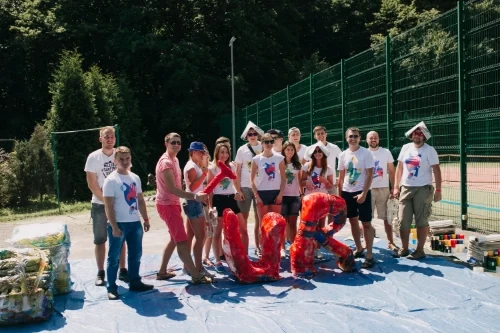
A lot has changed, but that initial comfortable, homelike atmosphere has remained.
Back in the day, we communicated a bit more face-to-face, gathering somewhere, going out together, but now things are different. Many people have moved or work from home. Still, that's more about the current realities we live and work in, rather than about the company itself.
Overall, the company has become more mature with clear processes in place; it's grown, but it has managed to maintain a good balance between being a goal-driven business and being a company that genuinely cares about creating comfortable working conditions.
What's the biggest lesson you've learned during your time at Softjourn?
I've had quite a diverse career path here: from developer to TechLead, then to Project Manager and Program Manager, and eventually to Solutions Architect. And along the way, I realized something important: to be truly effective, you have to answer a few questions:
- What do I actually want?
- What do I enjoy doing?
- What brings me the most satisfaction?
- And where can I be the most effective?
That kind of self-reflection helps you understand where to go next and how to grow. Sometimes, that also means being able to say no when you're offered new opportunities that don't really align with your goals.
I was curious to try different roles and areas within development to eventually find where I feel most impactful. I don't know if you can call it a "lesson," but it's more like a turning point, that moment when you stop and ask yourself where you're going next. That kind of clarity can seriously influence your growth, your work satisfaction, and even your future overall.
What advice would you give to people who are thinking about changing roles but are afraid of making the move?
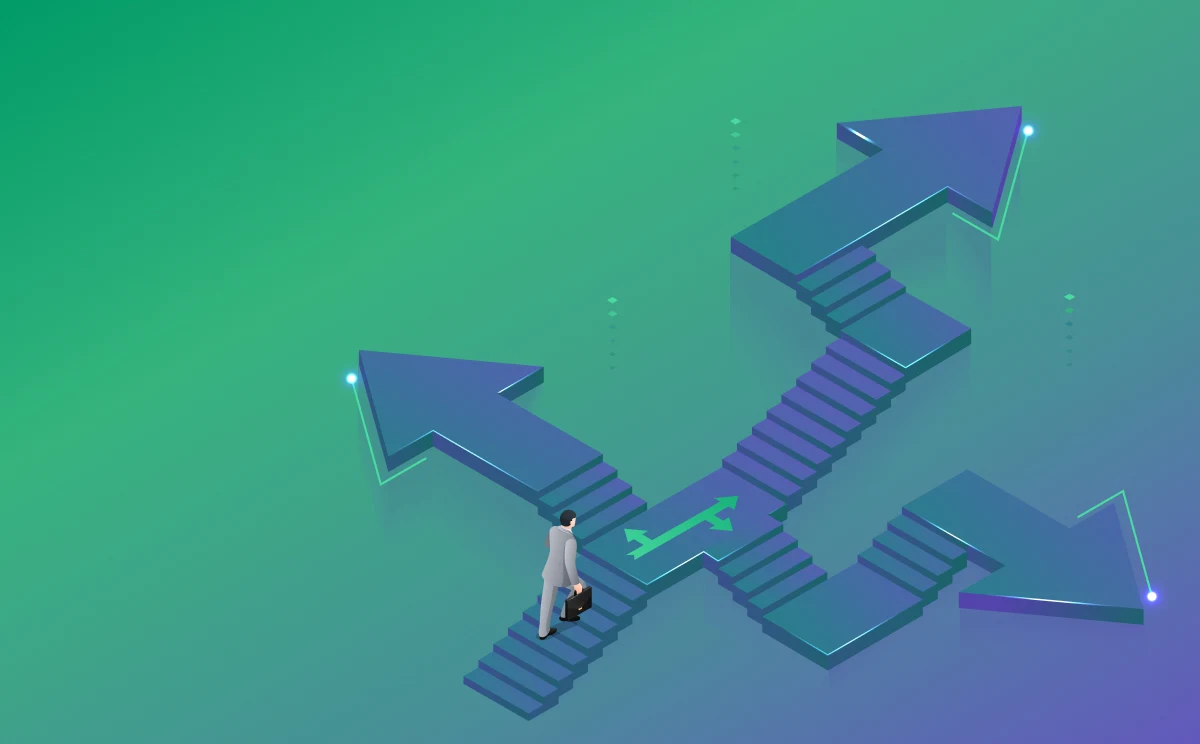
I think the key is not to make any drastic moves right away. Instead, start by exploring: talk to people who are already in that role, learn how things work, and see what it actually involves. If possible, carve out a bit of time to try it out in practice. That way, you're not jumping blindly; you're making an informed decision.
And honestly, there's nothing wrong with going back if it turns out the new role isn't for you. A lot of people worry about what it means to take a step back or change direction, but it's better to try and know it's not for you than to always wonder what if.
Of course, it has to be a balanced decision. Be honest with yourself: are you driven by real interest, or is it just external influence? Maybe your friend is doing it, or it seems trendy, or people in that role are earning more. That's still not enough. You have to know whether it's something you genuinely want. That kind of honesty with yourself is essential before making any change.
What is your most memorable project?
Honestly, a lot of them were exciting in their own way. One that really stands out is my very first project at Softjourn — Vendini. At the time, Flash was still a popular technology, and that was my entry point into the company. The project was challenging in many ways, and it was also the first time I traveled onsite to the U.S. to work directly with a client. That was a big and memorable experience.
But usually, the most memorable projects are those where you have to come up with a solution. There was a case when a client came to us with an idea that their previous vendor couldn't implement, and they weren't sure whether it was even technically possible. It became a real challenge to figure out how to make it work, specifically, how to synchronize audio and video in a way that felt seamless.
That challenge led us to create an algorithm that solved the problem. We built a proof of concept, and when the client saw that it actually worked, they were genuinely amazed. That moment—when you take an idea that seemed impossible and turn it into something real is incredibly rewarding. It was a kind of pivot point that kicked off a long-term project we're still working on today.
Technology has changed a lot. How do you keep up?
Technology really does evolve rapidly. But in my work, it's not so much about knowing every detail of a specific framework or programming language; it's more about understanding things on a conceptual level. How certain things should be implemented, what counts as good practice, and what doesn't.
I work with different languages and can do code reviews in many of them, but I don't go deep into language-specific nuances. What matters more for my role is seeing the bigger picture. And, most importantly, staying open to new things. You have to accept that there's always something new to learn. There won't ever be a moment when you can sit back and say, "That's it, I know everything." It's a continuous learning process, and that's a good thing. If your brain isn't challenged, it starts to slow down and get lazy.
The key is learning how to learn. Grasping the fundamentals: efficiency, structure, patterns, algorithms — those are usually shaped by your technical education. As for the details? You can always look them up or refresh when needed. It all depends on the context and the role you're in.
Do you have a favorite or memorable moment from your time at the company?
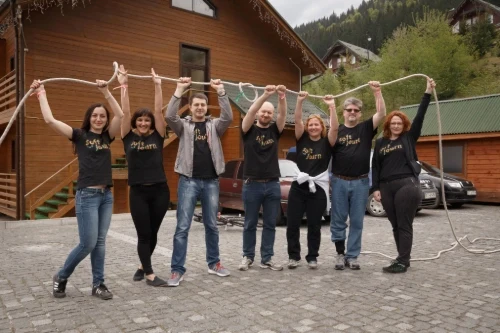
I'm not sure how original this will sound, but having been with the company for quite a while, I'd say the moments that stick with me the most are the celebrations, team trips, and get-togethers. There were so many great times. I know even Jeff still remembers that joke about the bus without a window.
It was during a trip to the ski resort, Bukovel — we were celebrating at the Radisson Blu, and somewhere along the way, a window just fell out of our bus. Emmy joked, "That's just fresh air, don't worry!" It was such a friendly and funny moment. Same with our themed dances, singing, and even trips abroad, truly warm memories.
What makes Softjourn different from other companies?
That's a tough one to answer because I joined Softjourn early in my career and have been here ever since. So, I can't really compare it to other companies. But maybe that's the answer. I think the years I've spent here say it all. There's something about this place that makes you want to stay. For me, it's been a combination of comfort, growth, and a sense of belonging.
If you had to describe Softjourn in three words, what would they be?
Humanity. Openness. Integrity.