
AI Readiness Assessment
Softjourn's AI Readiness Assessment is a 2-4 week engagement that gives you three answers: what AI opportunities to take advantage of, what to fix before you build, and what to leave alone for now.
What an AI Readiness Assessment Actually Answers
Softjourn's AI Readiness Assessment is structured around how AI decisions get made: what problems can AI help you solve, what you should fix before building, and what opportunities you are not yet ready for. The evidence we evaluate: data, processes, systems, ownership, and risk – mapped against 2-3 real use cases that matter to your business. Each use case gets a clear call at the end: build now, fix first, or defer. The output is a 30-90-day Action Plan with named owners, dependencies, and the cost-benefit analysis behind each call.
How Our AI Readiness Assessment Works
We start with leadership interviews and a short questionnaire to understand business goals, the current state of AI inside the company, and which use cases are already on the table. Output of this stage: a shared definition of scope – which business unit, which workflows, which constraints.
We review the data your AI initiatives would actually rely on (sources, quality, access, governance) and the architecture they would plug into (APIs, integration points, infrastructure, on-prem vs. cloud rules). The deliverable is a readiness score across these dimensions, with specific gaps named.
We work with your team and Subject Matter Experts to map potential AI use cases against business value, technical feasibility, data availability, and risk. Each case gets a recommendation: build next, fix dependencies first, or defer for now. SMEs define what a good output is for each use case. Output of this stage: a prioritized use-case shortlist with a clear recommendation per case – build next, fix dependencies first, or postpone for now.
In parallel, we look at the processes around the AI work – inputs, outputs, success criteria, change management, training needs – and at potential governance hazards, such as regulatory exposure (GDPR, sector rules), risk classification, and cost management for non-deterministic outputs. The deliverable is a process and governance readiness map, naming the gaps where pilot projects usually break down. This is the phase where only the best options would make it through.
We hand off a 30 or 90-day Action Plan that includes prioritized use cases, named dependencies, owners (yours, ours, or shared), and the cost-benefit math behind each recommendation. The Plan can become an SOW for a build engagement with us, a recommendation list you execute internally, or a mix of both.
What We Evaluate
Six dimensions of readiness across business, data, technology, process, people, and governance.

Business & Use-Case Readiness
Whether leadership has named the business outcomes AI should deliver, quantified the expected benefit in dollar terms, and aligned each potential use case with the broader company strategy.

Data Readiness
Whether the data your AI initiatives need actually exists, which can mean high enough data quality, ownership, integration paths, and governance to be safely used in production.

Technology & Delivery Readiness
Whether your architecture has the API doors, integration points, infrastructure, and ops support required to run non-deterministic AI systems reliably and at scale.

Process Readiness
Whether the workflows around the AI work are repeatable, with clear inputs, outputs, and success criteria that the model can plug into without breaking everything downstream.
People & Change Readiness
Whether your team has the skills, training plan, and resistance-management approach to absorb AI into daily work – and the leadership support to make adoption stick.

Governance & Risk
Whether you have a clear view of regulatory exposure, sensitive-data handling, model risk classification, and cost controls for non-deterministic outputs that can spike unpredictably.
Common Scenarios We See
Choose the Engagement That Fits Your Stage
Scope: a single use case, or a single business area with a small set of related candidates. We pull what we can from your team and existing documentation – light on workshops, low on data lift. You walk away with a readiness scorecard across the six dimensions and a short decision brief: should you build this, fix the dependencies first, or defer?
Best when you need an initial read on a single AI initiative.
Not sure where your AI initiatives stand today? An intro call gives you a first read in 30 minutes.
Talk to UsWhy Work With Us on Your AI Readiness
Scope discipline
We work on the 2-3 use cases that already matter to your business. We will size the timeline to fit the depth you need, in the same way we run our code audits.
Decisions you can act on
Every use case ends with a clear call: build now, fix first, or defer. You get a 1-2 page action brief built for a steering committee.
Evidence-backed scoring
Every score traces to data, process, or system observations you can review with us. The Action Plan stands on what we found together.
Integration-ready
The Action Plan converts directly into a delivery scope when you're ready to build. The same team can run the build or hand off to yours with full context.
Continuity into the build
The team that ran your assessment carries forward into the build, with the same knowledge of your data, processes, and stakeholders. The build starts where the assessment ended.
AI Work We've Shipped
 R&D
R&D
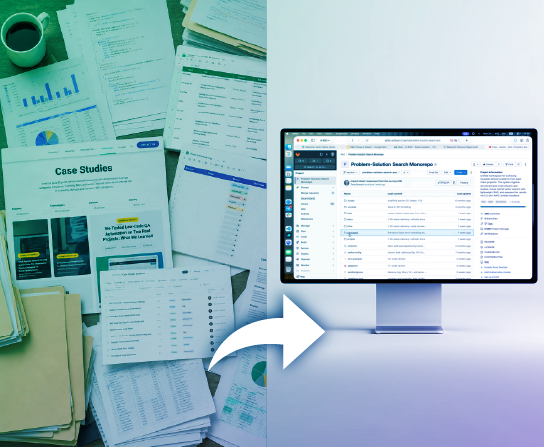
Turning 25 Years of Project History Into an AI-Searchable Knowledge Base
Twenty-five years of delivery experience did not make Softjourn AI-ready by default. The knowledge lived in case studies, PM logs, and people's heads, in formats never built for retrieval. Our R&D team structured it through three ingestion pipelines into one searchable vector database, then put a Slack bot on top that scores leads against real project history. The data work came first, and it is what made the AI layer useful.
 R&D
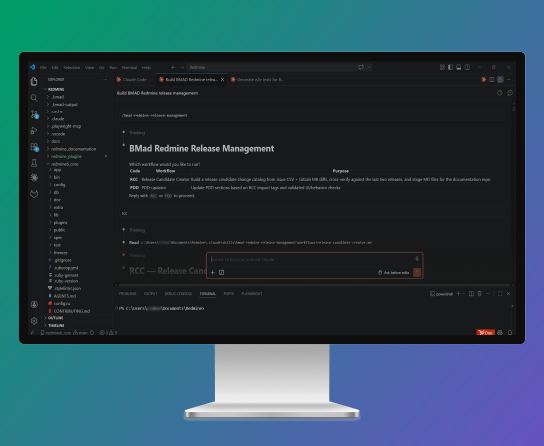
R&DThe Documentation That Kept Falling Behind: How We Fixed It with AI
Documentation debt is one of the gaps that stalls AI adoption, and Softjourn hit it on its own project: a 170-page product document months out of date after a migration. Our R&D team built two AI skills on BMAD that generate a traceable release candidate from sprint tickets and code changes, then update only the affected sections with screenshot verification. A six-month backlog cleared in one run, and upkeep now fits inside a normal sprint.
 Event Ticketing
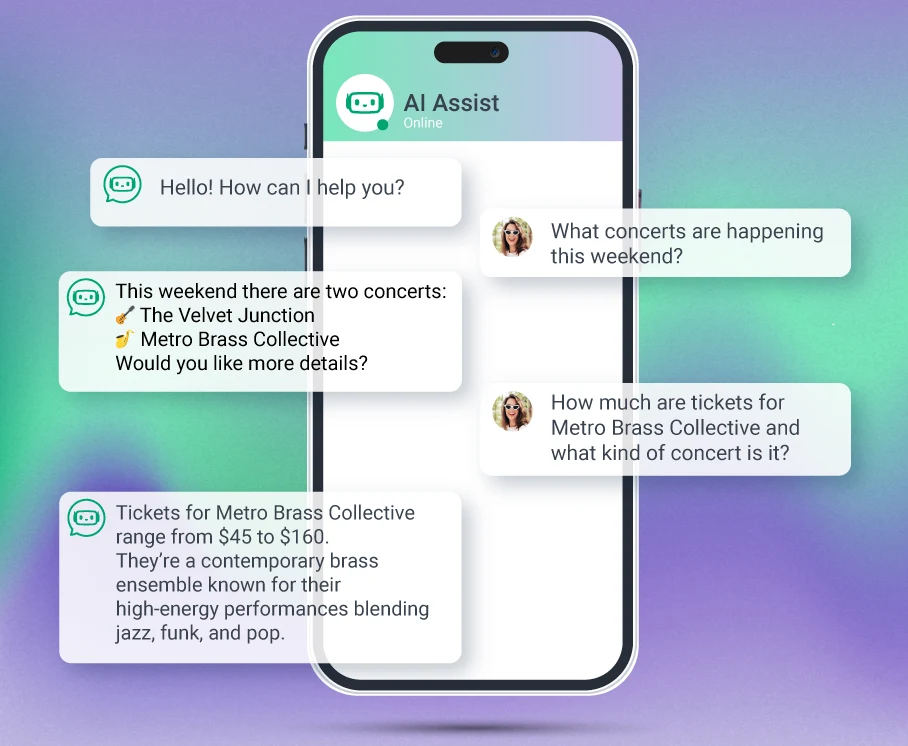
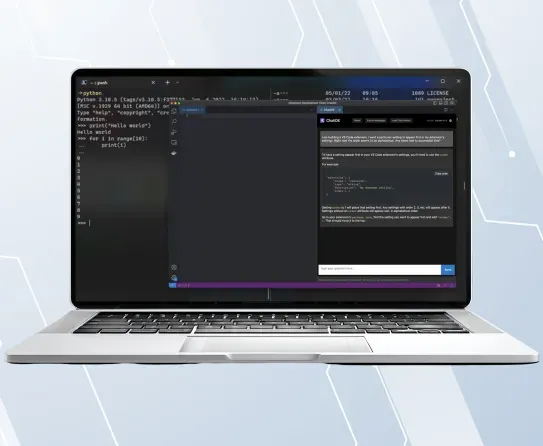
AI-Powered Event Discovery: Helping Fans Find the Perfect Event With Our Ticketing Chatbot
Inside our R&D practice, we built a conversational AI assistant on LangGraph that helps fans discover events through natural language search. The system routes queries across multiple AI providers based on query complexity. Operational costs dropped 40-60% through strategic AI allocation, with response quality holding steady across event types and languages.
 R&D
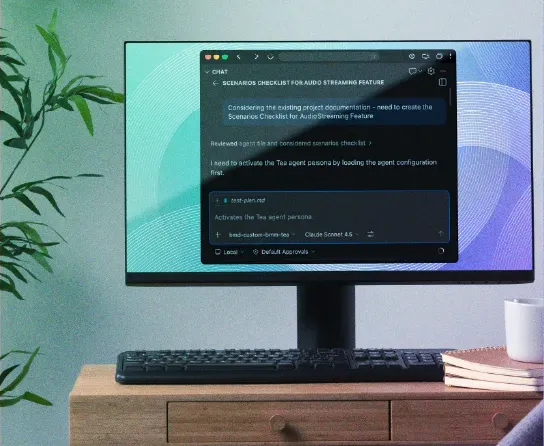
R&DAI as an All-Knowing Development Partner: Up to 30x Gains on Debugging
Claude Code now sits inside the IDE as an expert collaborator for our R&D engineers. The team rebuilt how they handle debugging, test generation, and dependency updates with the AI taking over routine work. Specific debugging tasks ran up to 30x faster, test generation gained 10-20x, and dependency update overhead dropped meaningfully across active projects.
 R&D
R&DWe Tested AI on Real QA and BA Work and Saw Up to 44% Time Savings
A structured proof of concept tested the BMAD AI framework against real QA and business analysis workflows. Each task category was measured against baseline manual delivery time. QA documentation time dropped 25-44% depending on task type, with the largest gains on repetitive specification work.
 R&D
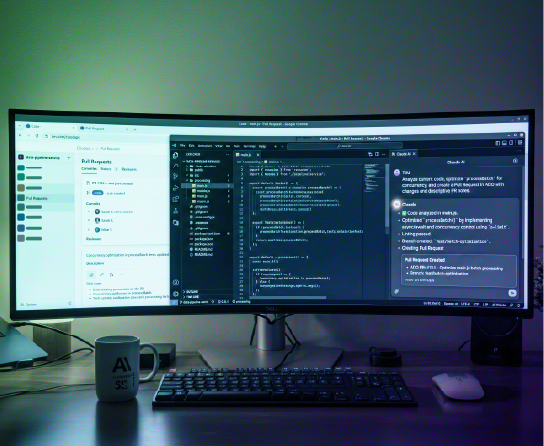
R&DWhat Happens When AI Reviews Its Own Code: Our Autonomous Pipeline Delivered 10x Faster Development
Two collaborating AI agents now run a fully autonomous ticket-to-PR pipeline our team built for internal R&D delivery. The agents handle planning and execution end-to-end, taking on routine work without human intervention. Well-defined tasks moved 5-10x faster, and client-side delivery throughput rose 125% on the pilot project.
 R&D
R&DAI-Augmented Development Cut a Week of Documentation Down to Minutes
Documentation that used to take a week now drops to minutes for our R&D engineers. An agentic workflow connects leading LLMs to live project infrastructure through MCP servers, pulling context from repositories, ticketing systems, and team docs as the AI drafts and the engineer reviews.
 R&D
R&DHow We Built a Non-Hallucinating AI Chatbot in One Week
Built in a week from project start: a proof-of-concept AI chatbot on Google Cloud's Vertex AI platform, grounded strictly in Softjourn's internal documentation through RAG. The system refuses to invent answers when source documents don't cover the question.
 R&D
R&DSoftjourn R&D: Our Designers Tested AI on Real UX Work. Here's the Honest Breakdown.
Structured experiments testing AI tools across three UX workflows: competitive research, large-scale asset rebranding, and onboarding flow redesign. Our designers measured time saved and quality impact for each. The biggest gain was rebranding 150 themed assets in 45 minutes – a 95% reduction from the manual baseline.
AI Readiness Assessment – Common Questions
Softjourn's AI Readiness Assessment evaluates whether your business is ready to build, scale, or extend AI inside its operations. We answer three questions for you: which AI work to take on next, what to fix before you build, and what to leave alone for now. The output is a 30-90 day Action Plan with named owners, dependencies, and cost-benefit math.
Most assessments run 2-4 weeks, depending on scope (single business unit vs. enterprise-wide), how many use cases are on the table, and how much existing documentation you have. After a short intro call, we will refine the estimate based on what we see.
Mid-size and enterprise teams that have tried an AI pilot and feel it did not fully land, or that feel internal pressure for AI without a clear next step. If your company has fewer than 50 people and a single technical owner, an assessment is usually overkill – a direct conversation with us about a specific use case is more useful.
A 30 to 90-day Action Plan covering prioritized use cases, dependencies you need to address before each one, named owners (yours, ours, or shared), and the cost-benefit math behind each recommendation. The Plan can become an SOW for a build engagement with us, a recommendation list you execute internally, or a mix of both.
Business goals and current AI ideas on the table, data samples (we work with you on access and NDA), architecture documentation, a short list of Subject Matter Experts who define what good output looks like for each use case, and current KPIs you want AI to improve. The more SMEs you can give us, the sharper the recommendations.
"Unknown" is a valid score in itself. It tells us where you need to investigate before making a confident AI decision. We mark these gaps explicitly in the readiness scorecard so the Action Plan indicates them as dependencies to address before you build.
Each dimension maps to a clear spectrum: scattered or undocumented practice at the low end, standardized and measured at the high end, partial or inconsistent in the middle. The scorecard shows where you land, along with the data, process, or system evidence behind each rating. The result is a concrete punch list you can work through on the path to AI-readiness.
We work on access plans before the assessment starts. For sensitive data, we sign a mutual NDA and scope what we need to see versus what we can gain an understanding of from your team's description. Where regulation rules out external access (HIPAA, PCI, GDPR-protected data), your team runs that part of the audit with us as observers, then walks us through the evidence we need to score it.
Let's Discuss Your AI Readiness
Tell us where you are with AI today. After a short intro call, we will give you an honest first read and a clear estimate of what an assessment would look like for your situation.

Softjourn asked the right questions, involved people with the right experience in the conversations. They showed good leadership in managing the process, kept us on track, and brought a lot of strong knowledge in the financial area.

Since 2010 Softjourn team has been maintaining the processing system which is a core of our business; they've done a great job so far. We value the knowledge transfer process as well as excellent development skills.