
Augmenting JavaScript & Typescript Teams: A Guide for Business Leaders
When your roadmap is moving faster than your team can hire, the answer isn't always a job posting. Here's how to build the capacity you need without the overhead you don't.

Most companies don't have a JavaScript or TypeScript problem. They have a capacity problem dressed up as one. The sprints slip, the releases get delayed, and somewhere in a leadership meeting, someone asks why the engineering team can't just move faster. The answer is rarely about the technology and it's almost always about who's available to build it.
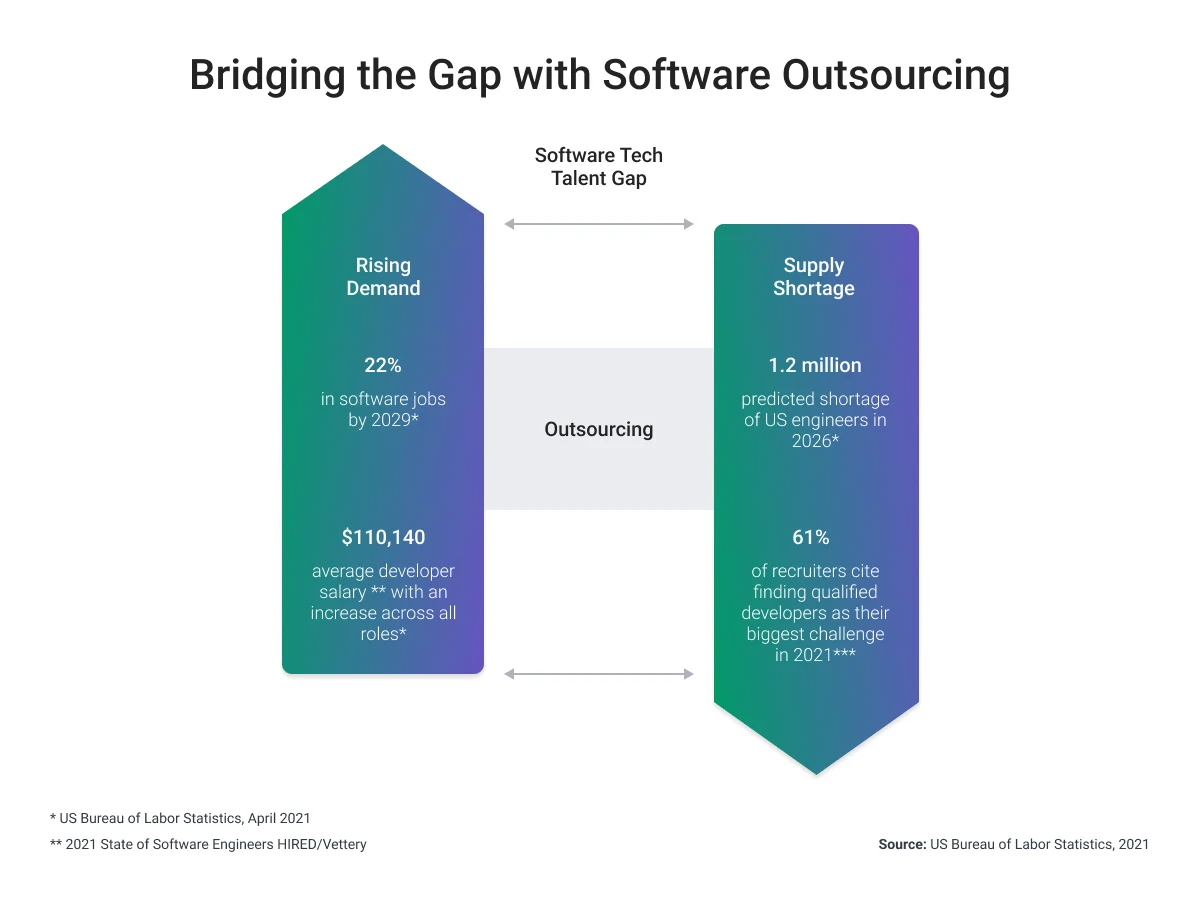
Scaling a development team has never been a straightforward calculation. In the engineering sector, the median time to hire sits at 41 days, with the slowest 10% of searches taking up to 82 days and that's before a new developer has written a single line of code for your product.
For companies that run on modern web infrastructure, that gap doesn't just slow down product roadmaps. It affects revenue, customer experience, and competitive position in ways that are easy to underestimate until they're impossible to ignore.
That's where thoughtful team expansion comes in, not as a workaround, but as a deliberate strategy that more technology leaders are building into their annual planning rather than reaching for in a moment of crisis.
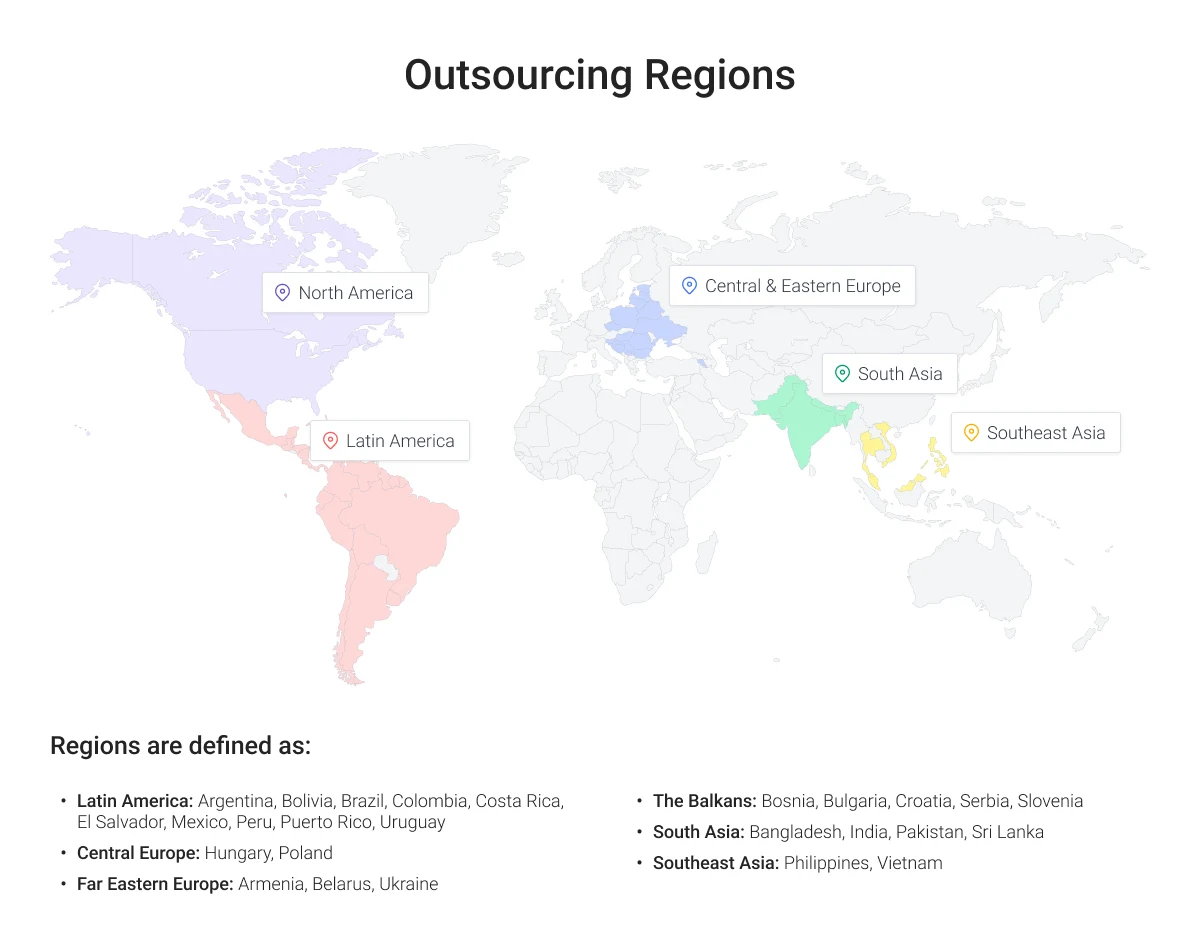
Skilled JavaScript and TypeScript teams have supported the largest scale of expansion for companies in fintech, ticketing, and enterprise technology, and that's why we will show how to augment your team in the most efficient ways.
The Rise of JavaScript and TypeScript As Enterprise Standards
Ten years ago, JavaScript was something enterprises tolerated. Today it's something they depend on. According to GitHub's Octoverse 2025 report, TypeScript became the most used language on the platform by monthly contributors, reaching over 2.6 million active contributors, a 66% year-over-year increase.
Meanwhile, JavaScript remains the most-used programming language in the 2024 Stack Overflow Developer Survey, with 62% of developers reporting active use.
TypeScript in particular has become the preferred choice for organizations that need their development teams to move quickly without sacrificing code quality or long-term maintainability.
What changed isn't just the language itself. The tooling, the frameworks, and the broader ecosystem matured to a point where JS/TS can support the kind of complex, high-stakes applications that financial services companies, ticketing platform development, and large-scale SaaS businesses run their operations on.
A single language running across the front-end, back-end, and increasingly mobile applications means fewer context switches, smaller team structures, and a more direct line between what gets built and what customers actually experience.

The business case for TypeScript has become harder to argue with. Teams maintaining JavaScript codebases over five years spend 40% more time on regression fixes and rework compared to teams that made the switch, as the cost compounds quietly until it shows up in release cycles and engineering capacity.
For regulated industries like fintech, where code quality isn't just a product concern but a compliance one, that gap matters more than most. Especially if you need fintech integrations that your in-house team doesn't have the time or bandwidth to work on.
For technology leaders, that shift means JS/TS expertise is no longer a nice-to-have when evaluating team structure. Softjourn's work across fintech and event ticketing reflects exactly that, with JS/TS sitting at the center of most of the platforms we build and maintain.
The Hidden Cost of Understaffed Dev Teams
At some point, most technology leaders have sat in a room and explained why something didn't ship on time. The reasons vary, but a shortage of available, qualified developers is among the most common and least discussed. It doesn't make for a clean slide in a board presentation.

According to LinkedIn's 2024-2025 recruitment data via Recruiterflow, the average time to hire in the U.S. sits at approximately 36 days from job posting to offer. For senior engineering roles, that number climbs higher.
The cost of that gap shows up in delayed go-to-market timelines, features that get cut from releases, and engineering teams stretched thin enough to start making decisions based on what's fast rather than what's right.
Over time, those decisions compound. What starts as a staffing gap becomes a product quality issue, and eventually a competitive one.
The other cost that rarely gets a line item is turnover. When skilled developers are consistently overloaded, they leave. Most studies estimate that replacing a senior developer costs between 0.75x and 2x their annual salary, and that figure doesn't include the time lost bringing someone new up to speed on your codebase, your product, and your team's way of working.
It's a market pattern we have seen more than once. Companies come looking for development support not because they planned for it, but because an already stretched team finally hit its limit. The expense management platform takeover is a good example of what that looks like in practice, and what's possible when the right support arrives quickly.
Augmentation as a Growth Strategy, not a Stopgap
The word "augmentation" carries some baggage. For many leaders, it conjures images of emergency hires brought in to rescue a failing project, only to be expensive and temporary. That framing undersells what a well-planned staff augmentation actually looks like in practice.
Companies that use external JS/TS talent strategically don't do it because they're behind. They do it because they've decided that certain capabilities don't need to remain on the payroll permanently to deliver permanent value. A product feature gets built, or a platform gets modernized, and once that is done, the in-house team gets unblocked.
The work is real, the outcomes are measurable, and the business moves forward without taking on the fixed headcount costs it may not need in two years.
There's also a knowledge transfer argument worth making. Bringing experienced JS/TS consultants and developers into your team, even temporarily, raises the overall quality of the work.
Senior external developers who have worked across multiple products and industries bring a perspective that's genuinely difficult to develop inside a single organization. That value doesn't disappear when the engagement ends.
The numbers reflect this shift in thinking. According to a Forbes analysis, over 65% of enterprises now use some form of blended workforce strategy to accelerate delivery and reduce time-to-market.
The same analysis found that companies maintaining long-term partnerships with their augmentation vendors report 20 to 25% higher project success rates compared to those that rotate vendors frequently. The model isn't a workaround anymore. It's how mature technology organizations are choosing to build.
For a concrete example of what planned expansion looks like, Softjourn's work with SecuTix is worth reading. Rather than scrambling to hire during a period of rapid growth, the company brought in structured external development capacity to keep pace with demand without overextending its internal team.
Building a Flexible, Scalable Team Model
The most effective team structures in 2026 aren't the largest ones. They're the ones designed to move well at different speeds. That means a core internal team focused on institutional knowledge, architecture assessment, product direction, and long-term architecture, with the ability to bring in additional JS/TS capacity when the roadmap demands it.
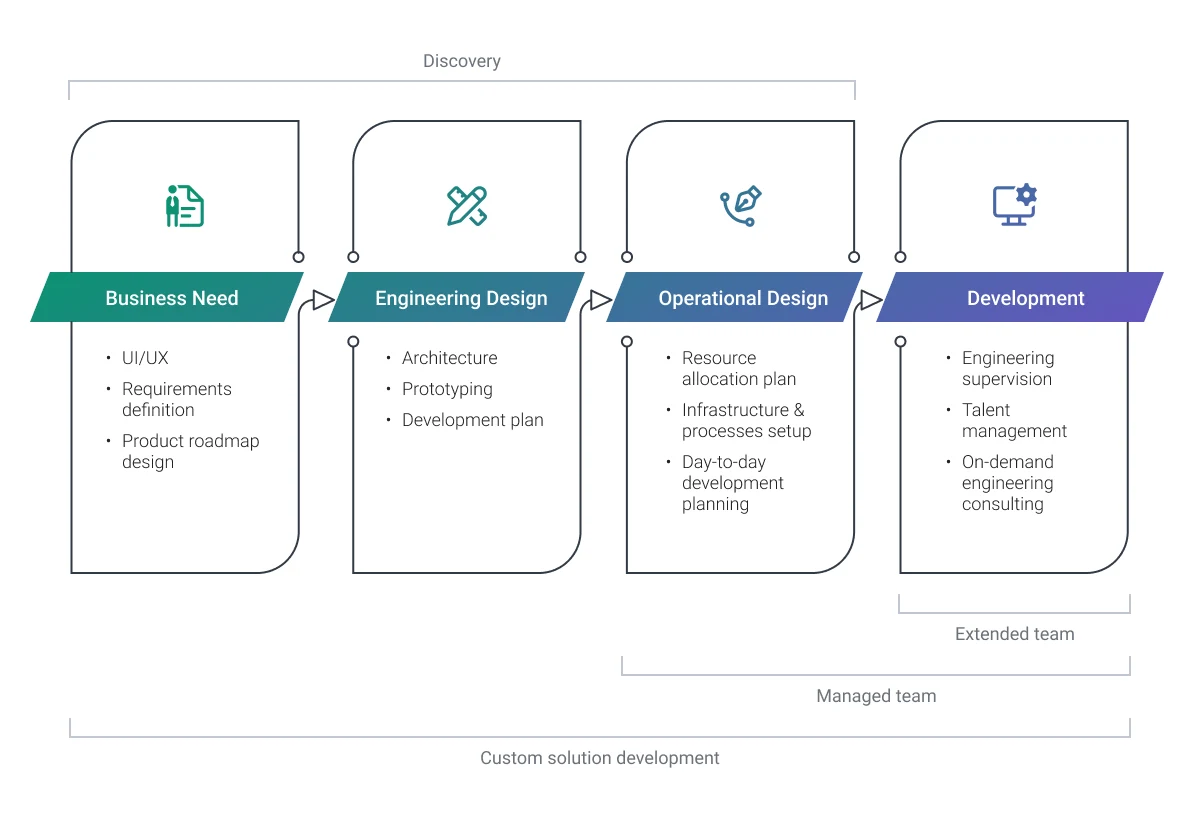
There are a few models worth understanding:
- Project-based expansion brings external JS/TS developers in for a defined scope: a new product feature, a platform migration, a performance overhaul. Then scales back once delivered. It keeps overhead low and execution focused. Softjourn's Backbone to React migration for a ticketing client is a good illustration of this, a defined technical challenge, a structured engagement, and a modernized stack delivered without disrupting live operations.
- Ongoing capacity support works well for organizations where development demand fluctuates but never fully disappears. A small group of external developers works alongside the internal team on a retainer basis, available when the workload spikes without the fixed cost of permanent headcount.
- Specialist access is the model most often underestimated. TypeScript architecture, performance optimization, and security-focused development are expensive specializations to maintain full-time but genuinely valuable when needed.
According to Paraform's 2024 hiring data, senior specialist roles take an average of 35 or more days to fill. For a business with a deadline, that's not a realistic timeline. Flexible access to specialist expertise solves that problem without creating a permanent overhead.
What separates the companies that do this well from those that don't is planning. When software development services are structured around exactly that kind of upfront clarity, flexible teams know what expectations, communication norms, and integration with internal workflows are established before the first line of code is written, not after.
Governance, Risk, and Vendor Management
Bringing external developers into your team creates real exposure if it isn't handled with intention. Intellectual property, code security, data access, and knowledge retention are all risks that are easy to manage when addressed upfront and difficult to unwind after the fact.

The companies that run augmented teams well treat governance not as a legal formality but as part of the engagement's structure from day one.
Intellectual property and security come first. Any engagement with an external JS/TS team should establish clearly who owns what is built, what access controls are in place for your codebase and infrastructure, and what data handling standards apply throughout the engagement.
For fintech companies in particular, this isn't optional; it's a requirement. Vendors worth working with will have security protocols and relevant certifications they can point to before the conversation moves to timelines or pricing.
Vendor selection deserves more rigor than most teams apply. The right signals to look for aren't always the most visible ones. Case studies in your specific industry matter more than general portfolio size.
Developer retention at the vendor is a meaningful indicator; a firm with high internal turnover will give you inconsistent work, and the developer who onboards onto your codebase in month one shouldn't be a different person's problem to replace in month four.
Define a governance rhythm before work begins. One pattern that works well: establish 30/60/90-day checkpoints tied to measurable outcomes: backlog reduced, migration waves completed, release frequency improved, or incident volume stabilized. These checkpoints give both sides a structured moment to course-correct before small misalignments become larger problems, and they create a record of progress that's useful for internal reporting.
Plan for the end of the project from the beginning. Knowledge transfer should be a delivery requirement, not something that happens in the final week when a deadline is already approaching. Augmented teams should document the decisions made, the patterns used, and the parts of the codebase that need attention as they build. When the engagement ends, your internal team should be more capable than when it started, not left holding a codebase they don't fully understand.
Understanding the difference between augmentation and outsourcing also matters here. With augmentation, external developers work inside your processes, report to your managers, and operate as an extension of your existing team.
With outsourcing, you transfer ownership of delivery to a third party. Both have their place, but they answer different problems and conflating them leads to misaligned expectations on both sides.
Real-World Outcomes: What Success Looks Like
Success in this model isn't just shipping on time, though that matters. It's the internal team carrying less technical debt because the workload was distributed well. It's a product that launched with the features it was supposed to have, instead of the ones that survived triage. It's a leadership team that can plan a roadmap with confidence rather than building in buffer time to compensate for a capacity problem that was never properly addressed.

The companies that do this well share a few common traits. They treat team structure as a strategic decision rather than an HR function. They plan for external capacity before they need it rather than after the deadline has already slipped. And they choose partners based on track record and fit rather than whoever responded fastest to an RFP.
The numbers back this up:
- According to Verified Market Research, the global IT staff augmentation market was valued at $299.3 billion in 2023 and is projected to reach $857.2 billion by 2031, growing at a compound annual rate of 13.2%.
- Across fintech, ticketing, and enterprise SaaS, the pattern is consistent: organizations that plan their team structure proactively consistently outperform those that react to talent gaps after they've already affected the business.
Softjourn has seen this play out across engagements in financial software development and event ticketing, where the difference between a smooth delivery and a difficult one often came down to how early in the planning cycle the team structure conversation happened.
For a tangible example, the performance testing engagement in fintech is worth a read. The engagement wasn't about rescue. It was about bringing in specialist JS expertise at the right moment to remove bottlenecks before they became business problems.
Key Questions to Ask
The right questions to ask aren't directed at a vendor; they're directed at your own organization. Before any external conversation starts, it's worth being honest about a few things internally.
- What's actually blocking your team right now? A capacity shortage and a skills gap are different problems. One is solved by more people; the other is solved by the right people. If your team is moving slowly because it's understaffed, augmentation fixes that. If it's moving slowly because nobody on the team has led a TypeScript migration at scale or built a high-throughput event processing system before, you need specialist access, not headcount. Knowing which problem you have shapes every decision that follows.
- How much management bandwidth do you actually have? Augmented teams work best when they're embedded into your workflow, not managed in parallel to it. External developers don't replace product ownership and technical leadership, they amplify what you already have. If your internal leads are already stretched, adding external developers without a clear structure creates more coordination overhead than it removes. The engagement works when your team is in a position to set direction and make decisions; it struggles when that capacity isn't there.
- What does handoff look like when this engagement ends? It's an uncomfortable question to ask at the start of a partnership, but the answer tells you a lot. A vendor with a clear knowledge transfer process is one that has run enough engagements to know what breaks down without it. Ask specifically how documentation is handled throughout the engagement, not just at the end.
- Are you evaluating vendors or just collecting proposals? There's a difference between running a real vendor selection process and going through the motions of one. The companies that get the most out of augmented teams don't choose based on who responds fastest or quotes lowest. They look at industry-specific experience, developer retention rates, security posture, and the quality of conversations before any contract is signed. A vendor who asks good questions about your product and your team before pitching their services is one worth taking seriously.
- What would make this project a success six months from now? If you can't answer that question specifically, not "faster delivery," but what "faster delivery" actually means in terms of features shipped, incidents reduced, or systems modernized, it's worth slowing down before you start. The clearer the definition of success, the easier it is to structure the engagement, measure progress, and know when the work is done.

How to Move Forward
The first step isn't writing a job description or issuing an RFP. It's an honest look at where your current team is being slowed down, what's sitting in the backlog that shouldn't be, and where the next six months of your roadmap are most at risk.
From there, the conversation becomes much clearer. Whether you need a single senior JS/TS developer to unblock a critical feature, a structured team to carry a larger initiative, or specialist expertise for a defined technical challenge, the right model exists. It's a question of finding the right partner to deliver it consistently, not just once.
Softjourn has been building and supporting JavaScript and TypeScript teams for companies in fintech, ticketing, and enterprise technology for nearly two decades. If your roadmap is outpacing your current team's capacity, it's worth having the conversation sooner rather than later. Contact Softjourn to get started.