
2026 Event Ticketing Stats: Key Industry Trends & Market Data
Market projections, AI adoption, and consumer trends that are shaping the future of live events.

The ticketing industry is in the middle of a quiet revolution. What used to be a simple transaction – buy a ticket, show up – has become a complex ecosystem of dynamic pricing algorithms, mobile wallets, AI matchmaking, and blockchain authentication.
The change isn't just technological. It's behavioral. People are booking differently, expecting more, and willing to pay for experiences that feel personal and frictionless.
The following collection of 70+ statistics covers ticketing markets, event technology, attendee behavior, and industry challenges, painting a comprehensive picture of where the industry stands and where it's headed.
Why We Track These Numbers
Softjourn has spent more than 20 years building ticketing and event technology, from venue mapping tools to access control systems used by major platforms. Our research and content teams track adoption data, market forecasts, and consumer behavior shifts across the ticketing and events industry so organizers and platform teams have a reliable, current reference rather than a static snapshot. The statistics above draw from primary research including Juniper Research, Mordor Intelligence, and Research & Markets, and we update this collection regularly as new data becomes available.
Ticketing & Events Market Overview
From trillion-dollar transaction volumes to double-digit software growth, the ticketing and events market is entering a new era of digital scale. Mobile ticketing, AI pricing, and hybrid experiences are now the core forces driving global expansion through 2035.
1. Total Ticketing Transaction Market
Total Ticketing Transaction value was $1.47 trillion in 2025, and is projected to be $3.37 trillion by 2030 - this is 128.6% market growth from 2025 to 2030. [Juniper Research]
2. Online Ticketing Market
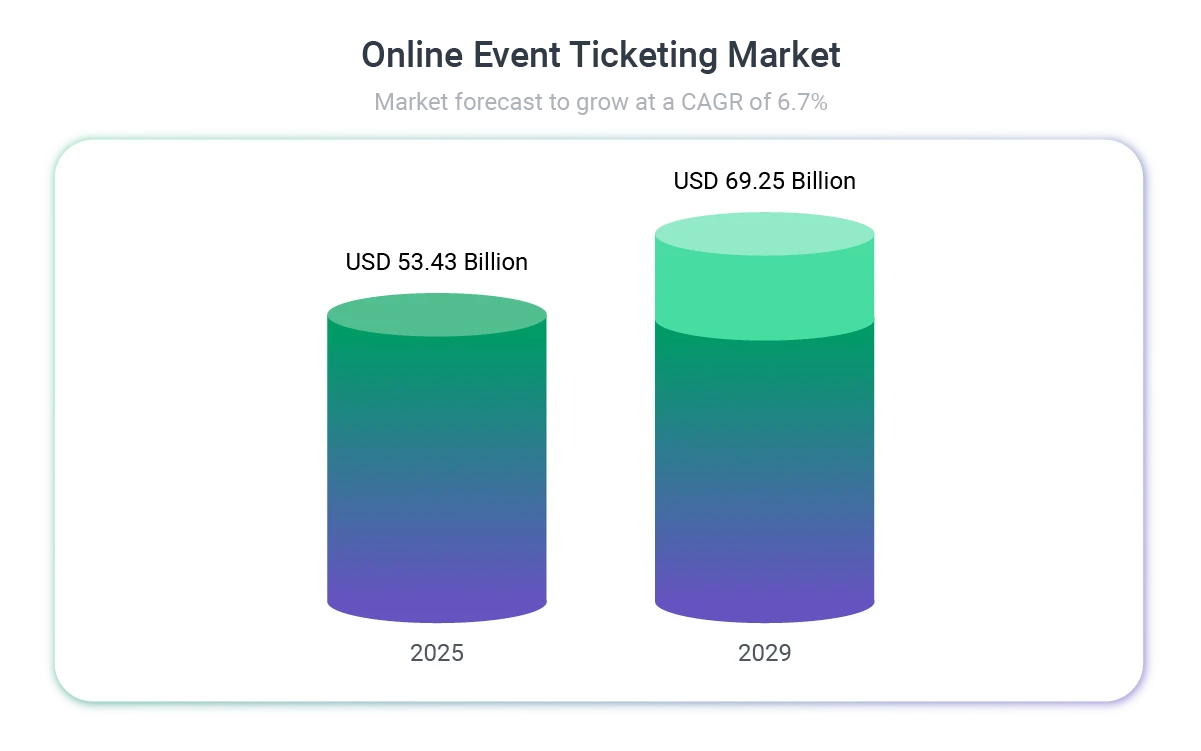
The online event ticketing market will grow from $50.97B in 2024 to $69.25B by 2029, expanding at a 6.7% CAGR, driven by mobile ticketing, dynamic pricing, and hybrid events. [Research and Markets]
3. Regional Ticket Markets:
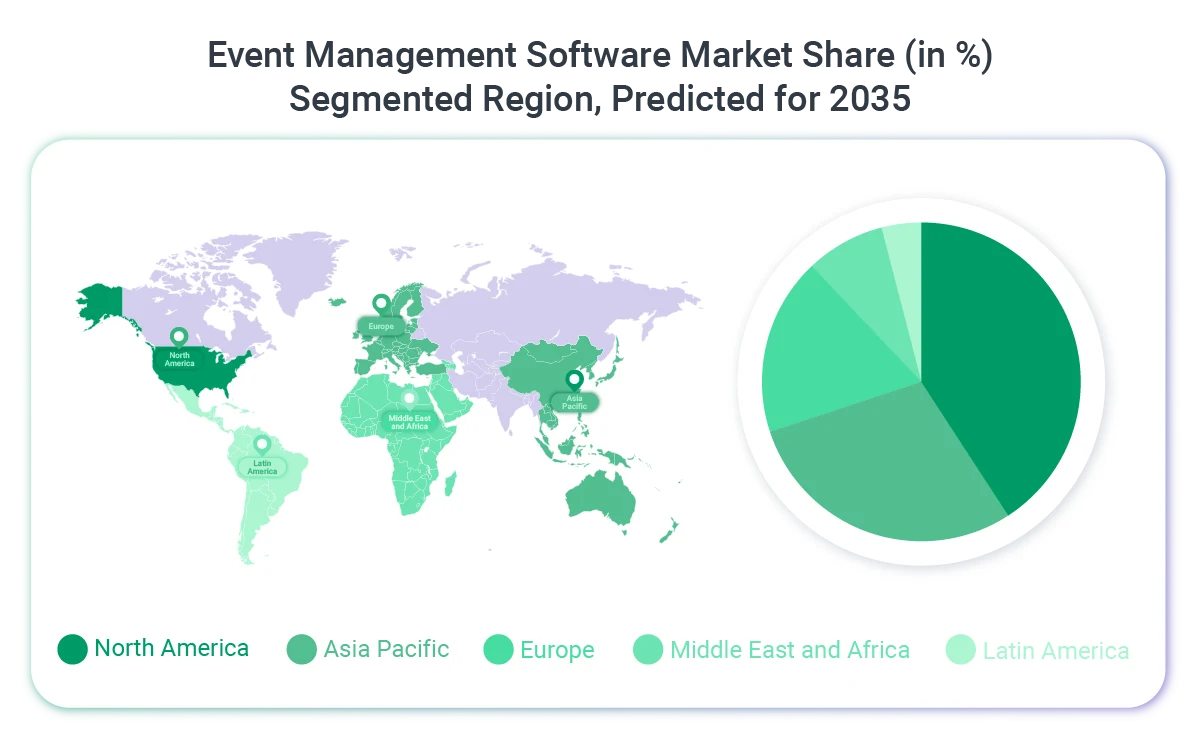
With such rapid global expansion, regional markets are becoming increasingly important in shaping innovation and adoption trends. By 2035, North America will hold 32% of the event management software market, with Asia Pacific close behind at 28%, driven by digital infrastructure and government tech initiatives. [Research Nester]
4. Factors that Have a Positive Impact on the Global Online Ticketing Market CAGR:
- 5G and high-speed mobile internet
- Smartphone penetration in emerging markets
- Growth of post-COVID live music & sports mega-events
- AI-driven pricing for ROI
- Blockchain NFT tickets enhancing fan engagement
- Corporate demand for hybrid events
[Mordor Intelligence]
5. Factors that Have a Negative Impact on the Global Online Ticketing Market CAGR:
- Heightened antitrust and fee transparency
- Cyber-fraud and bot resale activity
- Venue exclusivity clauses
- Volatile event calendars due to macroeconomic shocks
[Mordor Intelligence]
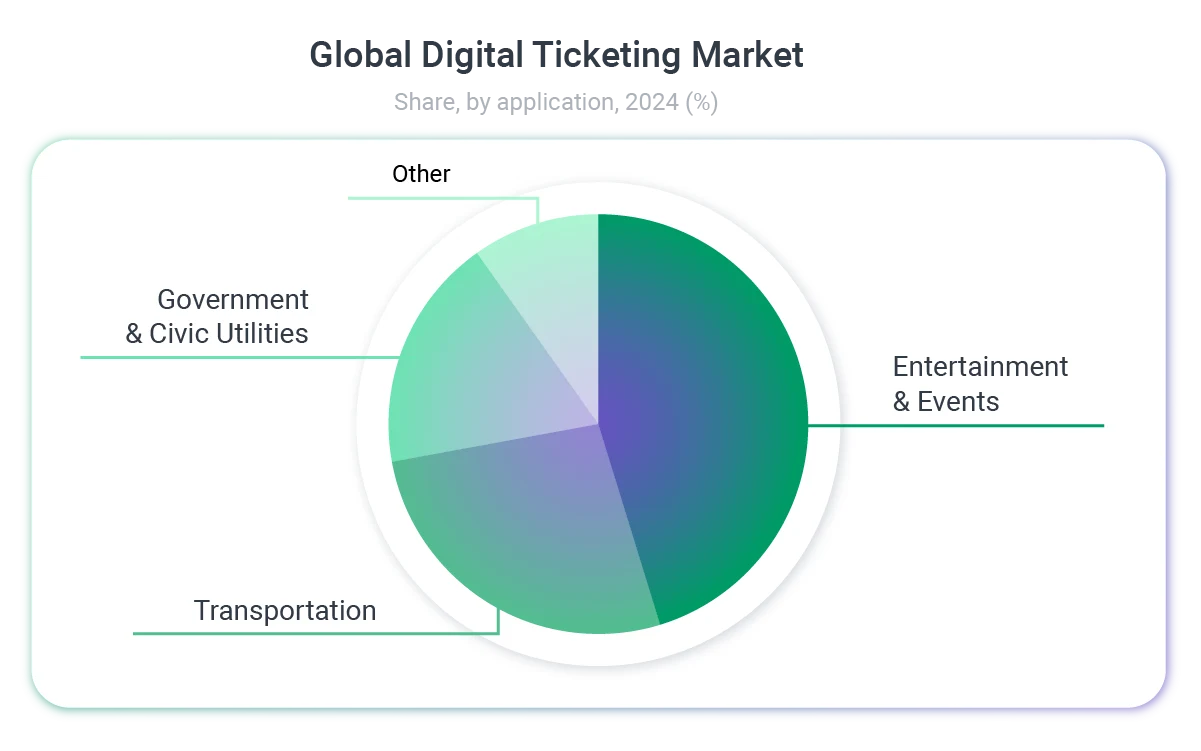
6. How the Global Digital Ticketing Market is Split by Application [Market.us]:
Secondary Ticket Market
The secondary ticketing market continues to expand as digital platforms and mobile-first purchasing drive growth worldwide. Despite ongoing regulatory scrutiny and fraud risks, emerging technologies and cross-border demand are fueling steady momentum through 2030.
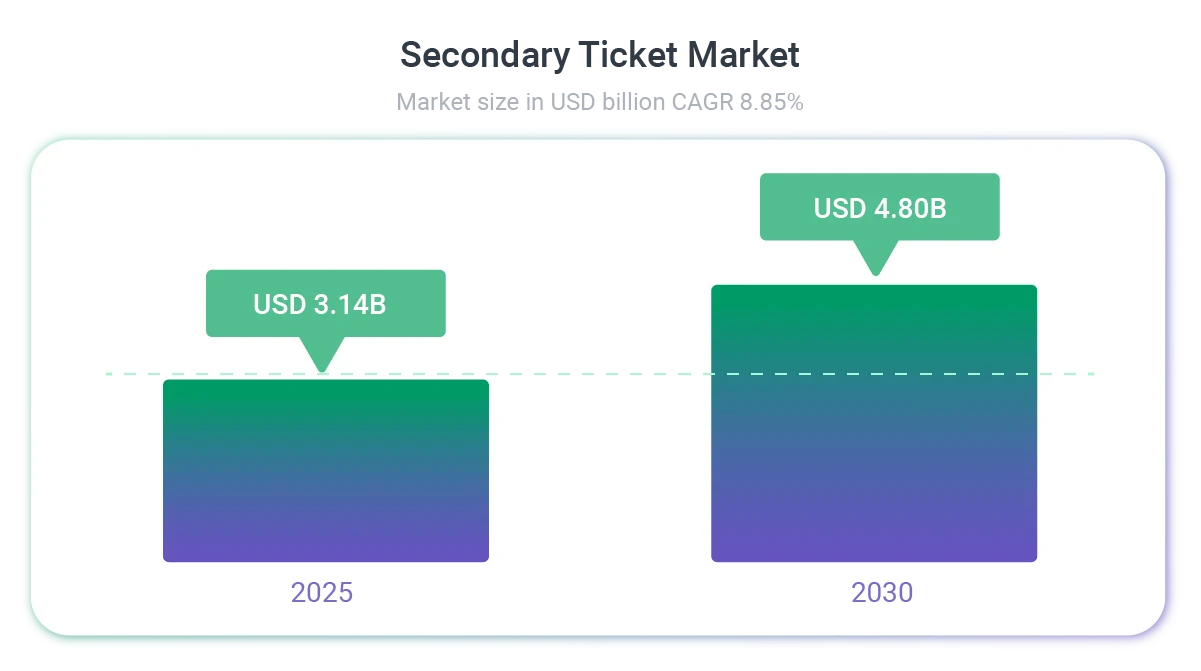
7. Secondary Ticket Market:
Growth projection: CAGR: 8.85% (2025–2030) [Mordor Intelligence]:
8. Factors that Have a Positive Impact on the Global Online Ticketing Market CAGR:
- Mobile-first purchasing behavior (North America)
- Hybrid & multi-day events (Europe)
- Dynamic pricing adoption (Asia)
- NFT-enabled smart tickets
- Cross-border event tourism (Middle East)
- Ticket exchange consolidation with digital wallets
[Mordor Intelligence]
- Factors that Have a Negative Impact on the Global Online Ticketing Market CAGR:
- Regulatory scrutiny on price gouging
- Counterfeit QR attacks on mobile tickets
- High settlement fees on cross-border transactions
- Saturation of movie theatre attendance post-pandemic [Mordor Intelligence]
Ticket Pricing
Ticket pricing strategies are evolving fast as organizers experiment with tier balancing, dynamic pricing, and subscription-based models. The right mix of ticket types and adaptive pricing not only boosts revenue but also shapes attendee perception and event accessibility.
- Optimal ticket mix varies by event:
- Conferences: 55% GA, 25% mid-tier, 12% premium
- Festivals: 65% GA, 15% mid-tier, 15% premium
- Training events: 40% GA, 35% mid-tier, 15% premium
Balancing tiers, not prices, delivers the highest revenue. [Run. Events]
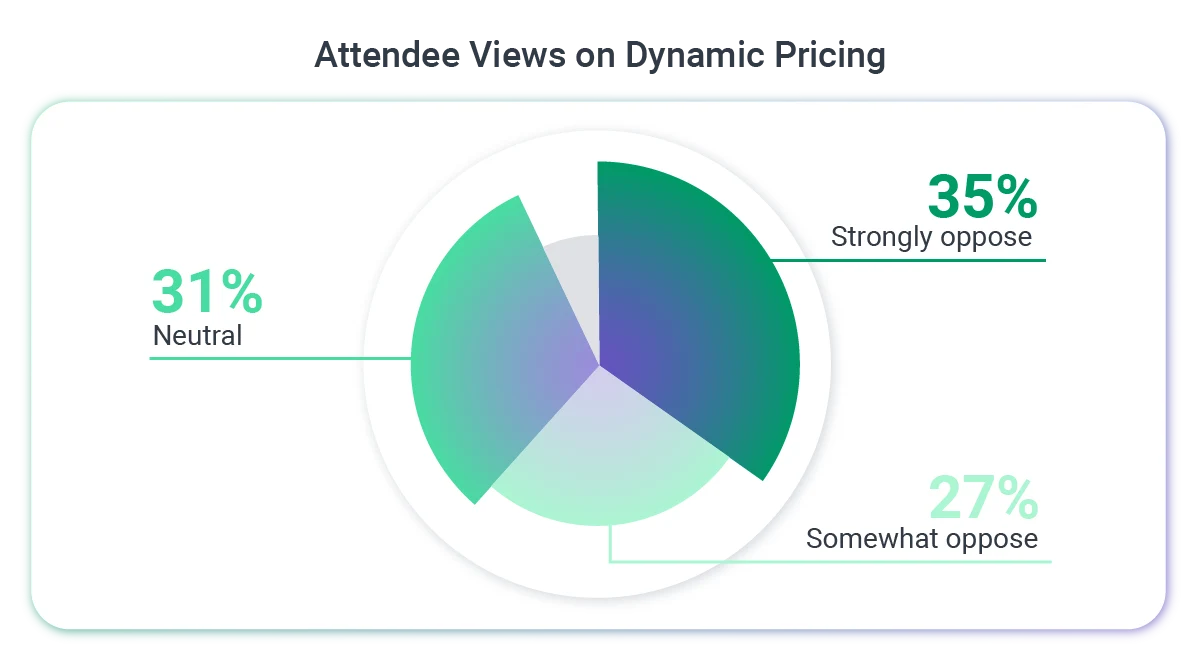
- Attendee Views on Dynamic Pricing:
- Strongly oppose: 35%
- Somewhat oppose: 27%
- Neutral: 31% [FIXR]
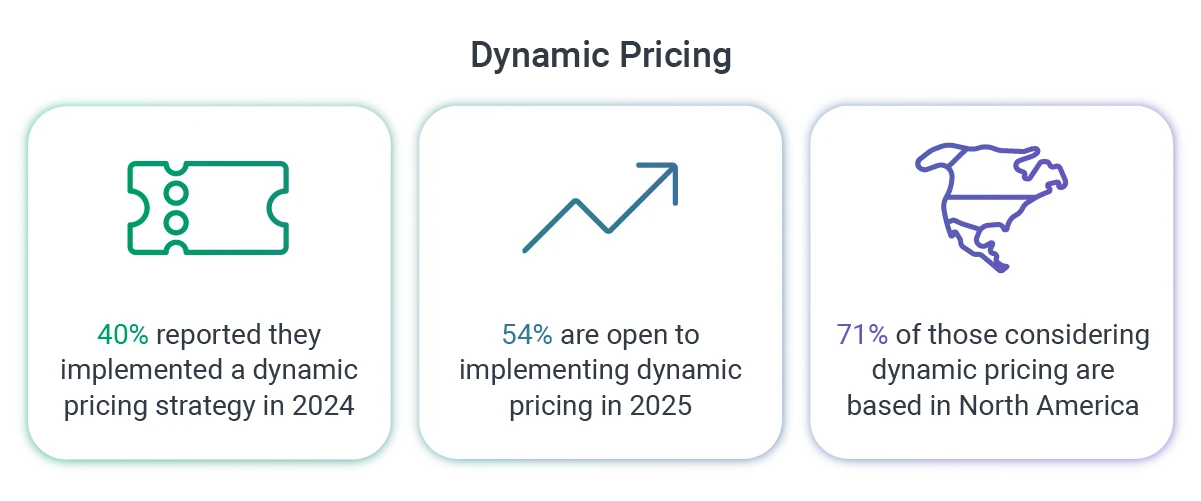
- Dynamic Pricing Adoption
- 40% implemented dynamic pricing strategies in 2024.
- 54% are open to implementing dynamic pricing in 2025.
- 71% of those considering dynamic pricing are based in North America.
[Eventex]
- Dynamic Pricing Drives Revenue:
Dynamic pricing delivers an average 30% revenue increase. [Global Growth Insights]
- Subscription-Based Ticketing:
19% of frequent users prefer subscription-based ticketing. [Global Growth Insights]
Ticket Technology
Technology continues to redefine how tickets are sold, managed, and experienced. From cloud-based event platforms to mobile-first ticketing and emerging interactive tools, innovation is driving faster adoption, higher engagement, and streamlined operations across the industry.
- Event Management Software Market
The event management software market was valued at $11.52 billion in 2025 and is expected to surpass $36.42 billion by 2035, expanding at a 12.2% CAGR. This reflects a strong investment trend in data-driven, hybrid-ready, and automation-enabled tools. [Research Nester]
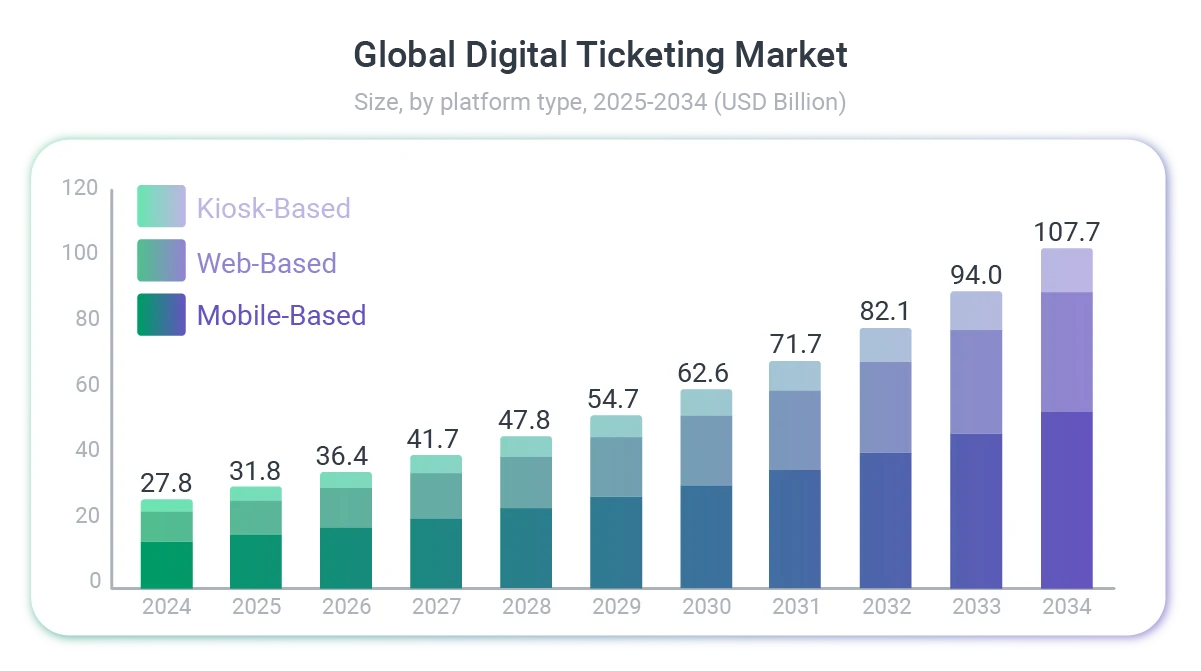
- Global Digital Ticketing Market Forecast:
The global digital ticketing market is projected to reach $107.7 billion for mobile-based platforms, $94.0 billion for web-based platforms, and $71.7 billion for kiosk-based platforms by 2034, growing at an overall CAGR of around 7%. [Market.us]
- Cloud-Based Event Software
By 2035, the cloud-based segment will dominate the event management software market with a 70% share, fueled by virtual events and cost savings. The event organizers & planners segment will account for 40%, as more companies outsource planning. [Research Nester]
- Benefits of Event Tech:
Event tech pays off: 89% of users save 200 hours a year, and 92% say it drives better results and engagement. [Research Nester]
- Favorite Way to Buy Tickets:
72% of consumers prefer purchasing tickets on mobile devices, reflecting a strong shift toward mobile-first platforms. Ticketing companies prioritizing mobile UX, wallet integrations, and contactless entry will capture the majority of new sales. [Statista]
- Preferred Type of Event Payments:
46% of live event attendees prefer cashless transactions, valuing speed and convenience. This shift supports the adoption of digital wallets, NFC, and QR-based systems for smoother event access and purchases. [Dataintelo]
- Most Important Feature of a Ticketing Platform:
66% of attendees and 66% of organizers ranked a fast, frictionless booking process as the most important feature of a ticketing platform. [Eventex]
- Digital Ticketing & Mobile App Usage:
More than 68% of event ticket buyers use mobile apps, while 42% of global events now offer digital ticketing solutions. [Global Growth Insights]
- Preference for Contactless & QR Access
The online ticketing market is being reshaped by mobile adoption and digital transformation with 55% preferring contactless or QR-code entry. [Global Growth Insights]
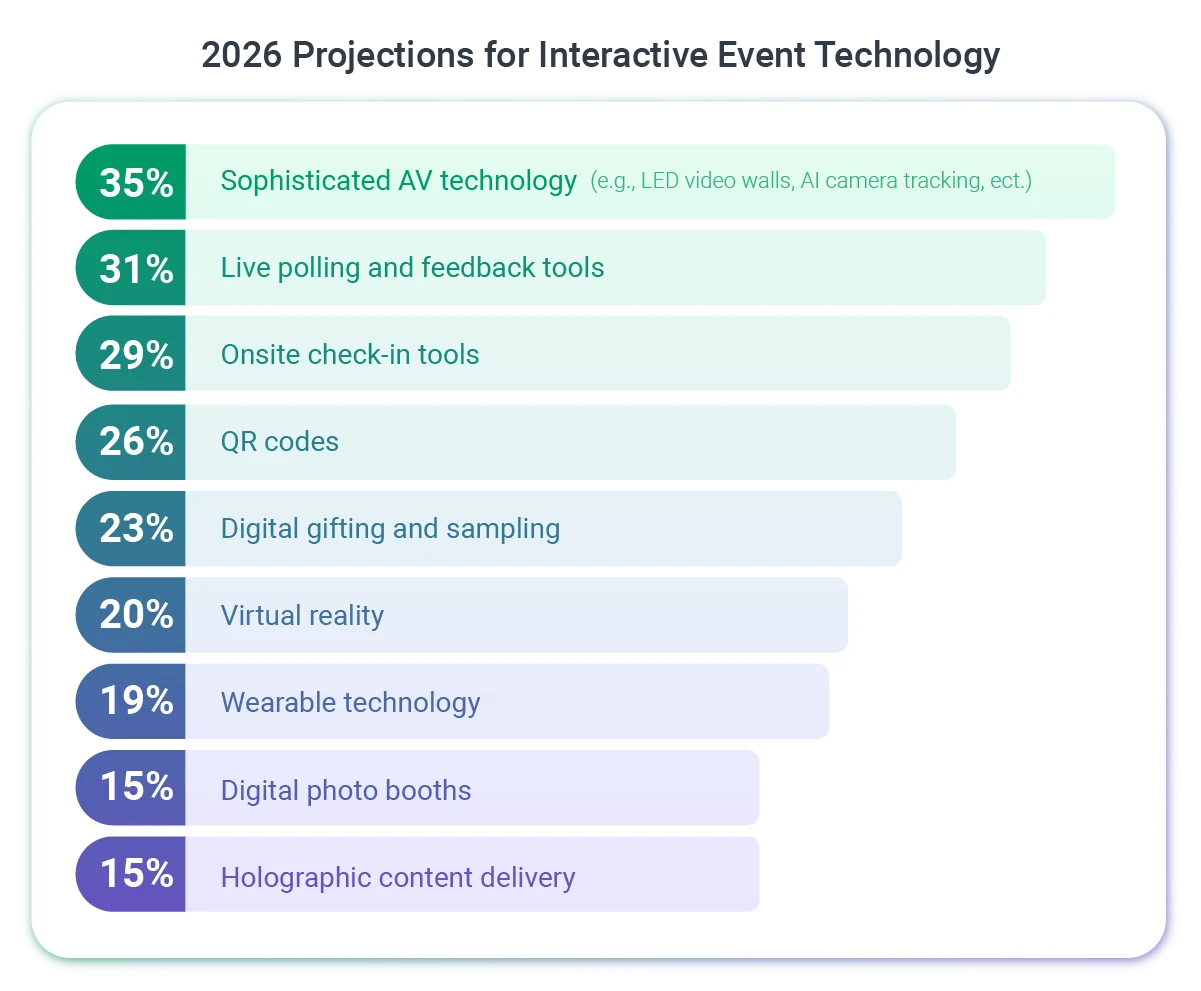
- Interactive Event Technology (2026 Projections):
By 2026, event professionals plan to adopt a diverse range of technologies to elevate attendee engagement and streamline operations. These include advanced audiovisual tools like LED walls and AI camera tracking, interactive polling and feedback systems, digital check-in solutions, and emerging innovations such as wearable tech, digital gifting, and holographic content delivery. [American Express Global Meetings & Events Forecast 2026]
AI in Ticketing
Artificial intelligence isn't just a buzzword as it's quickly becoming central to how events are planned, priced, and personalized. From creative concepting to post-event analytics, AI is transforming every stage of the attendee journey and adoption rates are accelerating fast.
- AI is the Trend to Watch:
44% of event professionals believe AI will be the biggest trend in events this year. [Swoogo]
- AI Adoption is Accelerating:
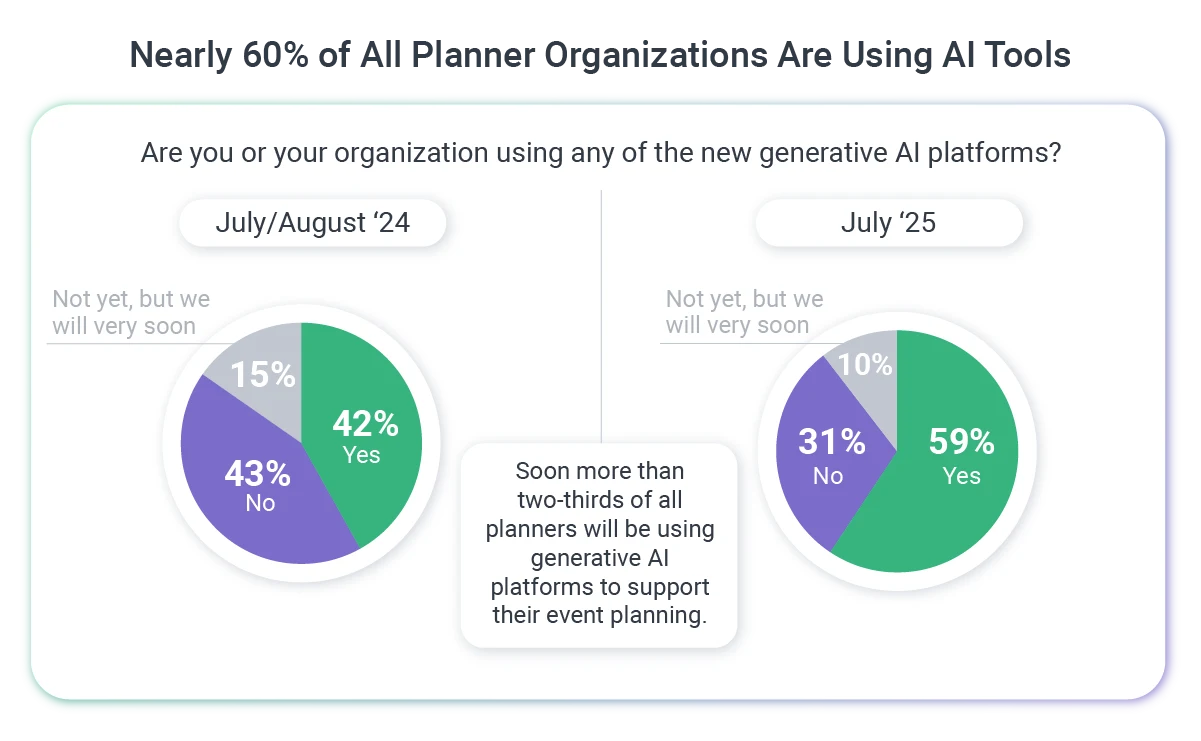
59% of planners are now using generative AI platforms—up 17% from last year. [Cvent]
- Usage plans for AI in 2026:
- 50% – AI-powered matchmaking for attendees and sponsors
- 45% – Generating creative event concepts/themes
- 42% – Content creation
- 40% – Tracking attendee engagement
- 35% – On-site usage
- 30% – Post-event evaluation
[American Express Global Meetings & Events Forecast 2026]
- Global Meetings & Events Forecast 2026:
- 35% believe AI will be "everywhere."
- 42% plan to use AI for post-event evaluation; 40% will use data and ROI tracking tools.
[American Express Global Meetings & Events Forecast 2026]
- AI Adoption in the Events Industry:
- 63% of event professionals adopted AI in 2024 (up from 65% who planned to).
- 83% believe AI is improving their job performance.
- 78% plan to increase AI use in 2025.
- ChatGPT was cited as the most popular AI tool.
[Eventex]
- The majority of Event Planners are using AI Tools [Northstar Meetings]:
Events Stats
Live and corporate events remain one of the most effective ways to build connections, drive loyalty, and generate business growth. Despite budget challenges, both organizers and attendees show strong confidence in the power and future of in-person experiences.
- Why Events Matter:
- 71% of event professionals say they use events equally for acquiring and keeping customers.
- 21% of event organizers say their events are used mostly for customer retention.
- Companies using events primarily for customer retention are 13% more likely to have an average year-over-year growth rate of more than 10%. [Swoogo]
- Ticket Sales Timing:
A large percentage of tickets — approximately 85% — are sold within the week of an event. [FIXR] - Event Volume is Growing:
41% of event professionals are hosting more events in 2025, while only 6% are hosting fewer—94% are hosting at least the same number or more. [Swoogo]
- Technology Enhances the Experience:
44% of attendees say technology that simplifies the event experience is a top priority for satisfaction.[Freeman]
- Events Increase Trust:
77% of people trust brands more following face-to-face interactions at live events. [Cvent]
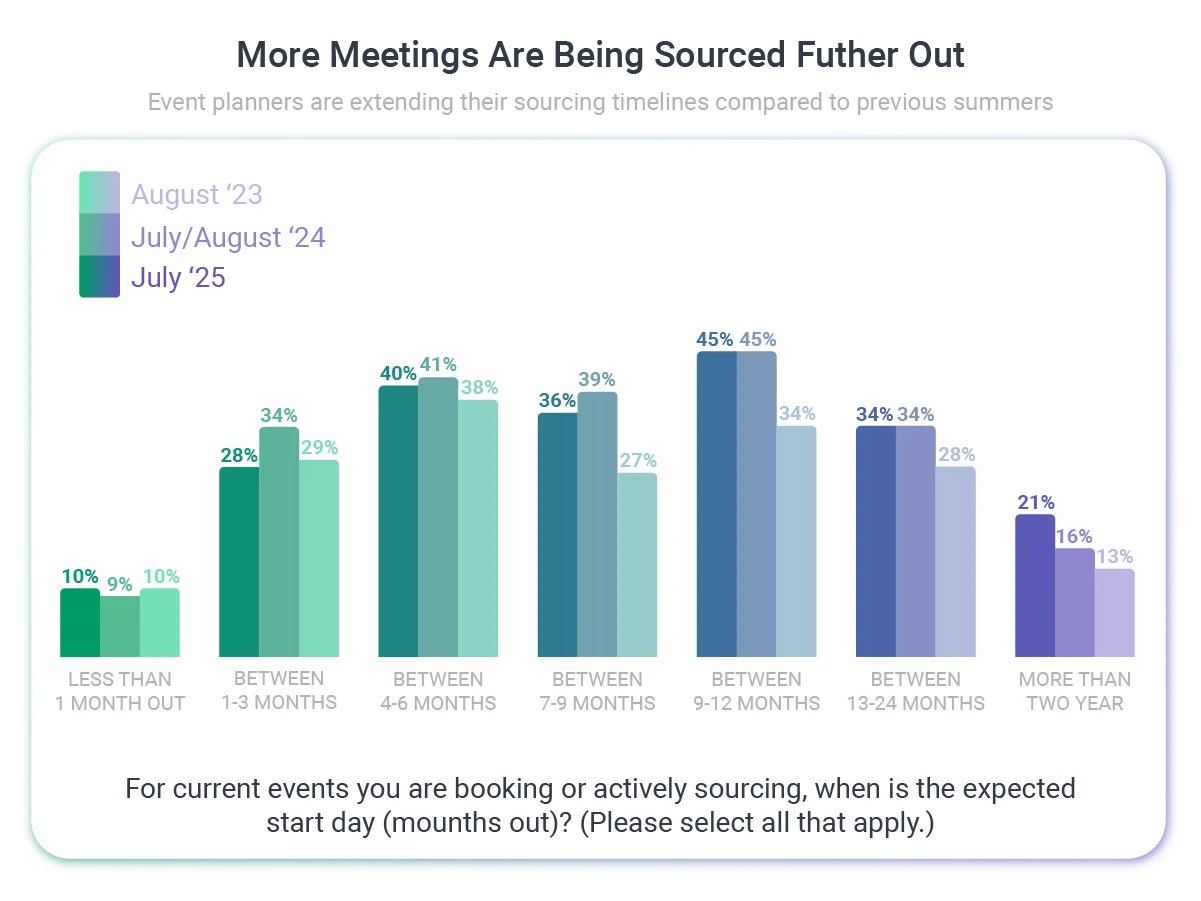
- More meetings are being sourced further out than in previous years [Cvent]:
- What's the Event Industry Vibe?
82% of North American and 90% of European planners report feeling positive about the event industry's future. [Cvent]
- What Makes Events Better:
57% of attendees would like event summary information.[Cvent]
- Events in Focus (2025 Overview) [Eventsair]:
- 87.1% of event planners cited budget constraints as their top challenge
- 63.5% ranked conferences as the most significant event type.
- Most common event tech investment: $10K–$30K annually.
- 95.4% rated in-person events as "very" or "moderately important."
- 79.7% said content quality is the most important factor for events.
Ticketing Challenges
Even as the ticketing and events industry expands, organizers face ongoing challenges. The biggest hurdles in 2025 center on engagement, integration, and creating events that reflect evolving attendee values.
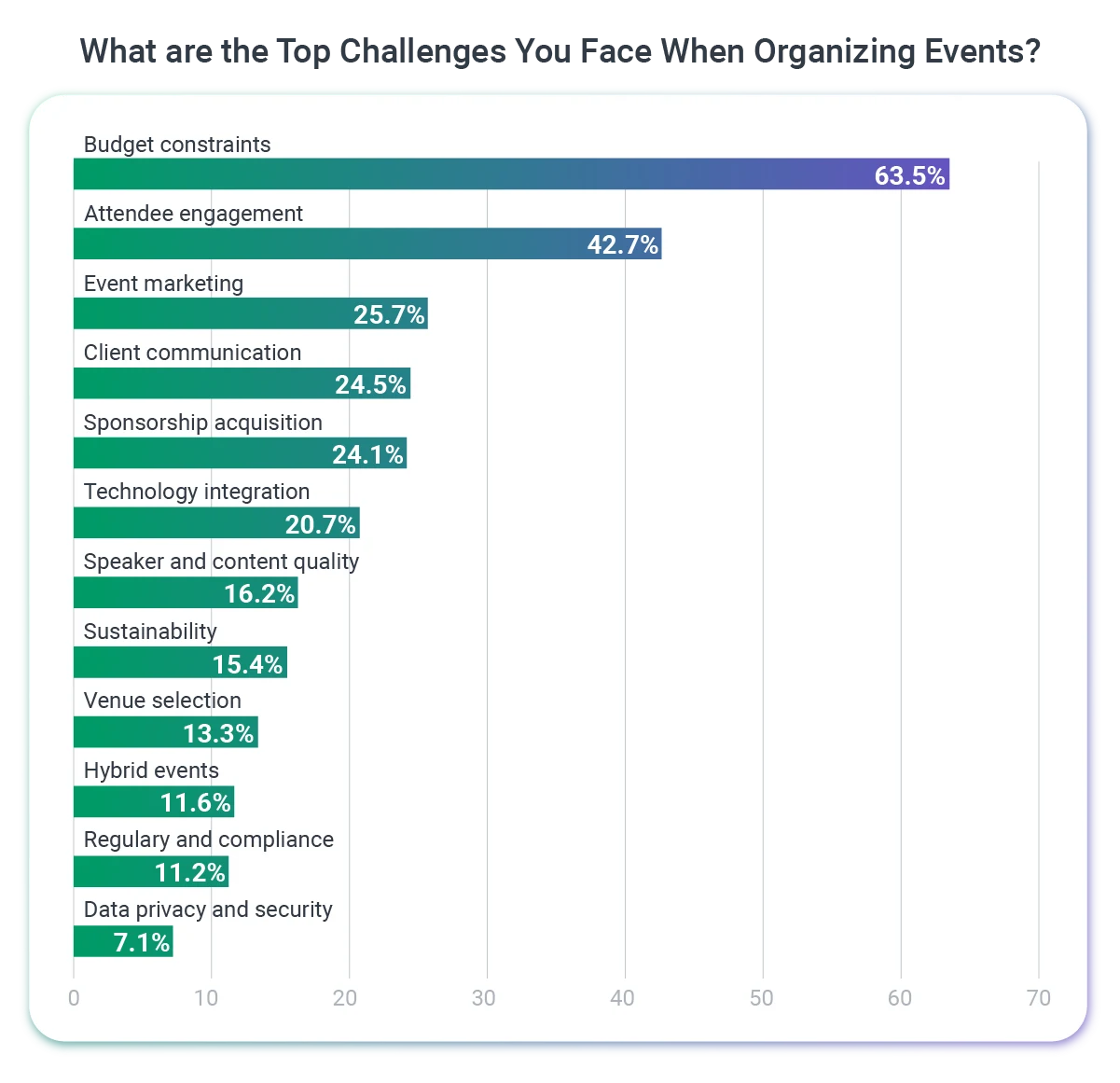
- Top Challenges in Event Organization
The most common organizer challenges include:
- Budget constraints
- Time and resource limitations
- Venue and vendor security
[eventsair]
- Technology Challenges:
27% of planners say integrations are a challenge in deploying event technology. 27% of planners also say a lack of buy-in from leadership is a challenge in deploying event technology. [Amex GBT]
- Finding Attendees can be Problematic:
21% of event professionals say getting the right attendees in the door is their top challenge for 2025. This is the #2 challenge, behind boosting attendee engagement and getting budget and buy-in (both tied for #1). [Swoogo]
- Challenges in Boosting Engagement:
22% of event professionals say boosting attendee engagement is their biggest challenge for 2025. This is the #1 challenge, tied with getting budget and buy-in [Swoogo].
Opportunities
As ticketing and event platforms evolve, new opportunities are emerging for organizers to deepen customer loyalty, enhance engagement, and capture shifting audience preferences. Data-driven personalization, loyalty programs, and immersive experiences are shaping the next phase of growth in live events.
- Loyalty Programs Lead to Retention:
Event organizers credit a 23% higher customer retention due to loyalty program integration, not surprising given the 31% of customers saying loyalty programs influence their buying decisions.
- User Reviews are King:
47% of ticket buyers rely on user-generated reviews when purchasing. [Global Growth Insights]
- Top Element of a Positive Event:
64% of event attendees say immersive experiences is the #1 element for a positive event experience. [Freeman]
- Online Capability is a Game-Changer:
84% of planners are more likely to select a venue for their simple meeting if it can be booked online. [Cvent]
- Turning Attendees into Brand Advocates
Americans who attend live events are more than twice as likely to participate in branded experiences compared to the general population. These individuals are highly engaged and open to brand interactions, particularly via Instagram and TikTok for concerts and performing arts, and television for sports fans. [Provoke Insights] - Data Analytics Lead to Personalization
Platforms that use data analytics and AI for personalized event recommendations report higher engagement and repeat attendance, reinforcing personalization as a key factor in event choice. [PW Consulting]
Consumer Behavior & Demographics
- Audience Buying Behavior (Demographics):
Groups that are buying fewer event tickets:
- Females: 47%
- Live in rural areas: 47%
- Parents: 33%
- Gen Z: 30%
- Millennials: 30%
- Men: 28%
- HHI $150K+: 28–46% range
[Provoke Insights]
- Live Events Becoming an Exclusive Experience:
Only 14% of Americans attended a concert or performing arts event and 11% attended a professional sporting event in the past month. Attendance is significantly higher among wealthier individuals, urban dwellers, and younger generations (Gen Z, Millennials). Rising ticket prices and overall costs have made live events feel increasingly exclusive. [Provoke Insights] - Who Is More Likely to Attend Live Events:
- Household income $150K+: 17%
- Parents: 15%
- Men: 15%
- Millennials: 14%
- Gen Z: 14%
- Urban residents: 14%
[Provoke Insights]
- Booking Behavior Trends:
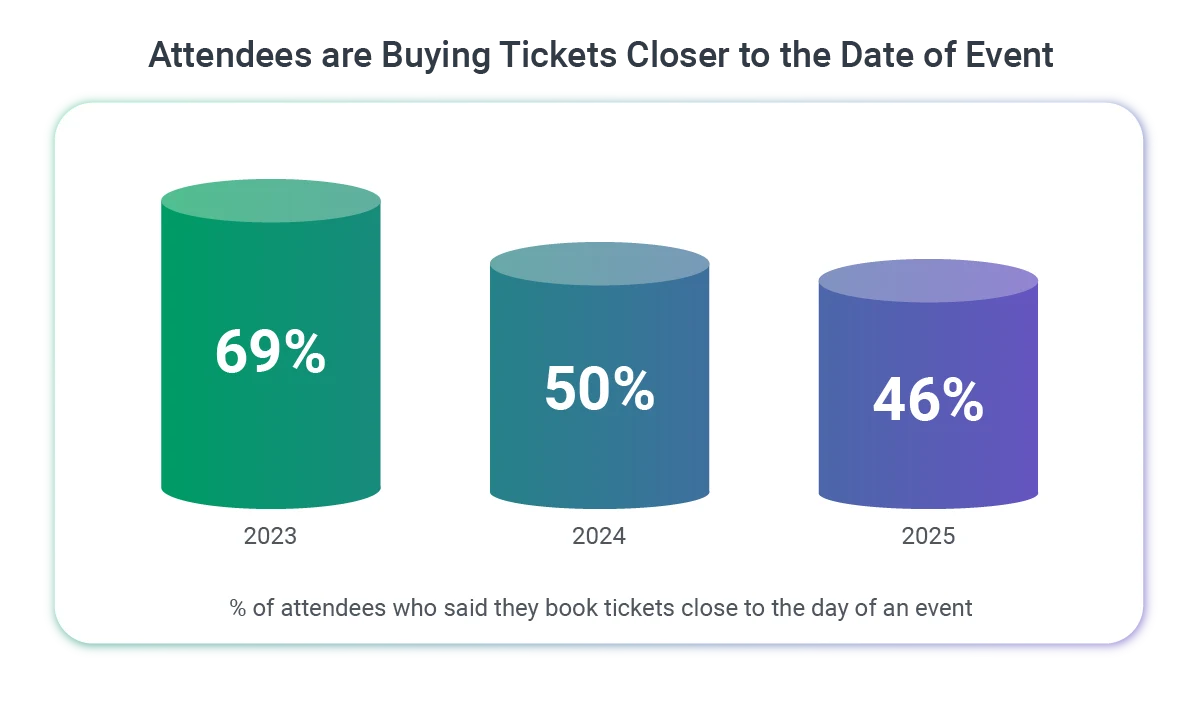
The share of attendees booking close to the day of the event dropped from 69% (Jan 2023) to 46% (Jan 2025) — a 50% decline in last-minute ticket buying. [FIXR]
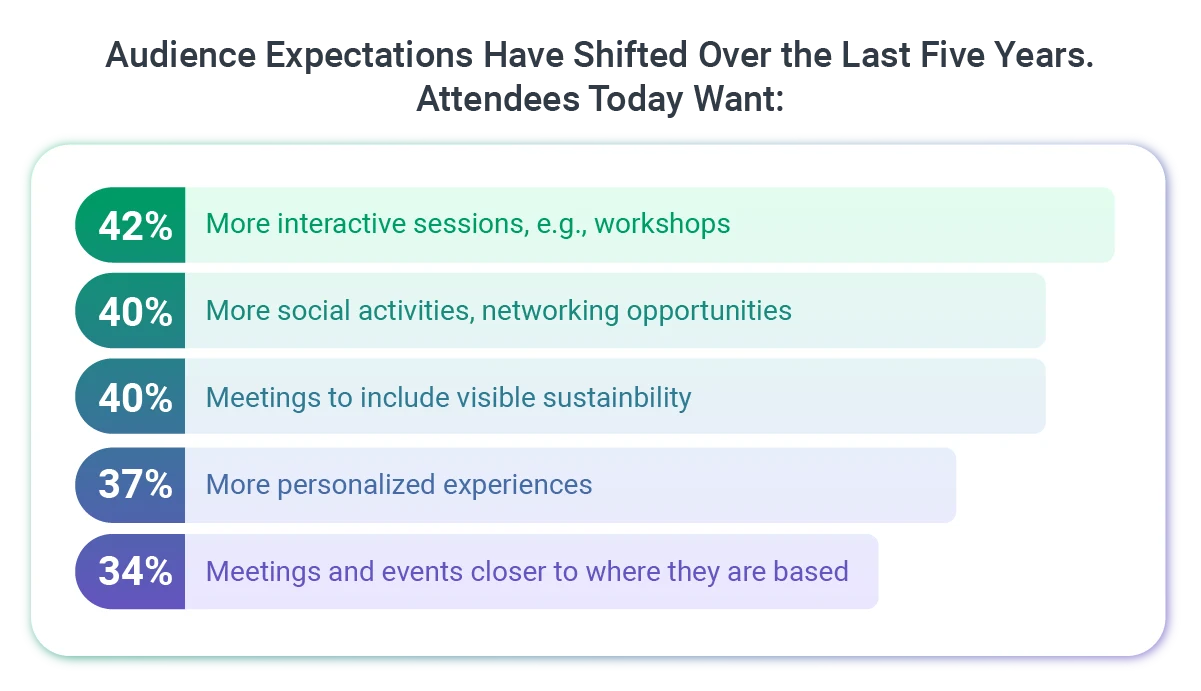
- Attendee Expectations (Shift Over the Last Five Years):
Attendees now want:
- 42% – More interactive sessions (e.g., workshops)
- 40% – More social networking opportunities
- 40% – Visible sustainability measures
- 37% – More personalized experiences
- 34% – Events closer to where they live/work
[American Express Global Meetings & Events Forecast 2026]
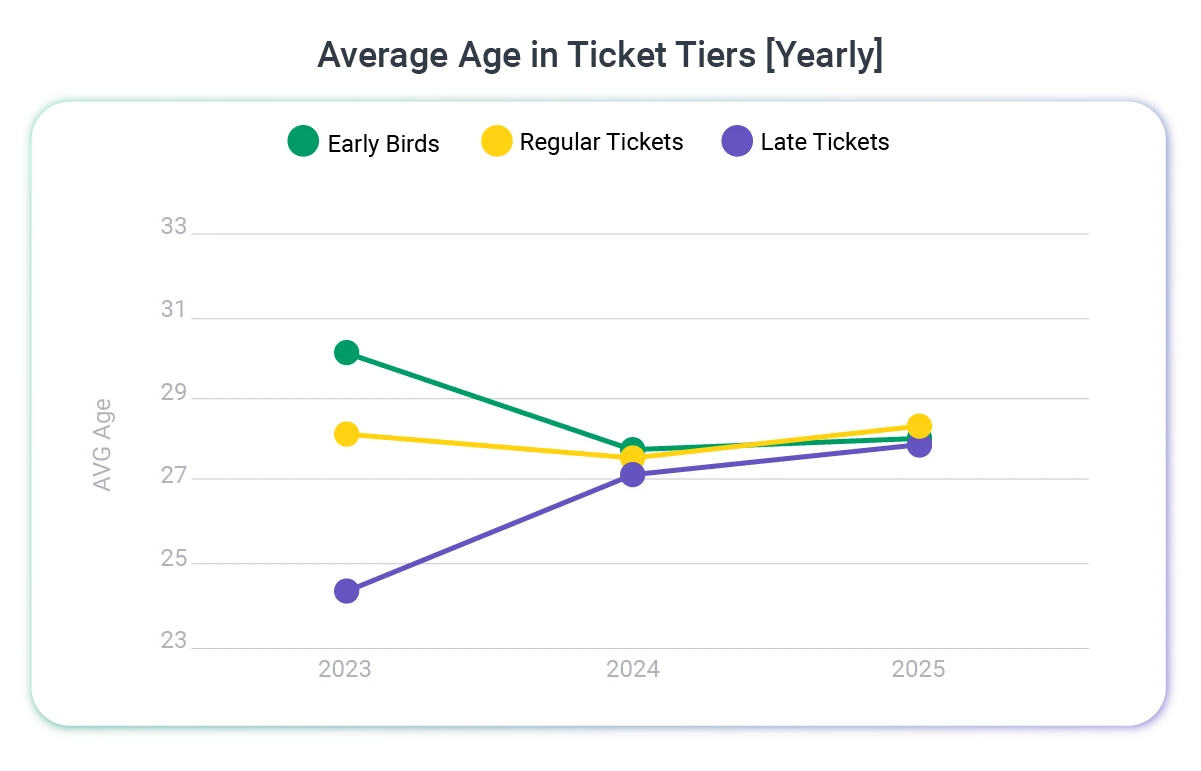
- Average Ticket Buyer Age by Tier:
In an analysis of almost 2,500 events from between 2023 and 2025, a study found:
- Early Birds (2023): Average age 27
- Regular Tickets (2024): 29–31
- Late Tickets (2025): 33
Shows a steady rise in buyer age year-over-year, reflecting affordability concerns.
[Weeztix]
- Ticketing Market by Event Type:
- Sports: 32% of total online ticket transactions; 40% of fans prefer digital booking.
- Music: 27%; 62% of Gen Z prefer online booking.
- Live Shows: 18%; 48% of urban millennials prefer weekend entertainment.
- Movies: 16%; 70% of bookings done via mobile apps.
- Other/Niche Events: 7%; 53% of bookings influenced by email or digital reminders.
[Mordor Intelligence]
- Ticketing Market by Age Group:
- 16–24: 21% of purchases, 66% via social links.
- 25–34: 34% share, 72% use mobile apps.
- 35–44: 19% share, 58% prefer bundled deals.
- 45–54: 14% share, 47% value secure payment.
- 55+: 12% share, 61% value accessibility and simple design.
[Mordor Intelligence]
Ticketing Trends
Event professionals are prioritizing innovation, sustainability, and attendee experience more than ever. The industry's 2025–2026 trends highlight a growing focus on technology integration, inclusivity, and creating meaningful, measurable impact across every event type.
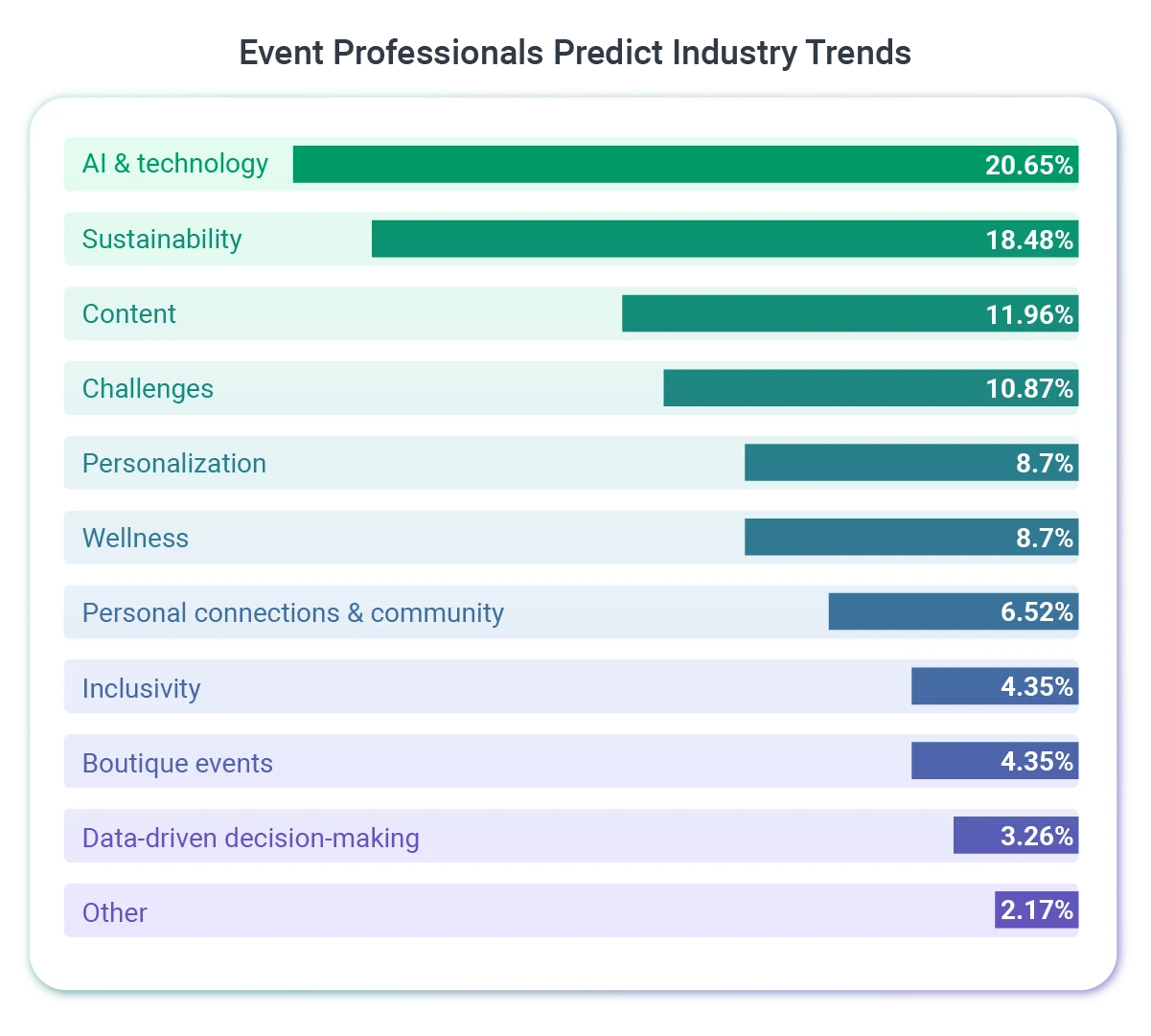
- Top event industry professionals across the globe predict their top 3 event Industry Trends for the upcoming year: [Eventex]
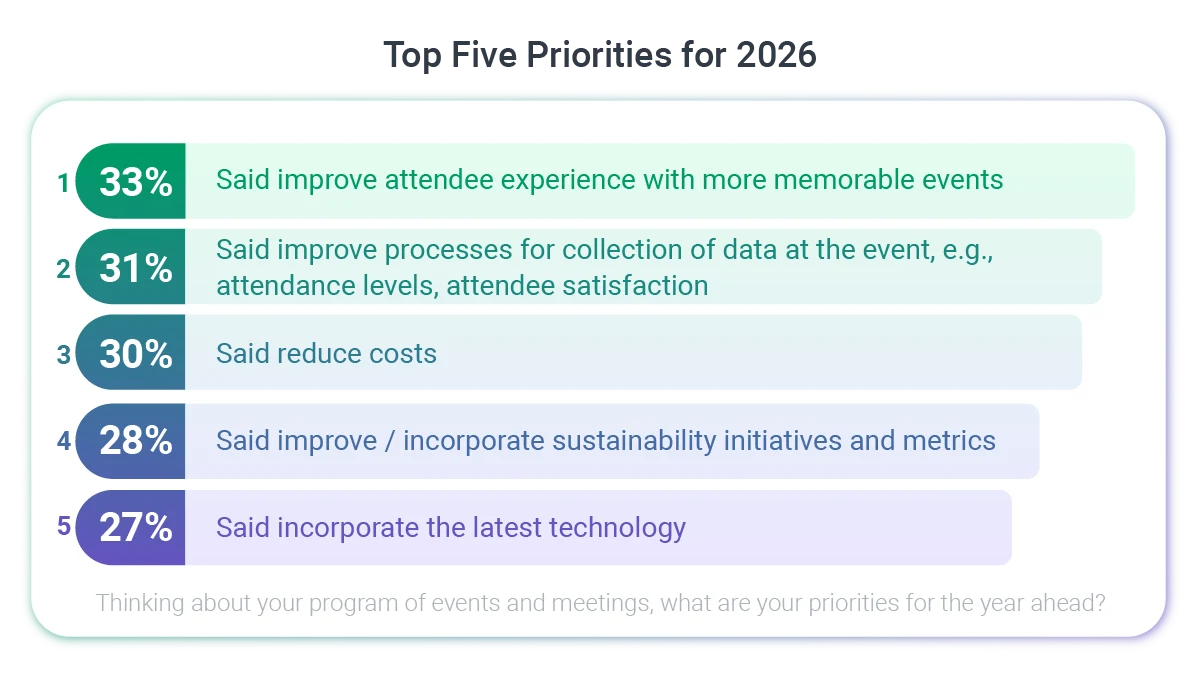
- Top Priorities for 2026 (Meetings & Events):
- 33% – Improve attendee experience with more memorable events
- 31% – Improve data collection (attendance, satisfaction)
- 30% – Reduce costs
- 28% – Improve/incorporate sustainability initiatives and metrics
- 27% – Incorporate the latest technology
[American Express Global Meetings & Events Forecast 2026]
Green & Inclusive Events
Modern events are being redefined by a commitment to sustainability and inclusion, with organizers increasingly prioritizing accessibility and eco-friendly practices.
- Accessible Events are Priority:
According to the World Health Organization, 1.3B people (16% of world's population) experience significant disability. So if your events aren't accessible, you're likely excluding a large part of your audience. [World Health Organization]
- Sustainability is at Top of Mind:
34% of attendees consider an event's sustainability practices before purchasing tickets. Eco-conscious audiences are shaping event policies, pushing venues and organizers to adopt paperless and carbon-neutral initiatives. [Eventbrite]
- Meeting Professionals Adopting Best Practices:
45% of meeting professionals surveyed have defined sustainability goals and 55% include inclusion and culture considerations. [American Express Global Meetings & Events Forecast 2026]
Hybrid & Corporate Events
After years of experimentation with virtual and hybrid formats, the events industry is shifting decisively back toward in-person experiences. While hybrid tools still play a supporting role, engagement and travel confidence are driving renewed investment in live, face-to-face meetings.
- In-Person is Still Number One:
In-person meetings and events are the #1 choice for event format, with 59% saying they run in-person events only. (Amex GBT)
- In-Person Attendees Take Priority:
48% of event professionals say that hybrid events take away from the event experience for in-person attendees. [Swoogo]
- Hybrid Events are Losing Traction:
- Companies hosted 25% fewer hybrid events on Swoogo in 2024. [Swoogo]
- Almost half (47%) of event organizers have hosted hybrid events in the past, but have no plans to host them in the future. [Swoogo]
- Low Engagement is Damaging Hybrid:
The #1 reason why event professionals are done with hybrid events: engagement isn't high enough (54%). [Swoogo]
- Corporations Still Use Hybrid Tools
Corporate and association meetings are expected to grow steadily through 2026, supported by renewed travel budgets and hybrid collaboration tools. [American Express Global Meetings & Events Forecast 2026]
Concerts & Live Shows
Concerts and live entertainment continue to lead the global ticketing industry, even as audience habits evolve. While large festivals face modest declines, rising prices, smaller venues, and strong demand for premium experiences keep the live music market thriving.
- Music and Live Shows Dominate:
Movie, music, and live shows dominate online ticketing with 55% of sales (USD 31.18B in 2024), growing at a 3.9% CAGR. [Business Research Insights]
- Concerts Come Out on Top:
38% of all online ticketing volume comes from music concerts. [Global Growth Insights]
- A Drop for Festivals and a Pickup for Clubs:
Festival ticket sales dropped 5% year over year, while club nights increased 7%.
Despite fewer sales, festival ticket revenue rose 3% due to higher pricing. Price resilience indicates strong demand for premium experiences even amid shifting preferences toward smaller venues. [Weeztix]
- Concert & Performing Arts Attendance:
Only a small percentage of Americans attended a concert or theater performance in the last month. Those most likely to attend include:
- Household income $150K+: 17%
- Millennials: 16%
- Urban residents: 7% more likely
[Audience Republic]
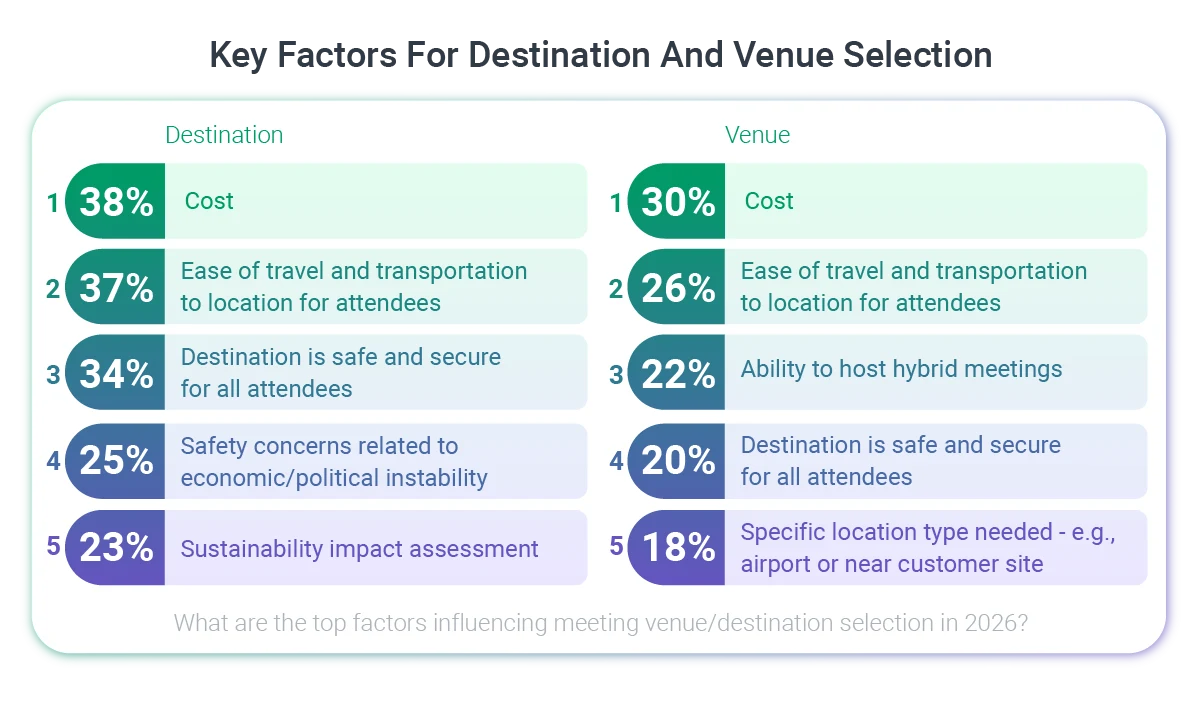
- Venue & Destination Selection Factors (2026):
- 37% – Ease of travel and transport
- 25% – Safety and security
- 25% – Economic/political stability
- 23% – Sustainability impact assessment
Venue priorities:
- 26% – Ease of travel for attendees
- 20% – Safety and accessibility
- 18% – Sustainability impact
[American Express Global Meetings & Events Forecast 2026]
Sports Ticketing
Sports events remain a major driver of ticketing revenue, reflecting the global demand for live experiences and digital ticketing innovation.
- Sports Ticket Market:
The global Sports Events Tickets market was valued at $35.52B in 2025 and is projected to reach $104.53B by 2033, growing at a 15.1% CAGR. [Allied Market Research]
- Sports Ticketing Shows Steady Growth:
Sports make up 30% (USD 17.01 billion) of the Online Event Ticketing Market, maintaining steady year-over-year growth. [Business Research Insights]
Conclusion
These statistics paint a picture of an industry that's growing fast and changing even faster. Mobile-first platforms, AI-powered tools, and frictionless digital experiences aren't on the horizon – they're already here, and audiences expect them. The opportunity is massive, but so is the pace of change.
The platforms that thrive over the next five years will be the ones that adapt quickly and intentionally. If you're building or scaling in ticketing and events, staying on top of these trends makes all the difference. Whether you need support with integrations, technology strategy, or just figuring out what comes next, we'd love to help you get there.