
Building Fan Engagement Apps: Technology Stack and Best Practices for Sports Teams
From technology stack choices to the features that justify the build cost, here is what sports organizations need to know before development begins.

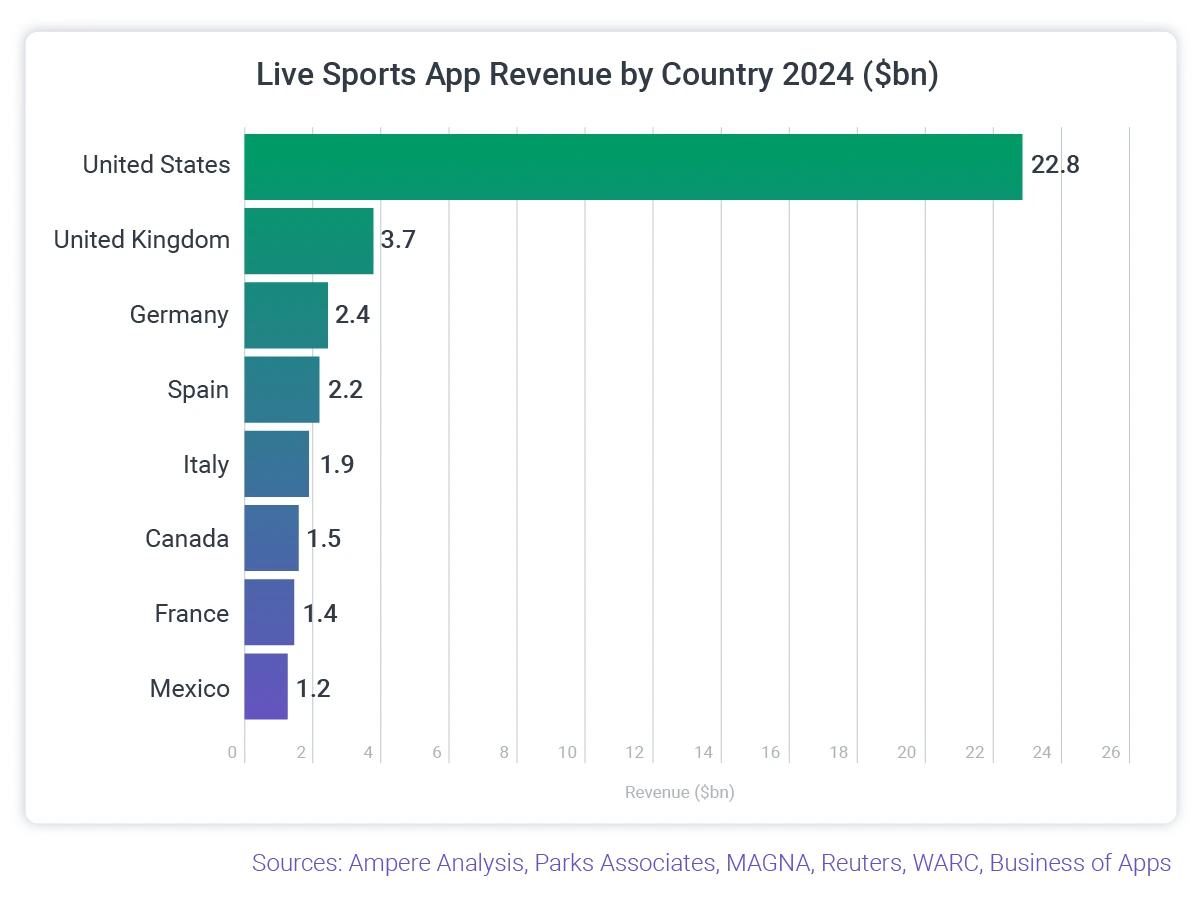
Sports fans are some of the most brand-loyal consumers in any industry. They buy season tickets through losing streaks, pass team allegiances down through families, and plan their weekends around fixture schedules. And yet, sports apps consistently rank among the most downloaded and least retained apps on any given phone.
The disconnect is not hard to spot once you look at it from a fan's perspective. An app gets downloaded in the lead-up to a big game, maybe for the schedule, maybe because the team sent a push notification about an exclusive offer. Match day arrives, the app takes too long to load on an overloaded stadium network, the notifications are generic, and the personalization amounts to little more than the team's logo on a splash screen. By the following week, it is sitting on page four of the app library, and within a month, it is gone.
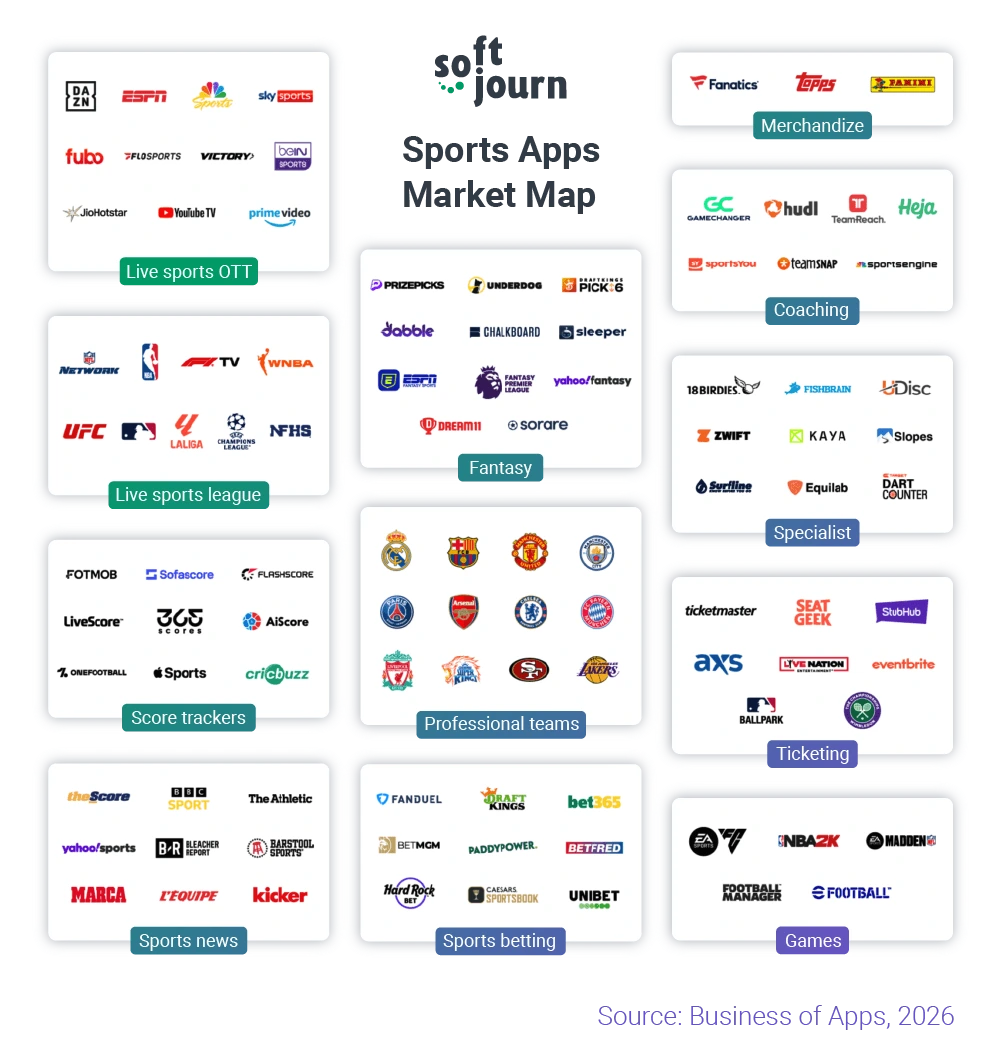
This article is not a universal case against fan apps. The ones that work, really work and easily become part of how fans experience their team, whether they are at the stadium or watching from another time zone. This article builds on topics from our Guide to Sports App Development, which covers what it takes to build a successful and useful sports app.
The difference between great apps and the forgettable ones comes down to a set of technical and product decisions made long before launch, many of which are easy to get wrong when you are focused on the feature list rather than the fans' actual behavior.

What follows is a look at those decisions: what causes retention problems, what the architecture of a successful sports app typically looks like, and where teams typically build themselves into corners they could have avoided.
What Fans Actually Want From an App (And When They Want It)
Fan behavior around a sports app is not consistent throughout the year, and building as if it is creates the first major product problem. Demand is intensely spiky. On match day, especially for high-stakes games, usage can jump by an order of magnitude compared to a quiet Tuesday in the off-season. The features fans reach for in those two contexts are almost completely different.
On match day, the priorities are speed and immediacy. Fans want live scores, real-time stats, and a quick access control mobile application to reduce friction at the venue: mobile tickets, in-seat ordering, parking information, and gate wait times.
If any of those features are slow to load or buried under two menus, fans abandon them and find another way. A stadium with 60,000 people all hitting the same app simultaneously is not a forgiving environment for an architecture that was not built with that load in mind.
Off match day, the priorities shift toward content and connection. Fans want injury updates, transfer news, behind-the-scenes video, and access to communities of other supporters. They want to feel closer to the team during the weeks when nothing is scheduled.
This is also when loyalty programs, merchandise connections, and personalized content recommendations do their most useful work, because fans have time to actually engage with them rather than just trying to find their seat.
The distinction matters for product decisions because teams often try to serve both contexts with the same feature set and end up serving neither particularly well. A notification strategy calibrated for match day frequency will drive off-season uninstalls. A content-heavy design optimized for browsing will feel clunky when a fan is standing at a turnstile trying to pull up a QR code in three seconds.
Worth knowing before you finalize your feature list:
- Match day features need to be accessible in two taps or fewer, work on congested networks, and handle sudden traffic spikes without degrading
- Off-season features can afford more depth, but only if the content pipeline to support them actually exists
- Loyalty and rewards span both contexts, but need a clear trigger design: what earns points, when fans are reminded, and how redemption works has to feel natural in both situations
Location-based tools like geofencing add another layer here, enabling real-time venue notifications, parking guidance, and targeted offers the moment a fan arrives. How Geofencing Benefits Live Event Marketing Strategies is worth reading if your app roadmap includes any location-based features. Softjourn built a custom in-seat mobile ordering solution for a sports event client, completing the project in six weeks by building on an existing API. The result reduced queue time and kept fans in their seats through more of the action.
The Features That Drive Uninstalls
Most sports apps are not uninstalled because they lack features. They are uninstalled because the features they have are poorly executed, and fans have a low tolerance for apps that waste their time or attention.
A few patterns show up repeatedly:
Notification overload is the fastest path to the uninstall screen. Push notifications are genuinely useful when they carry information a fan could not easily get elsewhere: a last-minute lineup change, a flash ticket offer, a match kickoff reminder. They become destructive when they are used as a general-purpose marketing channel. Fans who opted in for match alerts do not want promotional messages about merchandise on a Wednesday morning. Once trust in the notification channel is broken, fans either disable them entirely or remove the app. Either way, the engagement value of that channel is gone.
Slow load times at exactly the wrong moment is the second major driver. Match day is when an app needs to perform best, and it is also when conditions are worst: thousands of users, congested stadium Wi-Fi, and fans with zero patience for a spinner. An app that takes five seconds to show a mobile ticket or crashes when 40,000 people open it simultaneously will be remembered for that failure far longer than for anything it does well. The technical decisions that prevent this, discussed later in this article, have to be made during architecture planning, not patched in after launch.
Personalization that is not actually personal is a subtler problem but a persistent one. Many apps display a fan's name on the home screen and call it personalization. What fans notice is whether the app knows anything useful about them: their favorite players, their usual section, and whether they attend mostly home games or follow the team remotely. When the content and recommendations feel generic, the app feels generic, and there is no reason to open it over a browser search or a social feed.
Broken or incomplete third-party connections round out the list. An app that links to mobile event ticketing but requires a separate login, or that shows a loyalty points balance with no clear way to redeem them, creates friction at exactly the moments when friction has the highest cost. Fans who hit a dead end once rarely give the app a second chance to get it right.
The common thread across all of these is that they are not design failures in the visual sense. The screens can look polished, and the feature list can be impressive. The failures happen in the product logic: what gets sent when, what loads under pressure, whether the data actually powers anything meaningful, and whether the connections between systems were finished rather than just started.
The Technical Decisions That Cause These Problems (And How to Avoid Them)
Most of the failure patterns described above have technical roots. Notification abuse is partly a product strategy problem, but it is also an infrastructure problem: teams that lack proper audience segmentation tools default to broadcasting to everyone because targeted sending requires data pipelines they never built.
Slow match-day load times trace back to architecture decisions made when nobody was thinking about 50,000 concurrent users. Broken connections usually mean the project ran out of time or budget before the links between systems were actually tested under real conditions.
These are the decisions worth getting right before a line of code is written.
1. Native, Cross-Platform, or PWA?
The choice of development approach shapes almost everything downstream: performance ceiling, development cost, time to market, and how much of the device's hardware the app can actually use.
Native mobile development (Swift for iOS, Kotlin for Android) gives the best performance and the deepest access to device features like biometrics, NFC for ticketing, and camera-based scanning. It also costs roughly twice as much to build and maintain, since you are running two separate codebases.
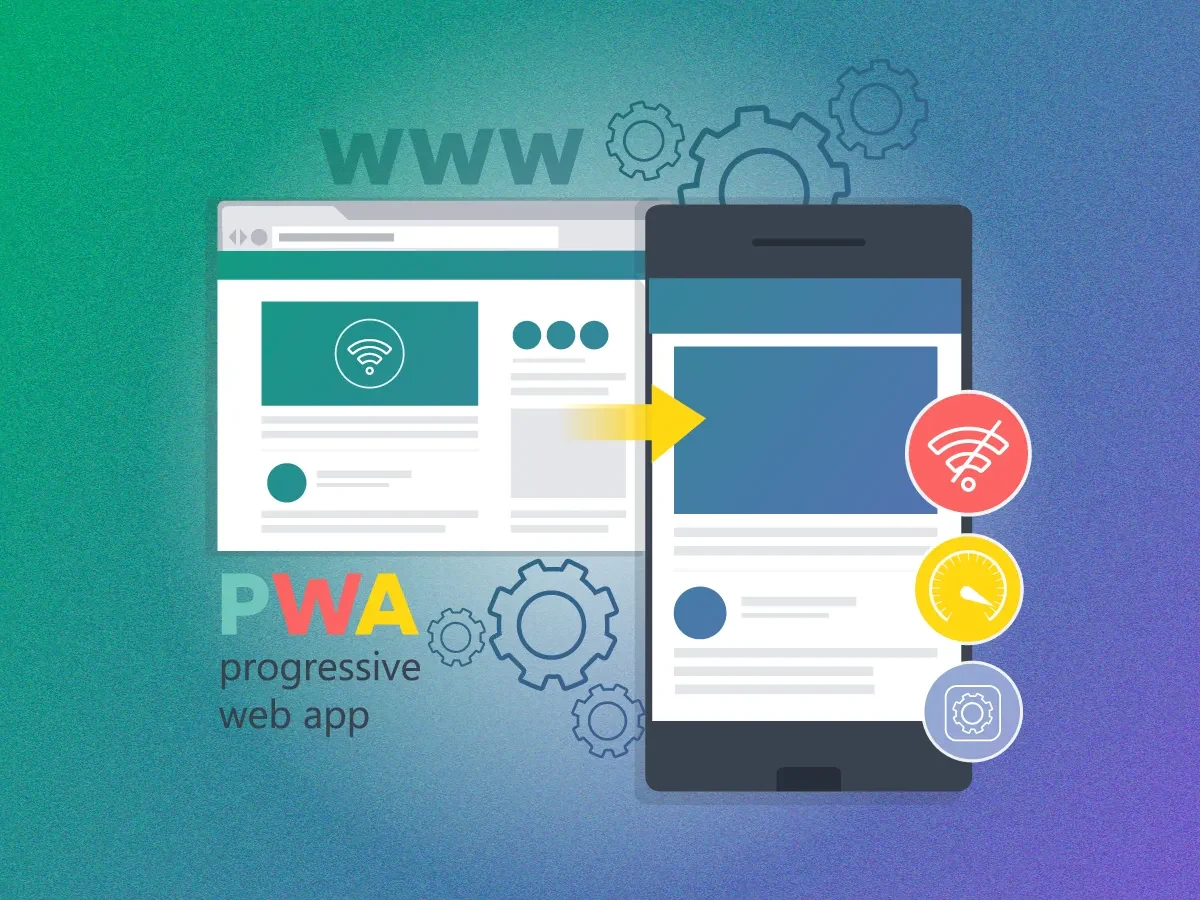
Progressive Web Apps are worth considering for specific scenarios: a team that wants a low-friction entry point without requiring a download, or a club that needs something functional quickly while a full app is in development. PWAs do not belong in the app stores, cannot access all device hardware, and will not match a native experience for match-day use cases. For a primary fan engagement product, they are a supplement rather than a solution.
Cross-platform frameworks like React Native and Flutter close most of that gap. A single codebase runs on both platforms, and for the majority of fan app features, the performance difference compared to native is not noticeable to users. For teams that need to ship a solid product on a realistic budget, cross-platform is usually the right call. Where it shows its limits is in highly hardware-dependent features or very demanding real-time UI, though neither is typically the primary use case for a fan engagement app.
Backend Architecture and Match-Day Traffic
The single biggest technical mistake in fan app development is building a backend that works fine during testing and falls over on match day. Stadium-scale traffic is not a stress test edge case. It is a predictable, scheduled event, and the infrastructure needs to be designed around it.
That means a few things in practice:
- Horizontal scaling so that additional server instances can spin up automatically when traffic spikes, rather than relying on a fixed infrastructure that is either over-provisioned during the off-season or under-provisioned when it matters
- Caching strategies for content that does not change minute to minute: team rosters, venue maps, static schedule information. Serving these from a CDN rather than hitting the database on every request removes a significant load from the backend during peak periods
- Real-time data handling through WebSockets or similar for live scores and stats, rather than polling approaches that multiply the number of requests as concurrent users increase
- Graceful degradation so that if one service has problems, the rest of the app continues to function. A fan who cannot load the live commentary feed should still be able to pull up their mobile ticket
Cloud infrastructure on AWS, Google Cloud, or Azure makes most of this manageable through managed services, but the architecture still has to be designed intentionally. Auto-scaling does not help if the application itself is not built to run as multiple stateless instances.
Data, Segmentation, and Personalization Infrastructure
Meaningful personalization requires data, and data requires deliberate decisions about what to collect, how to store it, and how to use it.
Teams that skip the data architecture planning phase end up with information sitting in silos: purchase history in one system, attendance records in another, in-app behavior in a third, with no way to connect them into a view of an individual fan.
At a minimum, a fan engagement app needs:
- A unified fan profile that pulls from ticketing, loyalty, and in-app behavior
- Event tracking on key actions so the product team can see what fans actually do in the app, not just what they download it for
- Segmentation tools that allow the marketing team to target notifications and content by meaningful criteria: home vs. away attendees, season ticket holders vs. casual buyers, fans who have not opened the app in 30 days
This does not have to be a complex data warehouse from day one. But the schema and the data flows need to be planned before the build, because retrofitting a personalization layer onto a product that was not designed to support it is expensive and often incomplete.
Third-Party Connections: Finish Them or Do Not Ship Them
Third-party connections are where sports app projects most commonly underdeliver. The feature is on the roadmap, the API connection gets started, and then time or budget pressure results in something that technically links two systems but has not been tested across real user flows, edge cases, or failure scenarios.
Connections worth getting right from the start include:
- Ticketing and access control: mobile tickets, QR codes, and gate scanning need to work reliably offline or on a poor connection, because stadium connectivity is never guaranteed
- Payment processing: in-app purchases, in-seat ordering, and merchandise need PCI-compliant payment flows that do not introduce unnecessary friction
- Loyalty and rewards: point accumulation and redemption need to feel seamless, which usually means the loyalty platform is either deeply embedded or is the source of truth for the fan profile. For teams considering blockchain-based loyalty structures, this overview of blockchain loyalty programs covers the practical considerations
- Push notification infrastructure: proper segmentation, delivery tracking, and opt-in management from a platform like Firebase Cloud Messaging or a dedicated provider, not a home-built solution
The rule of thumb is simple: if a third-party connection is on the feature list, it needs to be scoped, built, and tested as a first-class deliverable rather than treated as something that can be finished later.
What the Apps That Stick Have in Common
There is no single feature that separates the fan apps with strong retention from the ones that get uninstalled. The difference is more structural than that. The apps fans keep on their phones tend to share a set of characteristics that run through the product from architecture to content strategy.
- They are built around a small number of features that work exceptionally well, not a large number that work adequately. The temptation in any sports app project is to pack the first release with everything: live stats, video, loyalty, merchandise, social features, news feeds, and AR experiences.
- Each feature added to version 1 is a feature that has to be built, tested, connected to other systems, and maintained before anything ships. A product with five features that load instantly and behave predictably will outperform one with fifteen features where three of them are broken, and two more are slow.
- The notification channel is treated like a limited resource. The apps with the best engagement metrics typically send fewer notifications than average, not more. What they send is timely, specific, and tied to something the fan demonstrably cares about based on their behavior.
- A fan who attends home games in a specific section and has a favorite player should receive different alerts than a fan who watches every away game on a streaming service. That level of targeting is only possible if the segmentation infrastructure described earlier was built into the product from the beginning.
- Match day is the design constraint, not an afterthought. The best fan apps are essentially designed around the hardest scenario first: a fan standing in a concourse with a poor connection, in a hurry, trying to do one specific thing. If the app works well in that context, it will work well everywhere else. Teams that design for the ideal scenario and then try to optimize for match-day conditions later almost always end up compromising.
- There is always a concrete reason to open the app beyond the schedule and the score. Whether that is a loyalty program with genuinely desirable rewards, early access to tickets for registered users, exclusive content not available on the team's social channels, or in-seat ordering that actually saves time at the venue, there has to be a value exchange that is obvious to the fan. Apps that are essentially branded news feeds with a push-notification layer do not give fans a reason to stay.
How to Build for Retention From Day One
Retention is easier to design in than to fix later. A few principles that tend to separate the projects that go well from the ones that require expensive rebuilds within two years:
Start with the fan profile. Before the first feature is scoped, the team building the app needs to define what a fan profile looks like and where the data comes from. This is the foundation everything else sits on: personalization, segmentation, loyalty, recommendations. Getting this wrong, or skipping it entirely and bolting on a data layer later, is one of the most common and costly mistakes in fan app development.
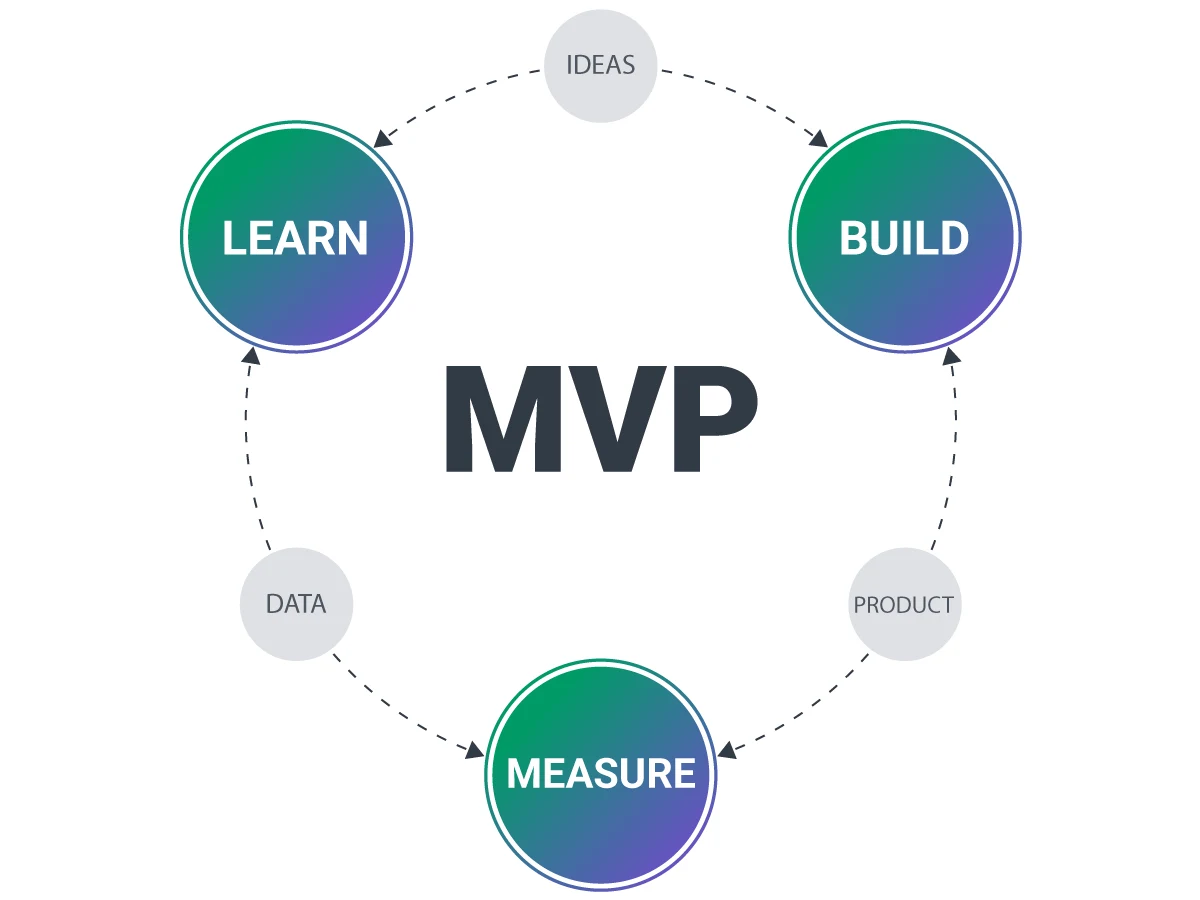
Define your MVP by what fans will open the app for in the first 30 days: Not what is impressive in a product demo. Not what the competitor's app has. What is the specific reason a fan will download this app and open it again the following week? That use case should be the center of the first release, and everything else should wait.
Plan for the content pipeline before you build content features: Video, articles, behind-the-scenes content, and player features are genuinely engaging if they are updated regularly. They become a liability if the team does not have the internal resources to keep them fresh. An empty news feed or a video section with three-month-old content is worse than no content section at all, because it signals to the fan that nobody is maintaining the product.
Test under match-day conditions before launch, not after: Load testing against realistic concurrent user numbers is not optional. It is the only way to know whether the infrastructure decisions made during planning will hold when they actually matter. A performance failure on opening day is recoverable, but it sets a first impression that takes a long time to undo.
Build the feedback loop early: Fan behavior data: what gets opened, what gets abandoned, where users drop off, which notifications get dismissed, which ones drive opens, should be visible to the product team from the first week of live operation. The apps that improve over time do so because the teams behind them can see exactly what is and is not working, and they act on it quickly rather than waiting for an annual review.
On average, retention across mobile apps is ~30%, while sports/fitness apps typically retain ~3–4% of users, making them one of the more retention-challenged categories. That's why building the feedback loop early can be pivotal for the future of your sports app.
Getting the Build Right
A fan engagement app is not a simple project. The surface area is wide: mobile clients on two platforms, a backend that has to handle unpredictable load, a set of third-party connections that each carry their own complexity, and a data layer that needs to actually power the personalization the product promises. Underestimating that scope is where most projects run into trouble, either by shipping something that does not hold up under real conditions or by running out of budget before the most important features are finished.
A broader look at how fan engagement strategies are shifting across live events and what technology is making possible.
The teams that navigate this well tend to approach the build in phases rather than trying to ship everything at once. A well-defined v1 focused on match-day reliability and one or two off-season engagement features gives the product a stable foundation and a real user base before the more complex features are layered in. It also creates the data needed to make better decisions about what to build next, based on what fans are actually doing rather than what the original roadmap assumed they would do.
Looking for more guidance on building modern and innovative sports apps? Explore our Complete Guide to Sports App Development.
Softjourn has worked with sports and ticketing clients on projects spanning mobile development, API work, and real-time platform architecture, including building a cross-platform sports event app for Datahove and an in-seat ordering system for a major sporting events platform, completed in six weeks. Contact Softjourn's sports app development team to talk through what the build actually involves.