
7 Trends Ticketing Professionals Are Most Excited About in 2026
We surveyed leaders from several ticketing companies to unveil the most highly anticipated trends shaping the ticketing landscape. Dive into the advancements that are fueling excitement across the industry.

In a rapidly evolving digital era, ticketing professionals are constantly seeking innovative solutions to enhance customer experiences, streamline operations, and drive business growth.
To gain a comprehensive understanding of the trends that experts are most excited about in 2026, we reached out to industry leaders from various ticketing companies. Their collective expertise and visionary insights have unveiled seven trends that are currently generating the most buzz in the ticketing realm.

From digital wallet features to hybrid technologies, we've ranked these trends by popularity in our survey of experts, and each of them shows promise to shape the future of ticketing and revolutionize the way we engage with live events.

Which Ticketing Trend Excites You Most?

1. Digital Wallet Features
As the world increasingly embraces digital transactions, digital wallet features have become a game-changer for ticketing professionals. This trend allows ticket holders to conveniently store and access their event tickets, loyalty programs, and even payment information in a single, secure application.
Jason Chan, the Co-founder of the successful outdoor cinema audio technology startup, Cinewav, expressed his excitement for digital wallets in ticketing. "We love the idea of digital wallets to create an ecosystem within the app that allows users to search for exciting events to go to next." He also felt that digital wallets help build loyalty with attendees.
2. AI (Artificial Intelligence)
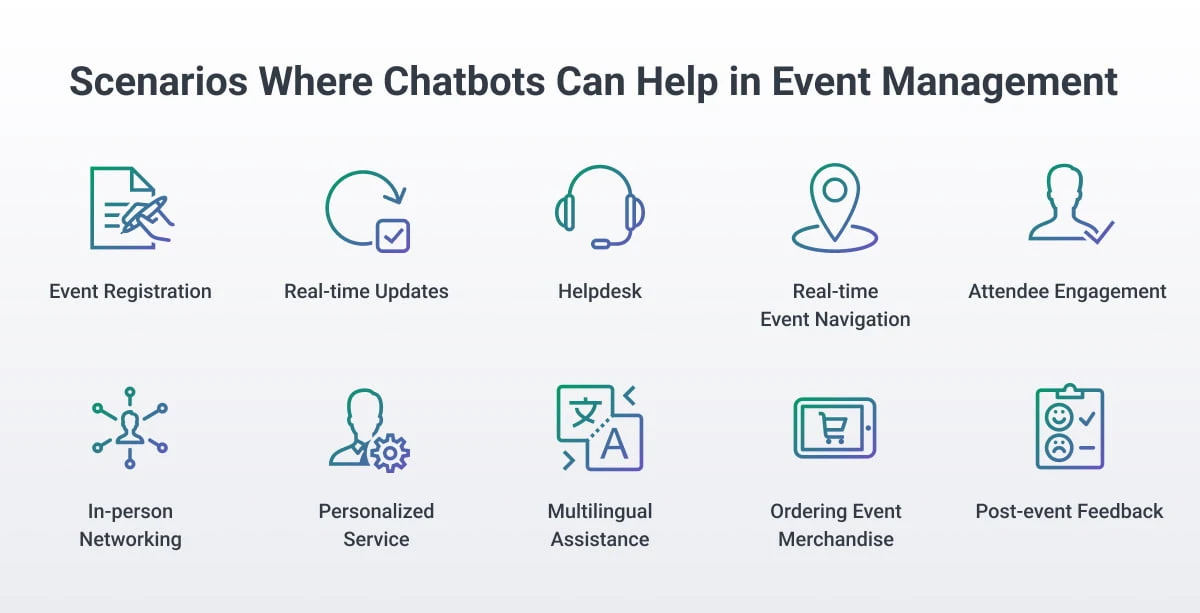
The power of AI is revolutionizing pretty much every industry, including ticketing. From chatbots providing personalized customer service to predictive analytics optimizing pricing strategies, AI is transforming the way ticketing professionals operate.
AI has the potential to have a profound impact on efficiency, revenue generation, and customer satisfaction - this is likely the reason that half the ticketing experts we surveyed are passionate about the idea of AI in the industry.
Hrefna Sif Jonsdottir, the Managing Director of the intuitive ticketing platform, Tixly, said: "I think it's extremely interesting to see how AI can help our industry in developing our tools to help our clients use their data as best as they possibly can."
3. Predictive Tools
Predictive tools leverage data analytics and machine learning algorithms to anticipate customer behavior, demand patterns, and market trends. Ticketing professionals are excited about the opportunities these tools present to optimize inventory management, pricing strategies, and marketing campaigns.
Jonsdottir also mentioned how Tixly is implementing a predictive tool into their platform to help their clients seek the right buyers for the right events, using their own data. "It's so exciting to see how this can help them sell more tickets in a more efficient and effortless way," she said.
4. Access Control
Efficient access control solutions are vital for smooth event operations and enhanced security. Ticketing professionals are eagerly exploring cutting-edge technologies like biometric authentication, RFID, and mobile ticket scanning to improve access control processes and create frictionless entry experiences.
In our research, we found that contactless ticketing was chosen as the most relevant post-pandemic technology by 100% of the ticketing experts we surveyed, proving the passion for frictionless technology at events.

Custom pass builders and Apple and Google Wallet integrations can further streamline access control by enabling secure, scannable digital passes tailored to each event.
Terry Wilcher, the Director of the online ticketing system, 123 Tix, said that new developments in access control can help them "streamline business processes and event ingress."
5. Fan Engagement Apps & Features
Fan engagement is paramount in the ticketing industry, and the advent of dedicated apps and features has opened new avenues for fostering deeper connections with event-goers. Ticketing professionals are excited about the possibilities of personalized event recommendations, interactive content, and loyalty programs offered through fan engagement apps.
We found that of the ticketing experts we surveyed, many placed an emphasis on wanting to attract and retain millennials more than any other generation. As this generation is the primary workforce in 2025 and has an increasing ticket-buying potential, it is important for venues and event planners to discover strategies on how to better engage millennials.

6. Venue Mapping
Understanding the layout of event venues has become increasingly important for both organizers and attendees. Venue mapping technologies enable ticketing professionals to provide detailed seating charts, virtual tours, and even augmented reality experiences, enhancing the ticketing process and offering attendees a preview of their event experience.
Kayhan Ahmadi, the CEO of the event organizer platform, Ticketbud, mentioned that while some popular trends may be overhyped, they feel that venue mapping is here to stay and a "core ticketing tool that wins business."
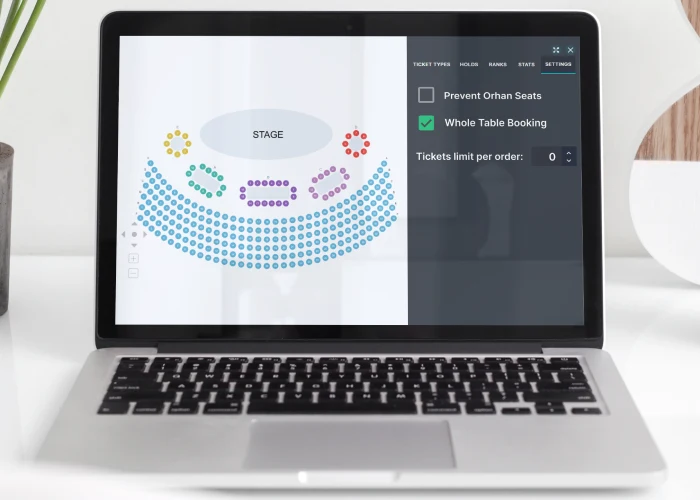
Recently, Softjourn has launched two highly anticipated functionalities in our Venue Mapping Tool software: Whole Table Booking and Orphan Seat Prevention. The Whole Table Booking Feature enables the sale of complete tables of tickets, allowing groups to sit together and enjoy the event as a cohesive unit. Our Orphan Seat Prevention algorithm ensures that all sold seats are grouped together, eliminating the risk of leaving single seats unsold.
7. Hybrid Technologies
While hybrid events have decreased in popularity a bit as Pandemic restrictions have eased, they still remain a decently popular event type. Hybrid technologies, such as live streaming, can be used to increase event accessibility, expand audience reach, and unlock new revenue streams for ticketing companies.
Final Word
The ticketing industry is undergoing a transformative phase, fueled by these exciting trends. As digital wallet features, AI, predictive tools, access control, fan engagement apps & features, venue mapping, and hybrid technologies continue to evolve, ticketing professionals are well-positioned to redefine event experiences, optimize operations, drive innovation, and digitally transform their platforms.
Stay at the forefront of ticketing advancements by embracing these trends and unlocking the potential they hold in reshaping the future of ticketing.
Ticketing Trends Through the Years: Did Conference Predictions Come True?
Ticketing conferences are good at predictions but poor at follow-up. So we went back through the notes our team took at INTIX, the World Ticket Conference, Ticketing Business Forum, and others over the years to see which calls held up.
FutureTix Ticketing Symposium, Miami (2018)
Softjourn joined the FutureTix Ticketing Symposium in Miami in November 2018, where Jeff Kreuser co-hosted five roundtables with Fred Maglione of the Maglione Group. Attendees there agreed almost unanimously that fixed ticket prices would be obsolete within a few years. Most also felt that patron security and access control were not the ticketing platform's job.
What happened next: Dynamic pricing spread among the largest sellers, but fixed pricing never went away. At Ticketing Business Forum 2020, a Deloitte advisor was still explaining why most of the industry hadn't adopted it. Access control, meanwhile, ended up firmly on ticketing roadmaps (see Access Control above).
INTIX 40th Anniversary Conference (2019)
Softjourn exhibited at INTIX's 40th anniversary conference in January 2019, demoing our Venue Mapping Tool and presenting on facial recognition and friendly fraud. When a speaker asked who still used paper tickets, about half the room raised their hands, and roughly the same share expected paper to still be in use five years later. A blockchain panel predicted the topic would soon be so ordinary it wouldn't need its own session, although our team noted that their main example, transferring a parking pass, didn't require blockchain at all.
What happened next: By the 2022 World Ticket Conference, the PGA Tour said it was 75% digital. Blockchain did lose its separate stage, but only after a detour through NFTs (more below).
Ticketing Professionals Conference, Birmingham (2019)
Softjourn attended the Ticketing Professionals Conference in Birmingham, UK, in March 2019, our third year in a row at the event. Queue-it's CEO argued that a well-run on-sale shouldn't sell out in two minutes, and recommended bot protection, transparency with buyers, and shorter cart timeouts.
What happened next: A year later, at TBF 2020, Deloitte's Jose Sanchez said 42% of activity on primary ticketing platforms came from bots.
Ticketing Business Forum (virtual, 2020)
Softjourn followed the first all-virtual Ticketing Business Forum in late 2020. With venues closed, sessions focused on data and payment models, and a few numbers stood out:
- The Rock & Roll Hall of Fame reported that 99% of visitors now bought tickets before arriving.
- NewC saw a 13% year-over-year rise in season ticket holders at clubs using subscription payments. When one club asked whether to pause payments during closures, 95% of subscribers chose to keep paying.
- A livestreaming panel cited a Goldman Sachs survey in which 84% of respondents were interested in watching live events from home, though only half would pay for it.
What happened next: Buying in advance became standard behavior. Paid livestreaming mostly faded once doors reopened (see Hybrid Technologies above).
AXS Sports Facilities & Franchises and Ticketing Symposium (2020)
Softjourn sponsored the 2020 AXS Sports Facilities & Franchises and Ticketing Symposium, held eight months into the pandemic. In the conference survey, run with Sports Business Journal, respondents named mandatory mobile ticketing as the biggest coming change to live sports. They expected mask enforcement to be the top patron concern, and fan sentiment toward attending games to still be unsettled a year later.
What happened next: The mask concern faded, but the mobile prediction stuck. By WTC 2022, the PGA Tour was 75% digital. Today mobile devices account for 58.95% of online ticketing transactions (Mordor Intelligence, 2025).
Event Tech Live (2021)
Softjourn took part in Event Tech Live 2021. CEO Emmy Gengler co-hosted a session on in-seat ordering with Tacit's Gajen Indrakumaran, and Jeff Kreuser and Lyubomyr Nykyforuk presented seating algorithms for social distancing. Elsewhere at the conference, Swapcard's CEO pointed to surveys showing fewer people would attend events in person, and called hybrid the industry's new reality.
What happened next: One year later, the World Ticket Conference reported Q2 2022 industry sales of $779M, compared with $373M in Q2 2019. Fans came back in larger numbers, not smaller ones.
Ticketing Business Forum (2021)
Softjourn attended Ticketing Business Forum 2021, the first in-person forum in over two years, with 350+ senior attendees. NFTs were a headline topic, with Queue-it's CEO making the case for their potential in ticketing. Our Solutions Architect Lyubomyr Nykyforuk argued the opposite: that secure, traceable tickets could be built with existing technology, no blockchain required.
What happened next: When LA28 laid out its ticketing plan at TBF 2026 for the largest Games in history, it relied on rotating barcodes and an official resale platform, with no blockchain involved (TheTicketingBusiness, 2026).
INTIX, Orlando (2022)
INTIX returned in person in Orlando at the height of the NFT boom. SecuTix's CEO praised blockchain as a way to eliminate scalpers, while critics warned it promised more than it could deliver. Project Admission, a Softjourn client, presented on commemorative tickets reimagined as digital collectibles.
What happened next: By INTIX 2023, speakers were avoiding the term "NFT" entirely in favor of "digital collectibles," which they considered less off-putting to fans. It was the framing Project Admission had used a year earlier.
World Ticket Conference, Las Vegas (2022)
Softjourn attended the 2022 World Ticket Conference in Las Vegas, held jointly with Ticket Summit, where our client Derek Palmer of Project Admission spoke on a panel. A record 900 attendees heard that average ticket prices had risen nearly 16% since the pandemic and that primary and secondary markets had effectively merged. All-in pricing was a major topic, with New York having just passed a law against hidden fees.
What happened next: All-in pricing went national in the US. Since May 12, 2025, the FTC's Rule on Unfair or Deceptive Fees has prohibited bait-and-switch pricing and other tactics that hide total prices and fees for live-event tickets. In April 2026, the FTC filed a complaint against StubHub under the rule.
TheTicketingBusiness Forum, Manchester (2023)
Softjourn attended TBF 2023 in Manchester, which drew delegates from around 40 countries (TheTicketingBusiness, 2023).
- Blockchain, with a real use case: The host venue, Lancashire Cricket, announced it would sell its entire Ashes Test on blockchain to stop unofficial resale. It was described as the first UK sports club to do this.
- Premium seating: A VIP and premium panel agreed that premium economy would grow and high-end packages would keep driving revenue, while mid-range hospitality might get squeezed.
What happened next: Premium kept growing. At INTIX 2026, SoFi Stadium said its first stadium tours showed it didn't have enough premium seating, and it is now converting underused areas into temporary premium spaces.
INTIX, Seattle (2023)
Softjourn attended INTIX 2023, meeting with clients and new ticketing teams over three days. A third of attendees were at INTIX for the first time. The main theme was the one-stop fan app, where tickets, parking, wallet, and concessions all live in one place, with Ticketmaster's Footprint ID as the headline example. Panelists expected facial recognition to stay limited to VIP areas, athletes, and performers.
What happened next: Facial entry moved beyond VIP areas faster than the panel expected, though it stayed opt-in. MLB's Go-Ahead Entry started as a pilot in Philadelphia in 2023, and by the 2025 season it was running at 10 ballparks (Biometric Update, 2025). Fans in Go-Ahead Entry lanes at Citizens Bank Park moved through 68% faster than a traditional entry lane.
Across eight years of notes, the technologies that lasted were the ones fans could feel at the gate and at checkout: mobile tickets, faster entry, and clearer prices. The ones that got the most panel time, like blockchain and hybrid events, were the ones that needed the most explaining.
World Ticket Conference, Nashville (2023)
Softjourn attended WTC 2023, the first held in Nashville after more than two decades in Las Vegas. Organizers moved it because hosting costs in Vegas had climbed too high, and Forbes read that as an early sign that ticket buyers were becoming more price-selective. Coverage also called 2023 the year of the lobbyist, with ticketing bills introduced in state legislatures and Congress (Forbes, 2023).
What happened next: Federal legislation moved further than many brokers in the room expected. On April 30, 2025, the House passed the TICKET Act 409 to 15 (Softjourn, 2025). The bill mandates all-in pricing and bans speculative ticketing.
INTIX, Las Vegas (2024)
Softjourn attended INTIX 2024 in Las Vegas, which drew a record 1,400+ attendees. In an audience poll run by SECUTIX, attendees ranked data as their top priority for the year, with fraud a close second. Queue-it's Jennifer Hughes warned that bots make up a large share of traffic on ticketing sites, driving up costs and eroding fan trust.
What happened next: Bots moved from a conference topic to a federal case. In September 2025, the FTC and seven states sued Live Nation and Ticketmaster (FTC, 2025), alleging the company let brokers get around its own ticket limits. This September, a federal judge denied Ticketmaster's motion to dismiss (TicketNews, 2026), so the case goes ahead. Live Nation and Ticketmaster dispute the allegations.
INTIX, New York (2025)
INTIX 2025 in New York was the best-attended edition yet, with 1,500 registrations (Pollstar, 2025). AI got its own pricing panel. SeatGeek's Derek Zhou argued that the AI that matters for ticketing is machine learning trained on sales data, not chatbots. The Dallas Cowboys' Delanie Nicosia described using AI to help decide which events to book when several promoters want the same date.
What happened next: A year later, the AI conversation had moved from pricing to discovery. At INTIX 2026, Ticketmaster said AI-powered search and conversational tools increasingly shape what fans see before they ever reach a ticketing page (Ticketmaster, 2026).
TheTicketingBusiness Forum 2025: AI, Data, and Resale Market
Speakers expected AI to become the "connective tissue" linking marketing, customer service, and operations, and called for more data-sharing across the industry. Vivenu projected the ticketing market would grow 184% to $1.2T by 2032. The loudest concern was unauthorized resale, now valued at €2.5B in Europe, which led to calls for unified EU regulation.
What happened next: The resale push moved quickly. In January 2026, more than 130 artists, managers, clubs, and festivals signed an open letter to EU Justice Commissioner Michael McGrath. They asked for the upcoming Digital Fairness Act to address resale directly, and their letter cited the same €2.5B figure. The UK went further: in May 2026 it confirmed plans for a Ticket Tout Ban Bill that would cap resale at the original price plus unavoidable fees. Whether the EU follows depends on the Commission's draft, expected in late 2026.
INTIX, Las Vegas (2026)
About 1,400 ticketing professionals from 27 countries met in Las Vegas. Panels described a strong business focused on premium experiences, but also noted fewer events and some price sensitivity among fans (Pollstar, 2026). SoFi Stadium's Andrew Bragman said the venue thought it had more premium seating than it would ever need, until its first stadium tours proved otherwise. It is now converting underused areas into temporary premium spaces. Derek Palmer of Project Admission, a longtime Softjourn client, received the Patricia G. Spira Lifetime Achievement Award.
What to watch: Whether premium demand holds as price sensitivity grows. [Stat idea: 2026 premium or VIP ticket revenue share at major venues.]
TheTicketingBusiness Forum, Manchester (2026)
The 14th Forum put data fragmentation front and center. TicketCo's CMO said the average sports club is 15 years behind a typical consumer business when it comes to connected data, and Vivenu's Simon Weber described ticketing strategy moving "from a box-office decision to a boardroom decision" (TheTicketingBusiness, 2026). LA28's VP of ticketing reported 4.4 million tickets sold in the first sales phase. He added that LA28 will be the first Games with an official resale platform, and that dynamic pricing plus official resale is its main tool for avoiding empty seats.
What to watch: The LA28 Olympic Games themselves. Dynamic pricing, which FutureTix attendees expected to replace fixed pricing back in 2018, will face its biggest test yet in 2028.