
How to Hire Java Developers: A Guide to Finding Top Talent
Need to hire Java developers? Find the best skills, tips, and ways to recruit top Java developer talent.

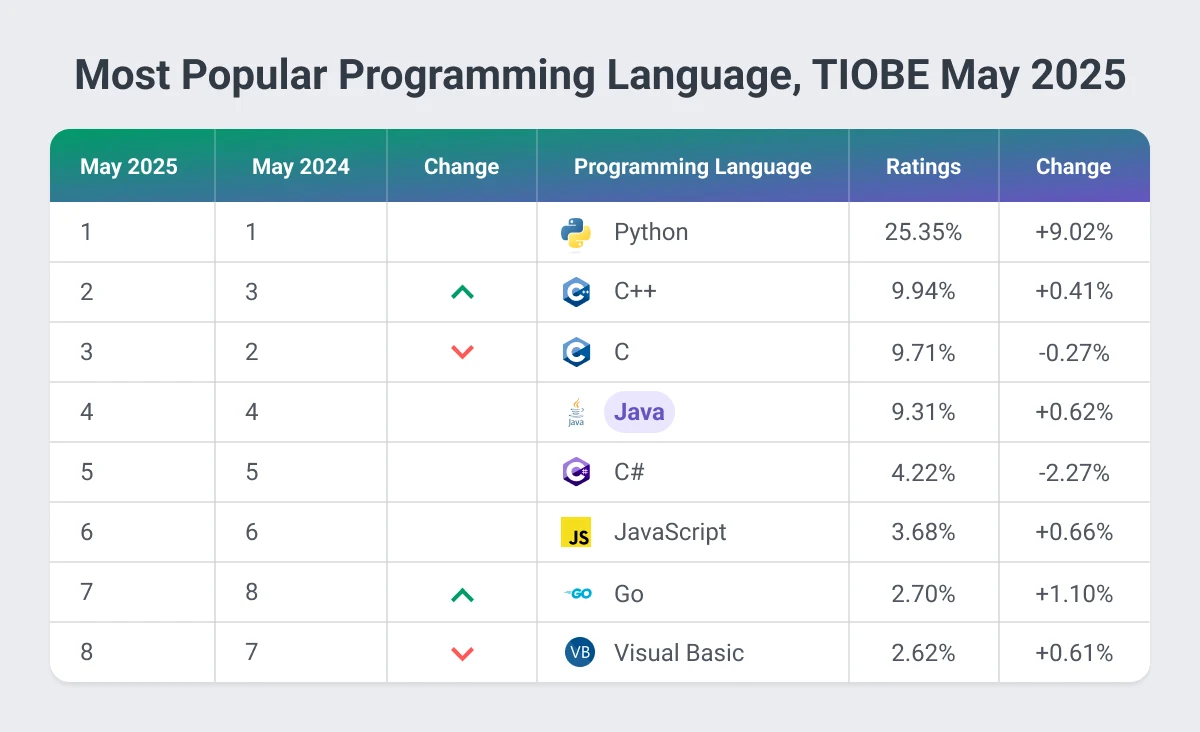
Java continues to be one of the most widely used and versatile programming languages in the world. As of 2025, 90 percent of Fortune 500 companies rely on Java for their software programming needs, and it remains the third most popular language on the TIOBE index.
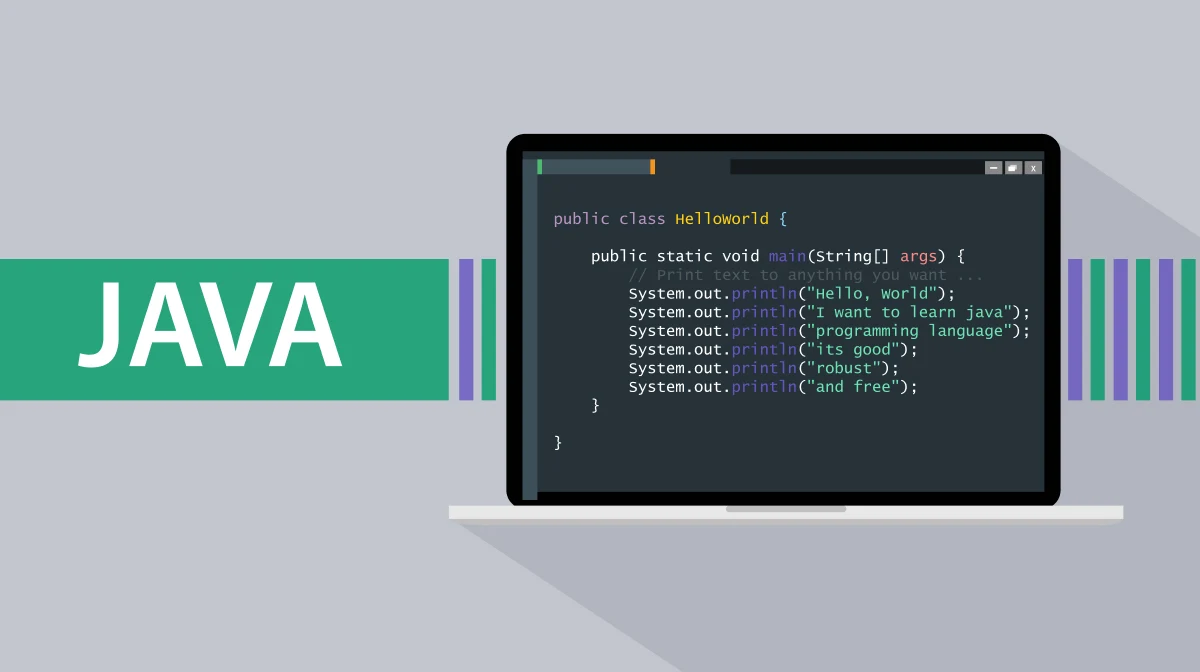
Java powers critical systems across industries, from enterprise applications and cloud-based platforms to mobile apps and fintech solutions. As companies pursue digital transformation, the demand for skilled Java developers is growing steadily.
Why Hiring Java Developers Is More Competitive Than Ever
Hiring the right developers has become more challenging. Competition for top talent is strong, and identifying candidates with the right mix of technical expertise and team fit requires a well-planned approach.
This guide provides a comprehensive look at how to hire Java developers successfully. You will learn what skills to prioritize, how to assess candidates effectively, where to find qualified developers, and how to optimize your hiring process to build a high-performing Java team.
Why Java Still Matters for Business
Java has remained a trusted choice for software development for more than two decades, and for good reason. It offers stability, security, and scalability, along with a vast ecosystem of tools, libraries, and frameworks. This makes it ideal for building reliable and maintainable systems.
Today, Java continues to power critical business applications across industries:
- Financial Services: Core banking systems, payment gateways, risk management tools
- E-commerce: Scalable online stores, order management, personalized recommendations
- Healthcare: Electronic health records, data processing platforms, device integration
- Telecommunications: Billing systems, real-time communication platforms
- Transportation and Ticketing: Fleet management, reservation systems, logistics tracking
- Enterprise Software: ERP, CRM, and other internal business platforms
- Android Development: Many Android applications still rely on Java
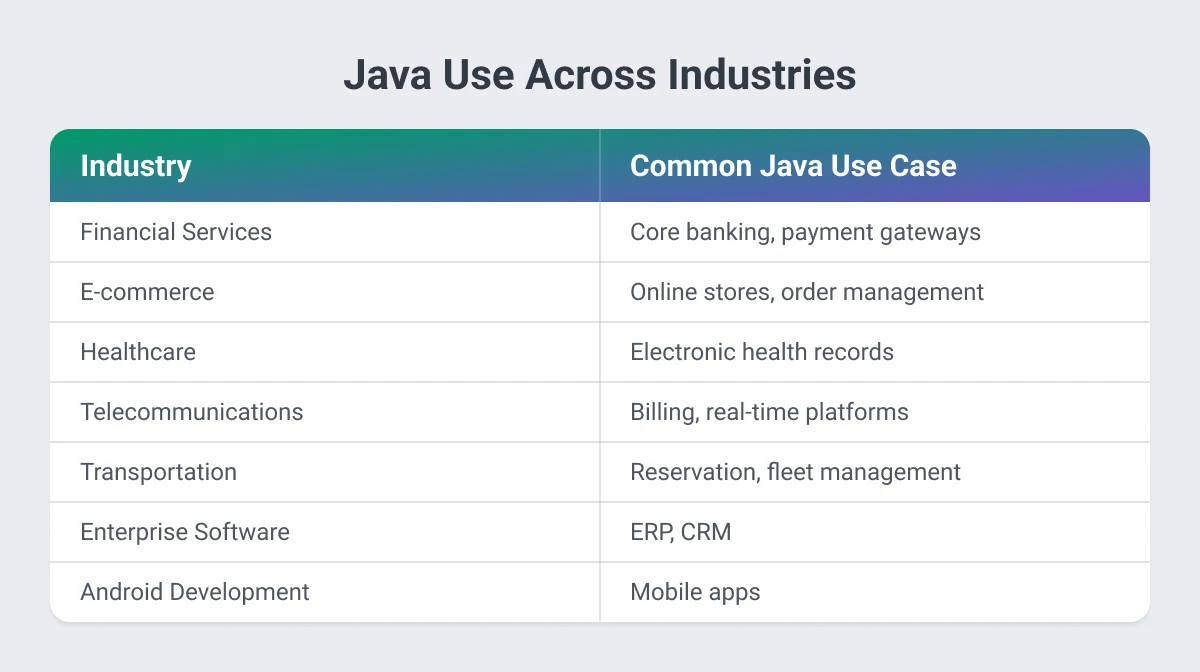
Java's strong performance, cross-platform compatibility, and robust community support make it an ideal choice for modern cloud-native applications and microservices architectures as well.
If you are planning to build or expand software solutions that require performance, scalability, and long-term support, hiring skilled Java developers is a critical first step.
Current Market Trends in Hiring Java Developers
The demand for Java developers remains strong as businesses modernize legacy systems, adopt cloud-native architectures, and expand digital offerings. Several trends are shaping today's hiring landscape:
Global Demand Is Rising
Java continues to rank among the top programming languages worldwide and remains a first choice for many enterprise applications, particularly in industries such as finance, healthcare, and telecommunications. According to the 2025 TIOBE Index, Java moved from fourth place in 2024 to third place, gaining a 1.79 percent boost in popularity.
This trend aligns with findings from the 2025 Java Developer Productivity Report, which revealed that 51 percent of companies plan to add Java developers in the coming year.
Despite competition from newer languages such as Kotlin and Go, Java remains widely used in enterprise software, Android development, and backend systems. Companies are also hiring Java developers to support new cloud-based applications and API-driven services, further driving global demand.
Increased Focus on Remote and Distributed Teams
The shift toward remote work has expanded the talent pool. Many organizations are now open to building distributed Java teams and working with outsourcing partners to find the best talent, regardless of location.
Specialized Skills in Demand
Employers are looking for Java developers with expertise beyond core programming. Skills such as cloud deployment, microservices architecture, containerization with Docker and Kubernetes, and CI/CD pipelines are now considered key differentiators.
Key Challenges in Hiring Java Developers
While demand for Java developers continues to grow, many companies face challenges in finding the right candidates:
Limited Talent Pool for Senior Roles
Many companies report difficulty hiring mid to senior-level Java developers with strong architectural knowledge and experience in modern frameworks and cloud environments. The competition for these candidates is high, especially among fintech, enterprise, and SaaS companies.
Balancing Technical and Soft Skills
It is not enough to hire developers with strong Java skills alone. Companies also need team members who can communicate clearly, collaborate across functions, and adapt to evolving project requirements. Finding candidates with both technical expertise and strong interpersonal skills can be challenging.
Evolving Technology Expectations
Java development today is much broader than writing backend code. Many roles now require understanding of microservices, cloud-native development, containerization, and API-first design. Developers who have not kept pace with these trends may not be the right fit for modern projects.
Speed of Hiring
With high demand and a competitive market, companies risk losing top candidates to faster-moving competitors. A streamlined and responsive hiring process is essential to secure the best talent.
Geographic Limitations
Companies that rely only on local talent pools may struggle to find the right Java developers. Expanding the search to remote developers and working with outsourcing partners can help overcome these geographic constraints and tap into a broader talent base.
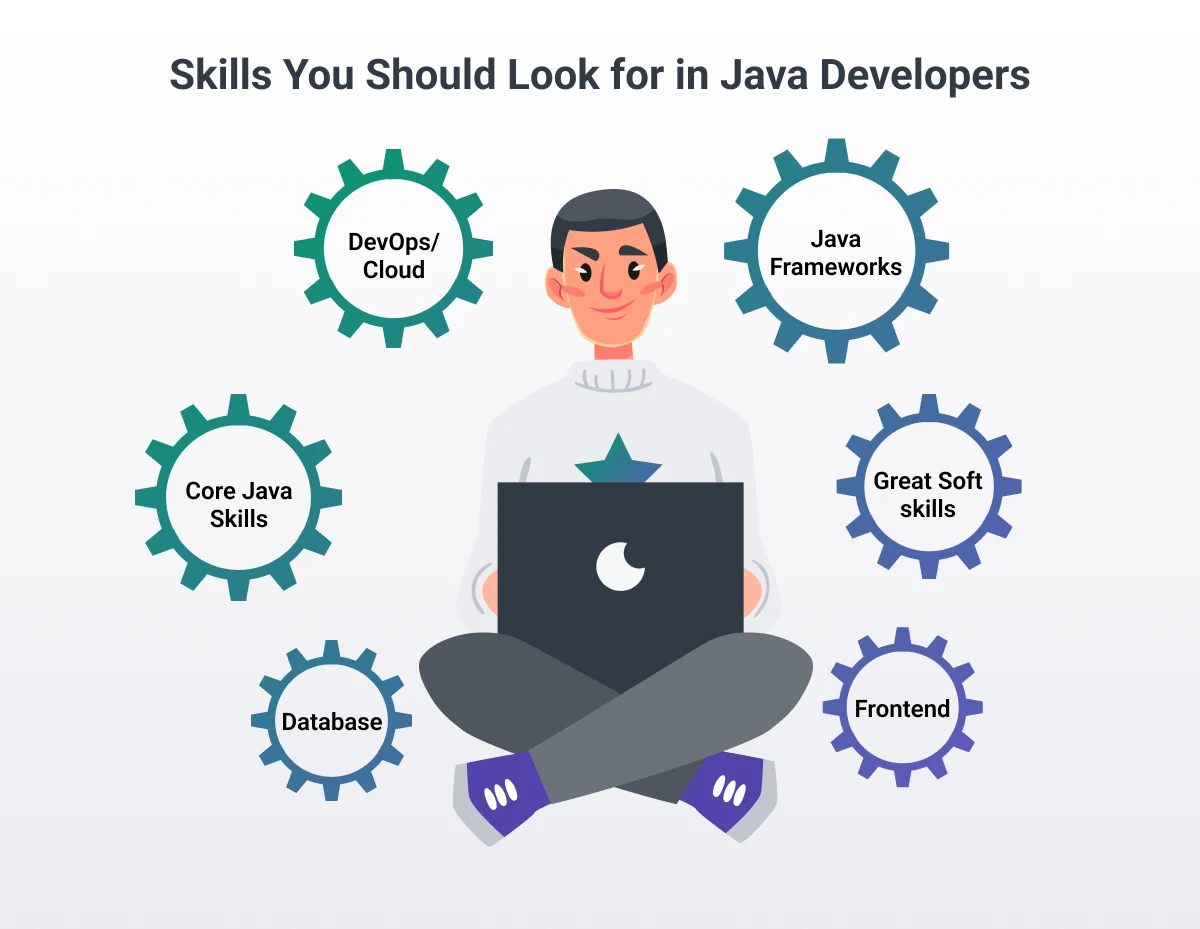
What Skills Should You Look for When You Hire Java Developers
Hiring the right Java developers starts with knowing which skills to prioritize. A well-rounded candidate will combine deep technical expertise with the ability to work effectively within your team and project environment.
Understanding of Java Programming Language
- Java Fundamentals: Strong understanding of Java syntax, object-oriented programming (OOP), data structures, JVM internals, and algorithms.
- Concurrency: Knowledge of multithreading and parallel processing for performance optimization.
Experience with Java Frameworks
- Java Frameworks: Proficiency with frameworks such as Spring, Spring Boot, Hibernate, and JPA.
- Java Collections Framework: Expertise in working with collections like Lists, Sets, and Maps.
Other Technologies
- Web Technologies: Familiarity with RESTful APIs, HTML, CSS, JavaScript, and server-side technologies. A good Java developer should have a basic understanding of front-end technologies for full-stack development.
- Database Management: Experience working with relational databases (SQL), NoSQL databases, and other popular databases like MySQL, PostgreSQL, or Oracle.
- Version Control: Proficiency with Git and related tools
- Testing: Experience with unit testing frameworks such as JUnit and integration testing tools like Mockito
- Cloud and DevOps: Familiarity with containerization (Docker), orchestration (Kubernetes), and CI/CD pipelines
- Microservices Architecture: Experience designing and implementing modular, scalable services
Soft Skills
- Problem-Solving: Ability to approach complex challenges with structured thinking and innovative solutions
- Communication: Clear, concise communication with both technical and non-technical stakeholders
- Collaboration: Strong teamwork and willingness to contribute to collective goals
- Adaptability: Openness to learning new tools, frameworks, and practices as technology evolves
- Time Management: Ability to prioritize tasks and deliver work on schedule
How to Assess Java Developer Skills
A thoughtful assessment process helps ensure you are hiring Java developers with the right mix of technical ability, problem-solving skills, and team fit. Here are key methods to evaluate candidates effectively:
Testing and Evaluation Methods
- Online Coding Assessments: Platforms such as HackerRank and Codility allow you to create Java-specific coding challenges that test a candidate's programming knowledge, problem-solving, and logical thinking.
- Live Coding Interviews: Asking candidates to solve coding problems in a live session helps you observe how they approach challenges and communicate their thought process.
- Pair Programming Exercises: Working collaboratively with a member of your team provides insight into how a candidate writes code, handles feedback, and contributes in a real-world development environment.
- Portfolio and Project Review: Reviewing past projects, GitHub repositories, or open-source contributions can provide a deeper understanding of a candidate's coding style and practical experience.
Sample Java Interview Questions
- Core Java: How does Java handle memory management and garbage collection? What are the key differences between an abstract class and an interface?
- Frameworks: What advantages does Spring Boot offer over traditional Spring? How have you used Hibernate in a recent project?
- Architecture: What patterns do you use when designing microservices? How would you structure the data access layer of a large application?
- Advanced Concepts: How do you optimize the performance of a Java application? What are the differences between the various garbage collectors in Java?
An assessment process that combines coding tests, live collaboration, and thoughtful interviews will help you identify Java developers who can contribute both technically and strategically to your team.

How to Create an Effective Java Developer Job Description
Before starting the process of looking for a Java developer, it is important to first clarify what type of Java developer you need. Many companies struggle to hire the right candidates because their job descriptions are too generic or misaligned with the actual skills required for their project.
Define the Role You Truly Need
- What type of project are you building? Enterprise platform, cloud-based API, Android app, backend microservices?
- What is the architecture? Monolithic, microservices, hybrid?
- What level of seniority is required? Do you need an architect to design the system, or a developer to implement features?
- What technologies will the developer work with? Cloud platform, database type, front-end stack?
Being specific about your needs will help you write a job description that attracts candidates who are a good match.
Key Points to Include in a Job Description
- A clear project summary and why it is important
- Core responsibilities aligned with your project goals
- Required skills that are truly essential for success
- Preferred but non-essential skills
- Soft skills and team collaboration expectations
- Work environment details (remote, hybrid, location requirements)
Where to Find Java Developers for Your Project
There are many ways to source Java developers, depending on your project scope, timeline, and resource strategy. Choosing the right approach helps ensure you build the team you need to deliver results.
Job Boards and Professional Networks
Well-established job boards and professional platforms remain a valuable resource for sourcing full-time Java developers. Posting on platforms such as LinkedIn, GitHub Jobs, Stack Overflow, and other technology-focused sites can help attract developers with experience in your industry or technology stack.
Engaging with Developer Communities
Active participation in Java-related communities, such as GitHub repositories, open-source projects, conferences, and local meetups, can connect you with developers who have a proven track record of contributing to high-quality codebases.
Team Extension Through Outsourcing
For many companies, working with an experienced software development partner is an efficient way to build or scale a Java development team.
A partner like Softjourn can provide access to a curated pool of skilled Java developers who are already trained in modern technologies and delivery practices.
Team extension through outsourcing offers several advantages:
- Faster team ramp-up: Quickly onboard Java developers with relevant experience
- Access to specialized expertise: Tap into a broader range of technical skills
- Flexible engagement models: Scale your team up or down based on project needs
- Reduced hiring overhead: Save time and resources on sourcing, vetting, and onboarding
- Global talent access: Overcome geographic limitations and build distributed teams
This approach is ideal for companies looking to move quickly, extend their capabilities, or fill skill gaps in their existing development teams.
Many of Softjourn's clients have enjoyed the benefits of our skilled Java teams firsthand:
"Our developers continue to impress me with their expertise, knowledge, and dedication to our project. They are my team, and I count on them as if we were all working in the same office."
— Brenda Crainic, CTO at Tacit Innovations "Softjourn's team is so closely integrated with us, they understand what we are trying to achieve. Distance is not an issue; it is the opposite, in fact. It means that our company never sleeps!"
— Jonathan Kaplan, CEO and Founder of Powwow "Softjourn included us as part of the team, not just as clients, which we loved as we wanted to know what was happening on a technical level and work it out as part of the team." — Jason Chan, Co-Founder and Director of Cinewav
Other Talent Options
In addition to full-time hiring or partnering with an outsourcing provider, companies can also engage contractors or freelance developers for short-term needs. If this model fits your project, there are many platforms that offer access to vetted talent.
However, be mindful that managing and integrating freelance developers often requires more effort on the part of your internal team.
Best Practices for Interviewing Java Developers
Whether you are hiring Java developers directly or working with a software development partner to extend your team, having a clear approach to evaluating candidates will help ensure you bring the right talent onto your project.
Focus on Real-World Skills and Problem-Solving
Prioritize practical skills that align with your project goals. Strong Java developers should be able to demonstrate their ability to design and implement scalable solutions, work with modern frameworks and tools, and contribute to real-world delivery outcomes.
When Softjourn helps clients evaluate candidates for team extension, we often structure interviews and technical assessments around the actual architecture, technologies, and performance needs of the client's platform.
Assess Technical Depth and Adaptability
Look for developers who not only understand core Java concepts but also have experience with modern development practices such as microservices, containerization, cloud platforms, and CI/CD pipelines. Technology evolves quickly, so adaptability is just as important as depth of current knowledge.
Consider Collaboration and Communication
For many companies, Java developers will be working as part of distributed or hybrid teams. It is important to assess whether a candidate can communicate clearly, collaborate effectively, and contribute to a positive and productive team dynamic.
When augmenting client teams, Softjourn places strong emphasis on finding developers who are proactive communicators and comfortable working in remote-first environments.
Tailor Interviews to Your Delivery Model
If you are building an internal team, you may run the full interview process in-house. If you are partnering with an outsourcing provider like Softjourn, much of the initial screening and technical vetting can be handled for you. In either case, you should have final-stage involvement to ensure alignment with your team's culture and project expectations.
Key Interview Mistakes to Avoid
- Focusing too narrowly on theoretical knowledge without testing applied skills
- Overlooking collaboration and communication abilities
- Running a slow or overly complex process that risks losing top candidates
- Using the same interview process regardless of whether you are hiring internally or through a partner
A well-structured interview process, whether conducted in-house or in collaboration with an outsourcing partner, helps ensure that the Java developers you bring onto your project will contribute effectively from day one.
How to Optimize and Streamline the Hiring Process
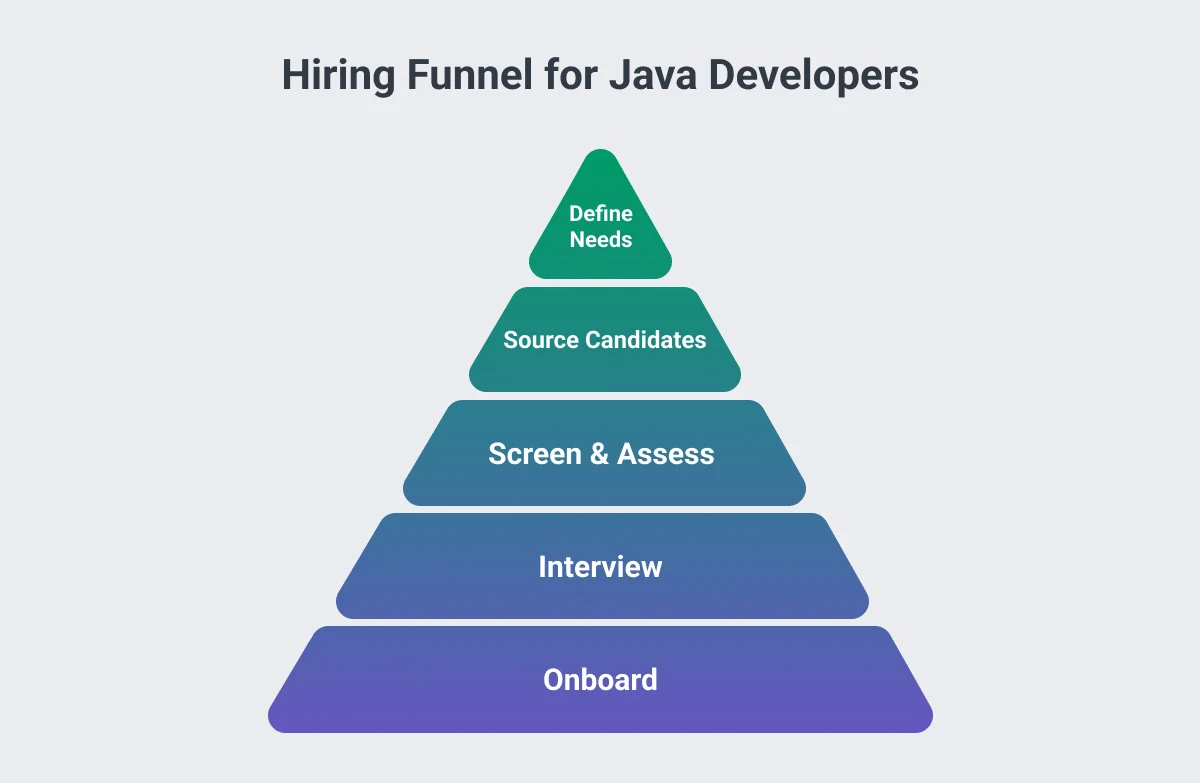
Hiring top Java developers often requires moving quickly and efficiently. A slow or fragmented process increases the risk of losing strong candidates and can delay your project timeline. Here are some ways to optimize your hiring approach:
Improve Time-to-Hire
Streamline internal approvals and decision-making so that strong candidates do not sit idle in your pipeline. A clear hiring workflow and defined interview stages can help speed up the process.
When working with an outsourcing partner such as Softjourn, much of the upfront sourcing, screening, and technical evaluation is already completed, which significantly reduces time-to-hire.
Leverage Remote and Distributed Talent
Expanding your search beyond local markets provides access to a much larger pool of skilled Java developers. Many companies today successfully build high-performing distributed teams by working with trusted software partners who can provide vetted developers with the right technical and collaboration skills.
Softjourn has extensive experience helping clients extend their Java development teams across time zones while maintaining strong alignment with internal processes and project goals.
Prioritize Effective Onboarding
Once you have selected the right candidates, focus on a smooth onboarding process. Clear documentation, early project context, and active communication during the first weeks help new developers integrate quickly and become productive contributors.
If you are augmenting your team through an outsourcing partner, this onboarding process can be further streamlined, as the partner will already have prepared developers who are familiar with agile processes and distributed team practices.
Set Clear Expectations and Growth Paths
Whether hiring internally or through a partner, clearly communicating goals, deliverables, and performance expectations sets the foundation for long-term success. Developers are more likely to stay engaged when they see a clear path for contribution and growth.
Final Tips for Hiring the Best Java Developers
Hiring skilled Java developers is an important investment that can directly impact the success of your software projects. As you refine your hiring strategy, keep these key points in mind:
- Be clear about what you need. The more precisely you define your project goals, technology stack, and team expectations, the easier it will be to identify candidates who are a strong match.
- Balance technical expertise with collaboration. Look for developers who can not only write excellent code but also work effectively within your team, communicate clearly, and adapt to changing project needs.
- Move quickly and decisively. Top Java developers are in high demand. An efficient and streamlined hiring process will help you secure strong candidates before they are hired elsewhere.
- Consider flexible team models. In many cases, augmenting your team with an experienced outsourcing partner can help you access specialized Java expertise, speed up delivery, and scale your development capacity with less risk. Partners like Softjourn can provide skilled Java developers who integrate seamlessly with your existing team and delivery processes.
Build Your Java Development Team With Confidence
Hiring the right Java developers is a critical step in building reliable, scalable software. By taking the time to define your needs, assess candidates thoroughly, and adopt an efficient hiring process, you can attract developers who will contribute real value to your projects.
Whether you are looking to hire full-time Java developers or extend your team with additional expertise, partnering with an experienced software development firm can help you move faster and with greater confidence. Softjourn has helped clients across industries build high-performing Java teams and deliver successful software solutions.
If you are planning your next project or scaling your development capabilities, we would be happy to explore how we can support your goals.
FAQ
Q: What are the key steps in the Java developer hiring process?
A: The Java developer hiring process typically involves defining the job requirements, sourcing candidates, screening resumes, conducting interviews, and evaluating technical skills. It's important to assess the candidate's expertise in Java, problem-solving abilities, and cultural fit within your team.
Q: How can I recruit top Java talent for my business?
A: To recruit top Java talent, you can use a combination of job boards, recruitment agencies, and professional networks like LinkedIn. Attending tech conferences and meetups can also help you connect with skilled java programmers. Offering competitive salaries and benefits is crucial to attract the best candidates.
Q: What should be included in a Java developer sample job description?
A A Java developer's sample job description should include the job title, responsibilities, required skills, qualifications, and experience. It should specify the knowledge of Java versions, such as Java 8, and any specific Java frameworks or tools the candidate must be familiar with. Additionally, mention whether the position is for junior or senior developers.
Q: How do I determine the salary for a Java developer?
A: The salary for a Java developer can vary based on experience, location, and the complexity of the projects they will handle. Research industry standards and consider the cost to hire in your region. Offering competitive salaries is essential to attract and retain top talent.
Q: What are the benefits of hiring remote Java developers?
A: Hiring remote Java developers allows you to access a global talent pool, often reducing the cost to hire. It provides flexibility and can lead to increased productivity. However, it's important to have effective communication and project management tools in place to ensure successful collaboration.
Q: How can I find and hire Java developers for freelance projects?
A: To find and hire java developers for freelance projects, you can use outsourcing companies, job boards, talent platforms, and developer websites.
Q: What qualities make a great Java developer?
A: A great Java developer should have strong expertise in Java, problem-solving skills, and the ability to work collaboratively. They should be adaptable, have a continuous learning mindset, and possess good communication skills. Experience with specific Java frameworks and tools is also beneficial.
Q: What is the cost to hire a senior Java developer?
A: The cost to hire a senior Java developer varies based on factors such as location, industry, and the developer's experience level. Senior developers typically command higher salaries due to their advanced skills and expertise. It's important to balance cost with the value they bring to your projects.
Q: How can I ensure a successful recruitment process for Java developers?
A: To ensure a successful recruitment process for Java developers, clearly define the job requirements and use a structured interview process. Evaluate both technical skills and cultural fit. Consider involving current team members in the interview process to assess the candidate's potential for collaboration.