
Digital Transformation Models: Complete Guide to Selection and Implementation
Learn which digital transformation model best fits your organization, and get a proven roadmap for implementation that avoids the 70% failure rate.

While the concept of digital transformation sounds promising, many companies dive in without a clear direction. This is the failing formula. According to a study by McKinsey, 70% of digital transformation efforts fail to achieve their goals. This highlights the need for a practical, structured approach, and more specifically, the right digital transformation model.

In this guide, we'll explore six digital transformation models, as well as when to use a hybrid model, provide a practical framework for selecting the right one for your organization, and walk through implementation strategies that increase your chances of success.
If you want to understand the common pitfalls in more depth, check out our analysis of why digital transformations fail.
What is a Digital Transformation Model?
A digital transformation model is the overarching approach that guides how an organization integrates digital technology across its operations.
It's not just a framework or a strategy document but the foundational philosophy that determines which processes you'll transform first, how you'll measure success, and what outcomes you're optimizing for.
Think of it this way:
- Strategy = Your specific goals and priorities (increase revenue by 20%, reduce costs by 15%)
- Model = Your chosen approach to transformation (customer-centric, operational, data-driven, etc.)
- Framework = The structured methodology you use to execute (TOGAF, McKinsey 7S, Agile, etc.)
The challenge? There are multiple proven models to choose from, each suited to different business contexts, maturity levels, and strategic objectives. Choose the wrong one, and you risk misallocating resources, confusing your teams, and joining that 70% statistic. Choose the right one, and you create a clear roadmap that aligns your technology investments with measurable business outcomes.

Why You Need a Model
Digital transformation without a model is like building a house without blueprints. You might have great materials (technology), skilled workers (your team), and a vision (your strategy), but without a structured approach, you'll waste resources and likely end up with something that doesn't meet your needs.
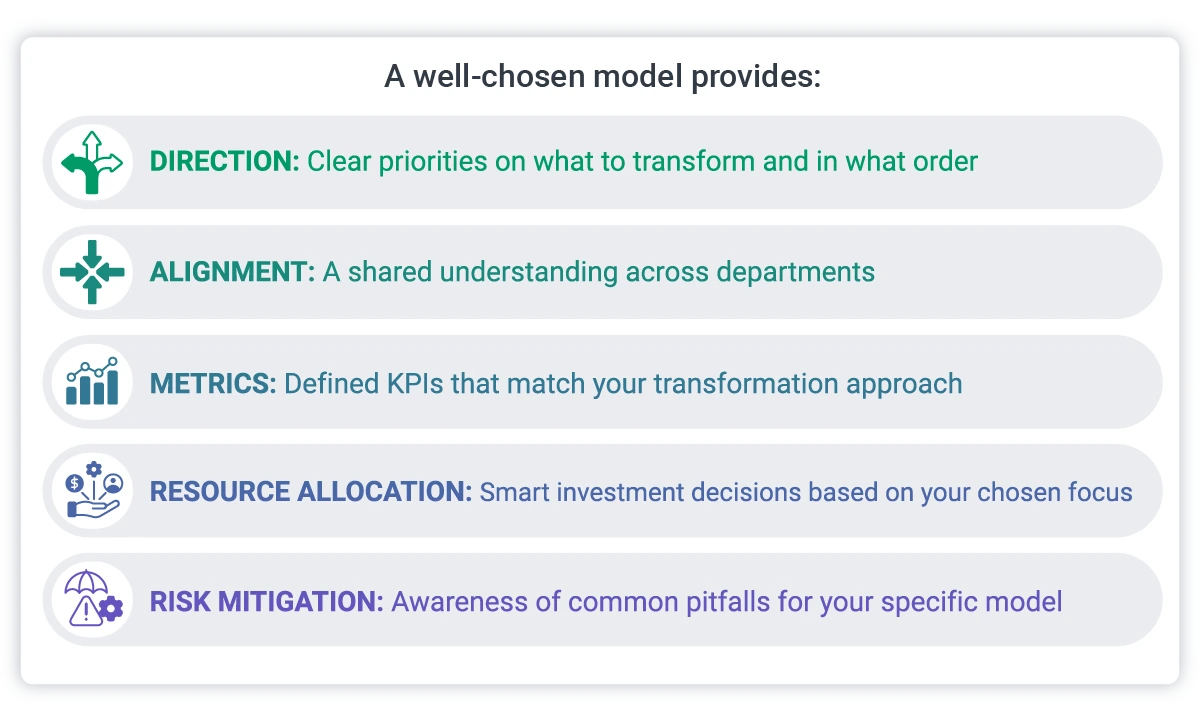
A well-chosen model provides:
- Direction: Clear priorities on what to transform and in what order
- Alignment: A shared understanding across departments
- Metrics: Defined KPIs that match your transformation approach
- Resource allocation: Smart investment decisions based on your chosen focus
- Risk mitigation: Awareness of common pitfalls for your specific model
6 Types of Digital Transformation Models
1. Customer-Centric Transformation Model
This model prioritizes enhancing customer experience at every touchpoint. Organizations adopting this approach restructure their operations around customer needs, preferences, and behaviors rather than internal processes.
Best for:
- Consumer-facing businesses (retail, e-commerce, hospitality)
- Companies with high customer churn
- Brands competing primarily on experience rather than price
- Organizations with 100-10,000+ employees looking to differentiate through service
Core focus: Personalization, omnichannel delivery, customer journey optimization, and real-time responsiveness to customer feedback.
Key advantages:
- Directly impacts revenue through improved retention and loyalty
- Measurable outcomes (NPS, CSAT, customer lifetime value)
- Creates competitive differentiation in crowded markets
- Builds long-term customer relationships and brand equity
Limitations:
- Requires significant investment in data infrastructure and analytics
- Can be difficult to demonstrate immediate ROI
- May expose inefficiencies in backend systems
- Demands cultural shift toward customer obsession across all departments
Technology requirements: CRM systems, customer data platforms (CDP), analytics tools, AI for personalization, omnichannel communication platforms, chatbots, and conversational AI.
Example: Netflix transformed from a DVD rental service to a streaming platform by intensely focusing on customer viewing preferences, recommendation algorithms, and seamless user experience across devices.

2. Operational Process Transformation Model
This model focuses on digitizing and optimizing internal workflows to improve efficiency, reduce costs, and accelerate time-to-market. The goal is to eliminate manual processes, reduce errors, and enable data-driven decision-making.
Best for:
- Manufacturing and logistics companies
- Organizations with complex, manual processes
- Businesses under cost pressure or margin squeeze
- Companies in their early digital maturity stages
Core focus: Process automation, workflow optimization, cloud migration, IoT integration, and real-time operational visibility.
Key advantages:
- Clear, measurable ROI through cost reduction
- Faster time-to-value compared to other models
- Reduces human error and improves consistency
- Frees employees for higher-value work
Limitations:
- Can create resistance from employees who fear job displacement
- May require significant legacy system modernization
- Risk of optimizing the wrong processes without strategic alignment
- Doesn't directly address customer-facing issues
Technology requirements: Cloud infrastructure, automation tools (RPA), IoT sensors, ERP systems, workflow management platforms, analytics dashboards.
Example: Amazon's warehouse operations use robotics, AI-powered inventory management, and automated fulfillment to process millions of orders with minimal human intervention, dramatically reducing costs and delivery times.

3. Business Model Transformation
This model involves fundamentally rethinking how the organization creates, delivers, and captures value. It often means shifting from traditional revenue models to digital-first approaches like subscriptions, platforms, or services.
Best for:
- Companies facing industry disruption
- Organizations with declining traditional revenue streams
- Enterprises seeking new markets or customer segments
Core focus: Revenue model innovation, market repositioning, product-to-service shifts, platform strategies, and ecosystem development.
Key advantages:
- Creates entirely new revenue streams
- Positions company ahead of disruption rather than reacting to it
- Can dramatically increase company valuation
- Opens access to new customer segments
Limitations:
- Highest risk of the six models
- May cannibalize existing profitable businesses
- Requires significant upfront investment with uncertain returns
- Demands buy-in from board and investors for patient capital
Technology requirements: Cloud platforms, APIs for ecosystem integration, subscription management systems, marketplace platforms, payment processing infrastructure.
Example: Adobe shifted from selling perpetual software licenses (Creative Suite) to a subscription-based model (Creative Cloud), transforming from one-time sales to recurring revenue and increasing their market value from $30B to over $200B.

4. Data-Driven Transformation Model
This model positions data as the core strategic asset, building capabilities to collect, analyze, and act on insights faster than competitors. The focus is on creating a data infrastructure that enables predictive decision-making and continuous optimization.
Best for:
- Financial services and insurance companies
- Healthcare and pharmaceutical organizations
- Companies with complex supply chains
- Businesses where insights create competitive advantage
Core focus: Data infrastructure, analytics capabilities, predictive modeling, data governance, and democratizing data access across the organization.
Key advantages:
- Enables proactive rather than reactive decision-making
- Improves accuracy of forecasts and resource allocation
- Identifies new opportunities hidden in data
- Creates compounding advantage as data accumulates
Limitations:
- Requires significant upfront investment in data infrastructure
- Long time-to-value (12-24 months minimum)
- Data quality and governance challenges
- Requires specialized talent (data scientists, engineers)
Technology requirements: Data warehouses/lakes, business intelligence tools, machine learning platforms, data governance systems, ETL/ELT tools, real-time analytics.
Example: Capital One transformed from a traditional credit card company into a technology company that happens to do banking, using data analytics and machine learning to personalize offers, assess risk, and detect fraud in real-time.

5. Cultural and Organizational Transformation Model
his model recognizes that technology alone doesn't drive transformation: people do. It focuses on building a culture of innovation, agility, and continuous learning while restructuring teams and workflows to support digital ways of working.
Best for:
- Large enterprises with entrenched cultures
- Organizations with low employee engagement
- Companies struggling with change adoption
- Businesses moving from hierarchical to agile structures
Core focus: Leadership development, employee empowerment, cross-functional collaboration, agile methodologies, innovation programs, and digital skills development.
Key advantages:
- Addresses root cause of transformation failure (culture resistance)
- Improves employee engagement and retention
- Creates sustainable change rather than one-time projects
- Builds organizational agility for future changes
Limitations:
- Longest time-to-value of any model (18-36 months)
- Difficult to measure ROI directly
- Requires consistent executive commitment
- Can face middle management resistance
Technology requirements: Collaboration platforms (Slack, Teams), project management tools, learning management systems, employee engagement platforms, agile workflow tools.
Example: Microsoft's transformation under Satya Nadella focused first on shifting from a "know-it-all" to a "learn-it-all" culture, emphasizing growth mindset, collaboration, and customer empathy before implementing new technologies.

6. Digital Ecosystem Transformation Model
This model focuses on building a network of strategic partnerships, integrations, and platforms that create value beyond the organization's boundaries. It's about orchestrating an ecosystem where partners, customers, and third parties co-create value.
Best for:
- Platform businesses (marketplaces, SaaS)
- Companies with complex value chains
- Organizations seeking to scale without linear growth in resources
- Businesses moving toward platform or network effects
Core focus: API-first architecture, partner enablement, platform development, marketplace creation, and ecosystem orchestration.
Key advantages:
- Enables exponential growth through network effects
- Reduces need to build everything in-house
- Creates stickiness through ecosystem lock-in
- Accelerates innovation through partner contributions
Limitations:
- Requires giving up some control to partners
- Complex governance and coordination
- Platform must reach critical mass for value
- Revenue sharing reduces margins
Technology requirements: API management platforms, partner portals, marketplace infrastructure, integration platforms (iPaaS), developer tools, ecosystem analytics.
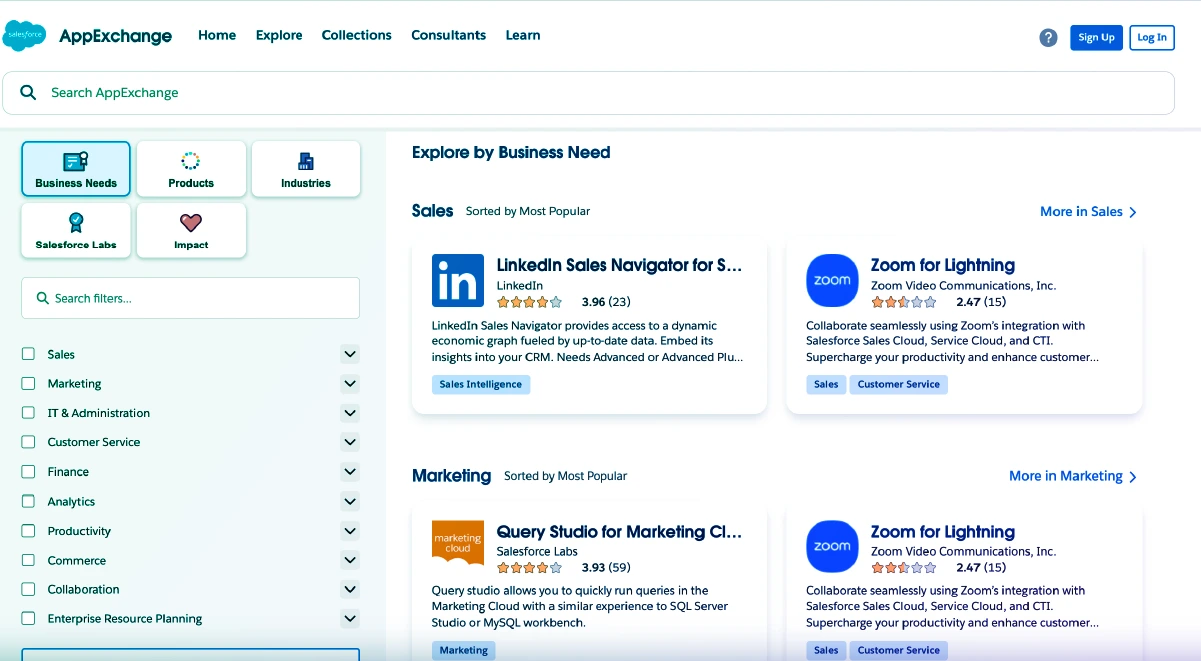
Example: Salesforce transformed from a CRM product into a platform ecosystem with AppExchange, enabling thousands of third-party developers to build applications that extend Salesforce's value, creating a $7B+ partner economy.
How to Choose the Right Digital Transformation Model
Selecting the wrong model is one of the fastest ways to struggle during transformation. The right choice depends on your organization's context, not what worked for another company or what's trending in the industry.
Choosing the right model comes down to answering three key questions:
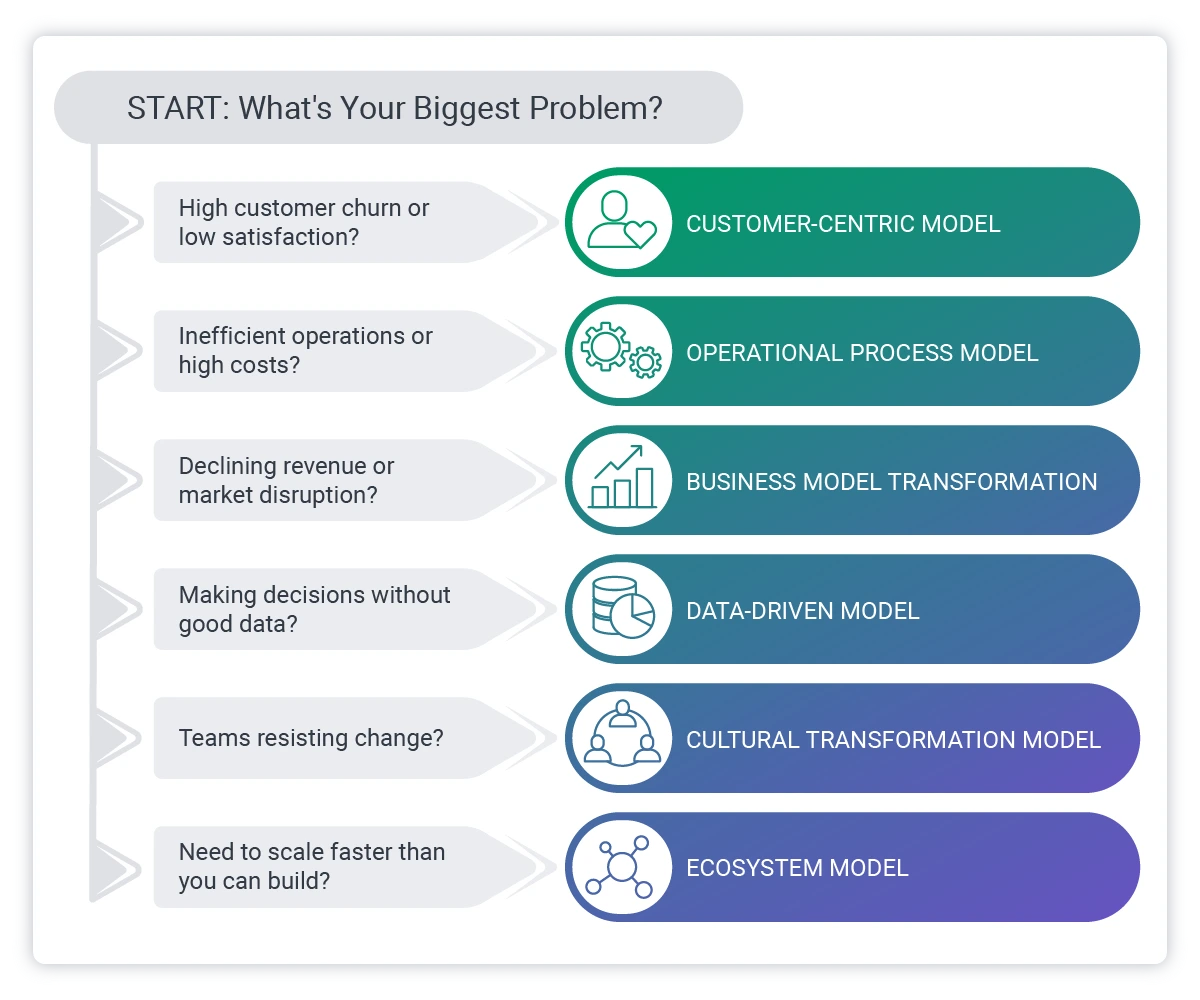
1. What's Your Biggest Problem?
High customer churn or low satisfaction? → Customer-Centric Model
Inefficient operations or high costs? → Operational Process Model
Declining revenue or market disruption? → Business Model Transformation
Making decisions without good data? → Data-Driven Model
Teams resisting change? → Cultural Transformation Model
Need to scale faster than you can build? → Ecosystem Model
2. What's Your Digital Maturity?
Just starting out (basic digital tools, manual processes): Start with Operational Process Model. Build your foundation first.
Moderately digital (some systems integrated, basic analytics): Customer-Centric, Data-Driven, or Cultural models are accessible.
Digitally mature (integrated systems, data-driven culture): Business Model Transformation or Ecosystem Model to stay ahead.
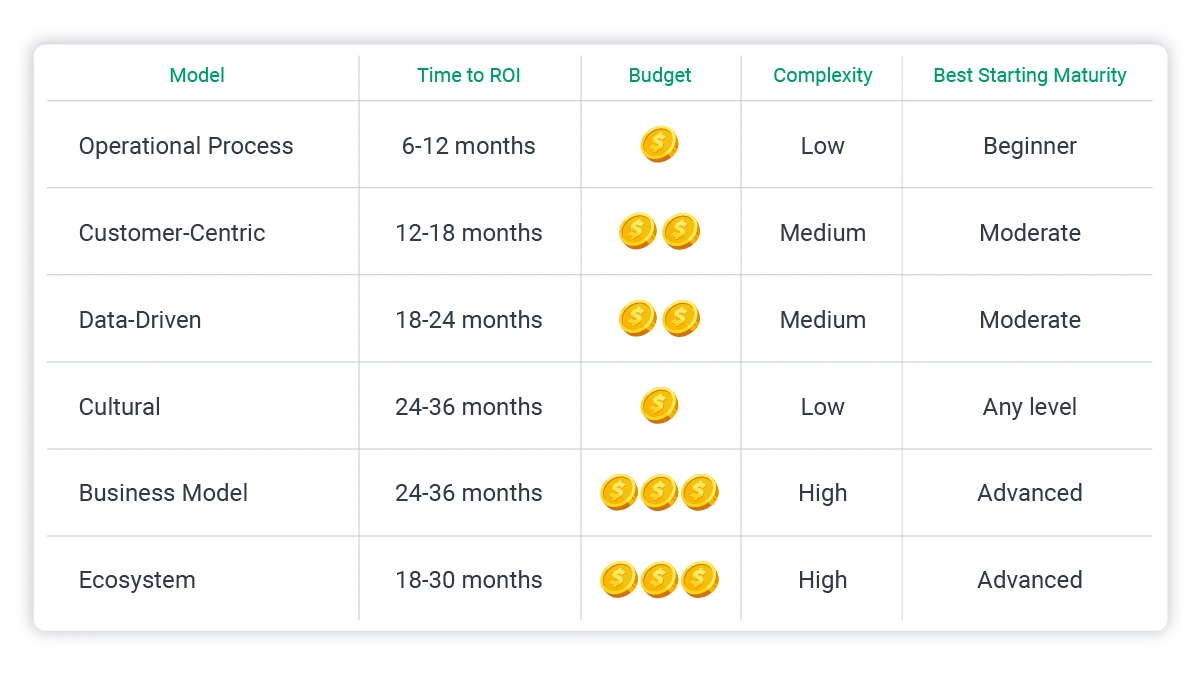
3. What Resources Do You Have?
Common Mistakes to Avoid
- Choosing what's trendy instead of what solves your actual problem
- Starting too complex when you lack foundational digital capabilities
- Copying competitors without understanding if you face the same challenges
- Trying to do everything at once instead of prioritizing one model (or see the next section on hybrid approaches)
Hybrid Approaches: When to Combine Models
Here's the reality: most successful digital transformations don't follow a single model. They blend approaches strategically. According to research from MIT Sloan, companies that combine multiple models in a deliberate sequence achieve better outcomes than those that rigidly stick to one.
The key is intentional combination, not doing everything at once.
Why Hybrid Approaches Work
Single models have blind spots, for example:
- A customer-centric transformation won't succeed if your operations can't deliver on new promises
- An operational transformation might optimize the wrong processes if you haven't first defined what customers actually value
- A data-driven approach fails without the cultural foundation to act on insights
Combining models lets you address these dependencies systematically.
Three Proven Hybrid Combinations
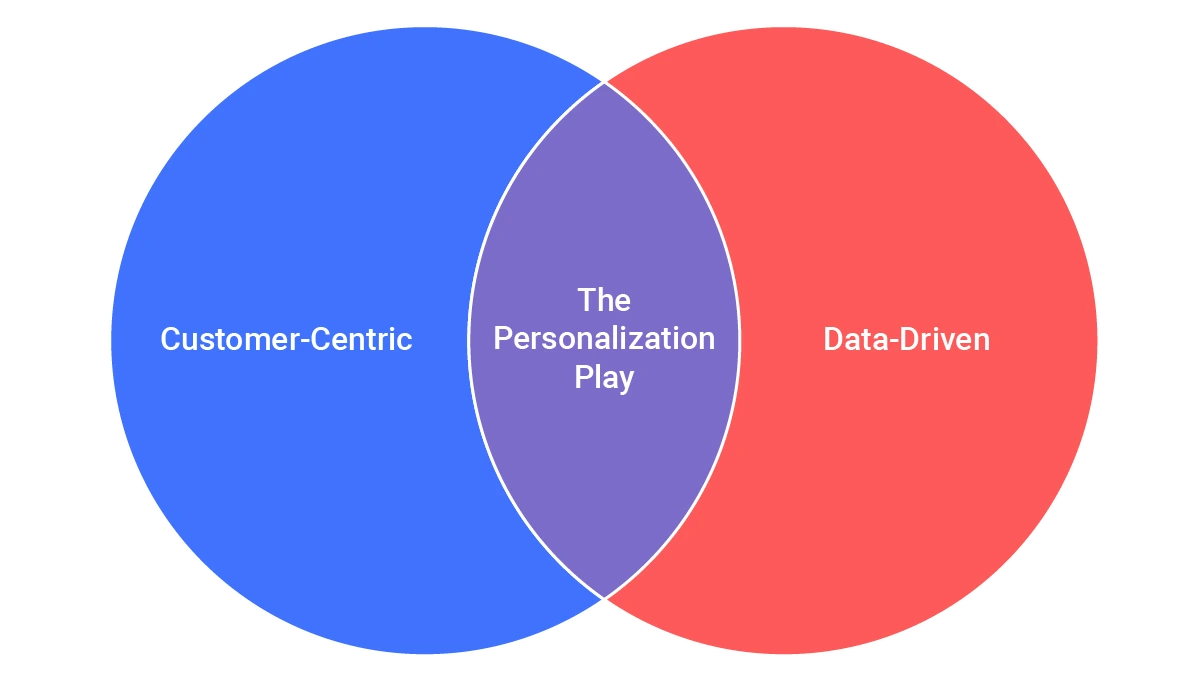
1. Customer-Centric + Data-Driven (The Personalization Play)
Best for: Retail, e-commerce, financial services, ticketing & events, expenses management
The approach: Use data infrastructure to enable customer personalization at scale.
Sequence:
- Year 1: Build data foundation (customer data platform, analytics)
- Year 2: Launch personalized experiences powered by that data
- Ongoing: Continuously optimize based on customer behavior
Why it works: Customer expectations demand personalization, but personalization is impossible without robust data capabilities.
Example: Spotify combines customer-centric design with deep data science to create Discover Weekly, personalized playlists that drive 40% of new artist discovery on the platform.
2. Operational + Cultural (The Sustainable Transformation)
Best for: Manufacturing, healthcare, traditional enterprises, government
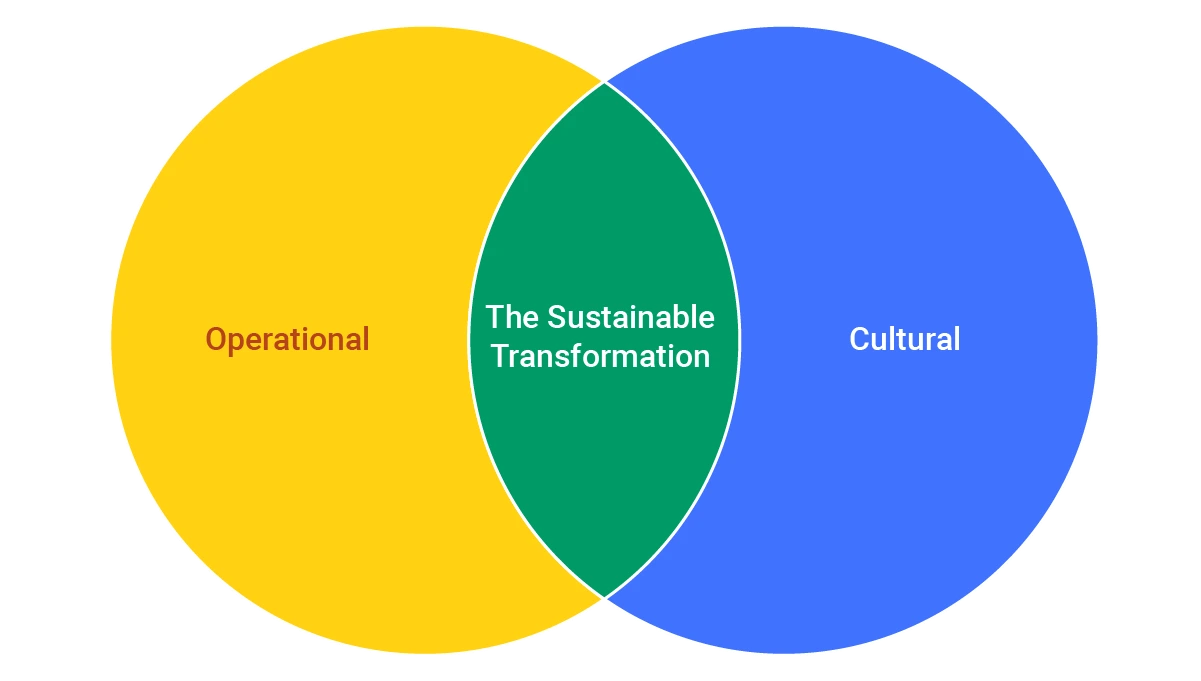
The approach: Optimize processes while simultaneously building the culture to sustain those changes.
Sequence:
- Months 1-6: Quick operational wins (automation, process improvement)
- Months 6-18: Cultural programs (training, incentives, leadership development)
- Ongoing: Employees drive continuous improvement
Why it works: Technology changes are easy to implement but hard to sustain without cultural buy-in. Starting with operational wins builds credibility for broader cultural change.
Example: Toyota's production system combines operational excellence (lean manufacturing) with a culture of continuous improvement (kaizen), where every employee is empowered to identify and solve problems.
3. Business Model + Ecosystem (The Platform Strategy)
Best for: B2B SaaS, marketplaces, technology companies, fintech companies
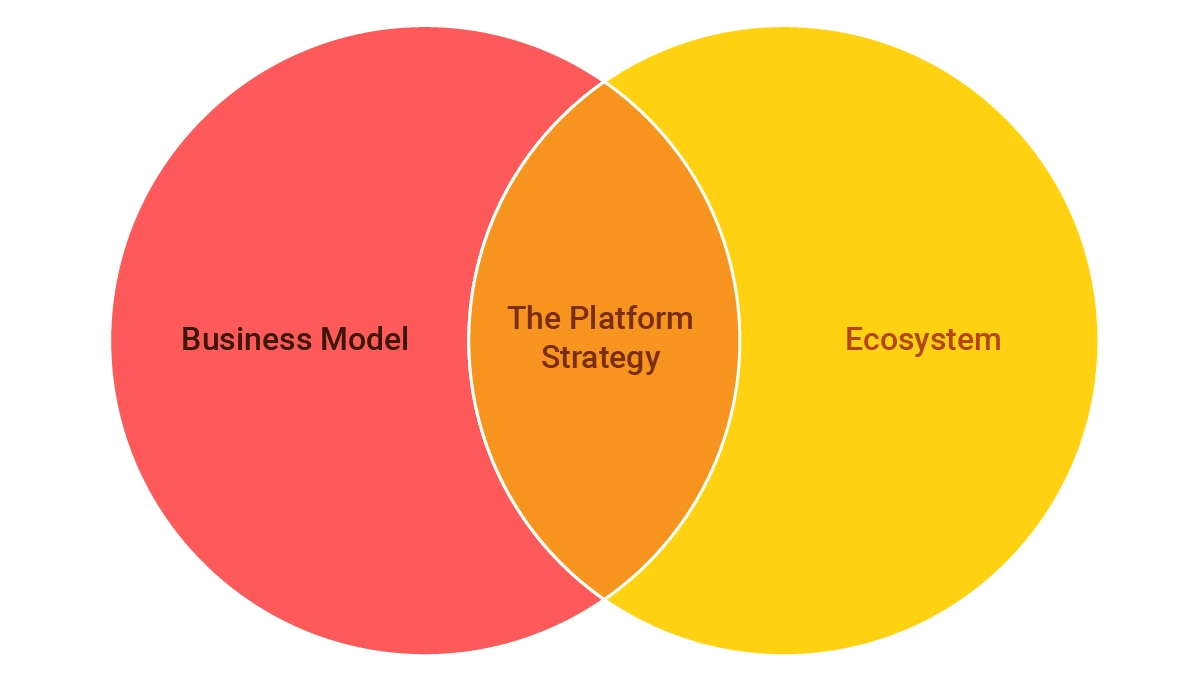
The approach: Transform your business model into a platform while building an ecosystem of partners who extend your value.
Sequence:
- Year 1: Develop core platform and API infrastructure
- Year 2: Recruit initial strategic partners
- Year 3+: Scale ecosystem and create network effects
Why it works: Platform business models are exponentially more valuable with strong ecosystems. Attempting either alone leaves money on the table.
Example: Shopify transformed from an e-commerce platform into an ecosystem, combining their business model shift with 8,000+ apps and partners that extend Shopify's capabilities, creating a $100B+ company.
How to Sequence Multiple Models
If you're combining models, use this approach:
Phase 1: Foundation (Months 1-12) Start with one primary model that addresses your biggest pain point and builds capabilities you'll need later.
Phase 2: Extension (Months 12-24) Layer in a complementary model that leverages what you built in Phase 1.
Phase 3: Optimization (Months 24+) Continuously refine both models, letting them reinforce each other.
Red Flags: When Hybrid Becomes "Everything at Once"
Avoid these mistakes:
Launching 3+ models simultaneously - You'll overwhelm your organization and dilute focus
Combining models without clear sequencing - Dependencies matter; data-driven requires operational foundation
Not appointing clear owners - Each model needs dedicated leadership, or hybrid becomes "no one's responsible"
Skipping the foundation - Don't jump to business model transformation if your operations are broken
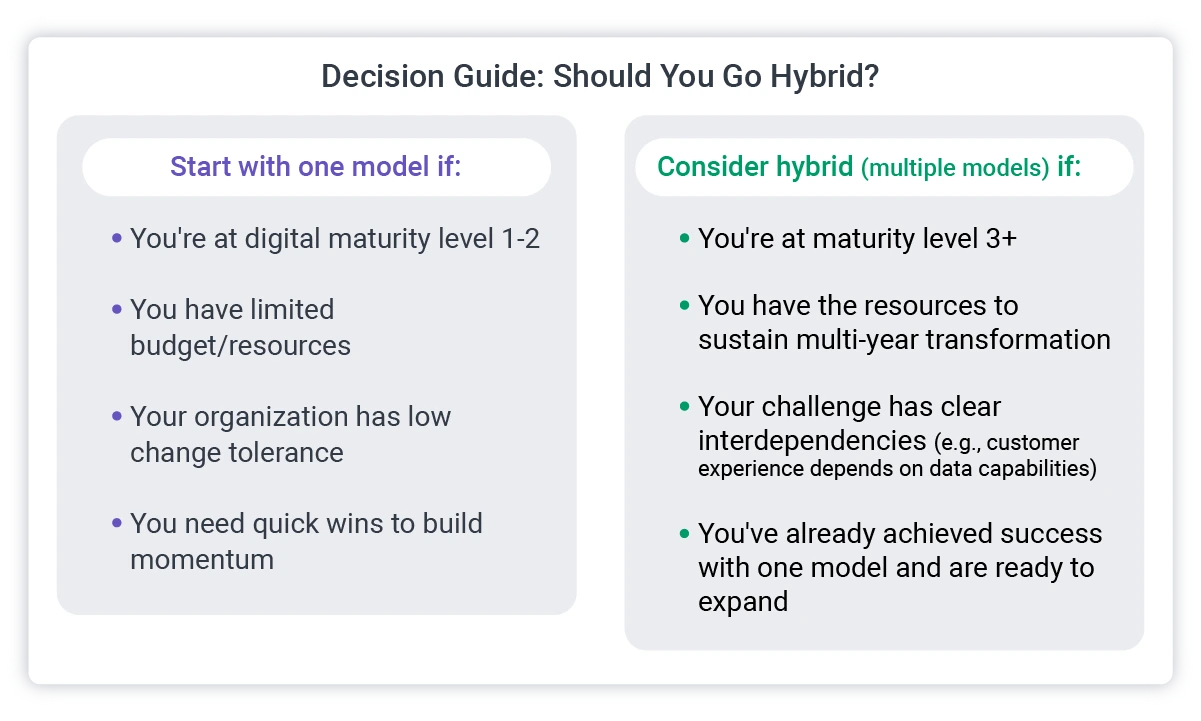
Decision Guide: Should You Go Hybrid?
Implementation Roadmap
Regardless of which model(s) you choose, successful implementation usually follows three phases. The timeline stretches or compresses based on your model's complexity, but the pattern remains consistent.
Phase 1: Foundation (Months 1-6)
Start by getting everyone on the same page. Assess where you are today, define what success looks like, and identify your transformation team. The biggest mistake at this stage is spending months planning without taking action.
Your goal is to launch one small pilot project by month three. This pilot should be meaningful enough to demonstrate value but small enough to complete quickly. Early wins build momentum and credibility for the larger transformation ahead.
By the end of this phase, you should have clear baseline metrics, executive buy-in, and proof that your chosen approach can work in your organization.
Phase 2: Scale and Embed (Months 7-18)
Now you expand what worked in your pilot. This means investing in technology, training people on new skills, and standardizing processes across departments. The transformation starts feeling real to most of your organization during this phase.
This phase is about building the muscle memory of digital operation. New tools and processes need to become second nature, not special projects that require constant attention from leadership.
Phase 3: Optimize and Sustain (Months 19+)
Digital transformation doesn't have an end date. Phase three is about making continuous improvement part of how you operate. You're refining what you built, measuring impact, and identifying the next set of capabilities to develop.
Many organizations stumble here by declaring victory and moving on. The most successful transformations treat this phase as permanent, constantly evolving as technology and customer expectations change.
This is also when you might consider layering in a second model if you've successfully established the first and your organization has capacity for additional complexity.
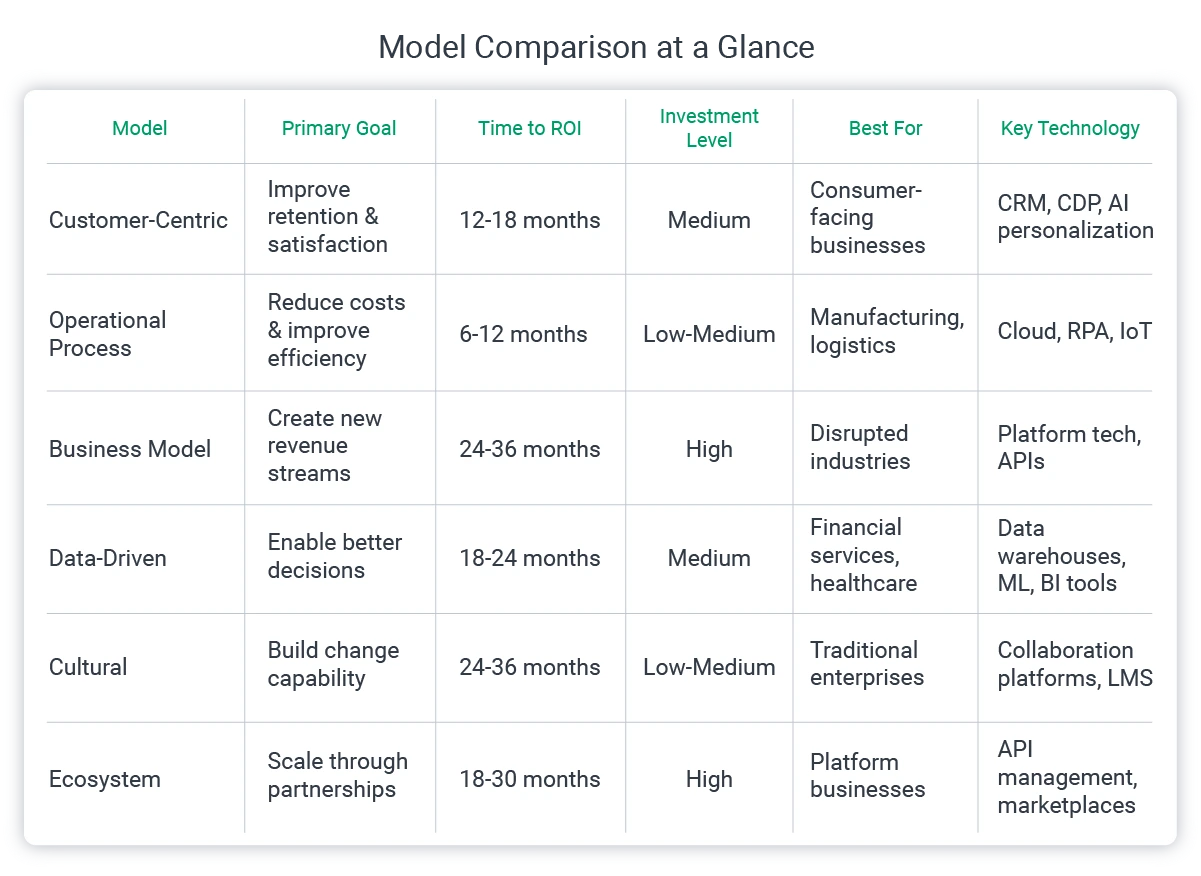
Model Comparison at a Glance
Real-World Digital Transformation Examples
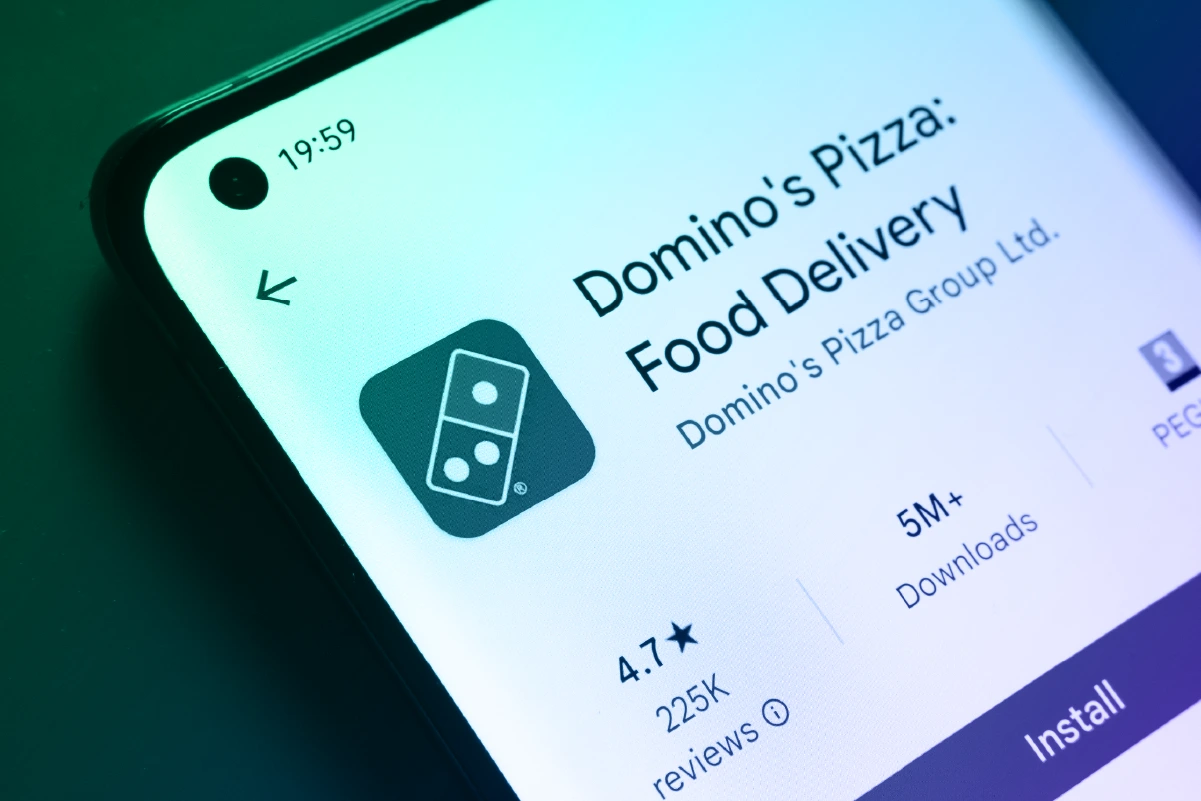
Example 1: Domino's Pizza - Customer-Centric + Operational
The Challenge: By 2008, Domino's was losing market share to competitors. Customer satisfaction scores were among the lowest in the industry, and their ordering process was outdated.
Model Approach: Domino's combined customer-centric transformation with operational improvements. They rebuilt their entire customer experience around digital ordering while simultaneously modernizing kitchen operations.
What They Did:
- Launched "Pizza Tracker" showing real-time order status
- Enabled ordering through multiple channels (app, smart TV, Alexa, even emoji)
- Digitized kitchen operations with automated quality checks
- Used data to optimize delivery routes and timing
Results: Digital orders grew from 50% to over 75% of sales. Stock price increased 6,500% from 2010 to 2020. Domino's became a technology company that happens to sell pizza. Read more→
Example 2: Maersk - Data-Driven Transformation
The Challenge: The world's largest shipping company was drowning in paper documentation. A single shipment could require 200+ interactions and 30+ documents across dozens of parties.
Model Approach: Data-driven transformation focused on digitizing the entire supply chain ecosystem.
What They Did:
- Partnered with IBM to build TradeLens, a blockchain-based platform
- Digitized shipping documentation and tracking
- Created a data standard for the entire shipping industry
- Built APIs for customs, ports, and logistics partners
Results: Reduced documentation processing from days to hours. Cut shipping delays by 40%. Over 150 organizations now use the platform, processing millions of shipments. Read more.

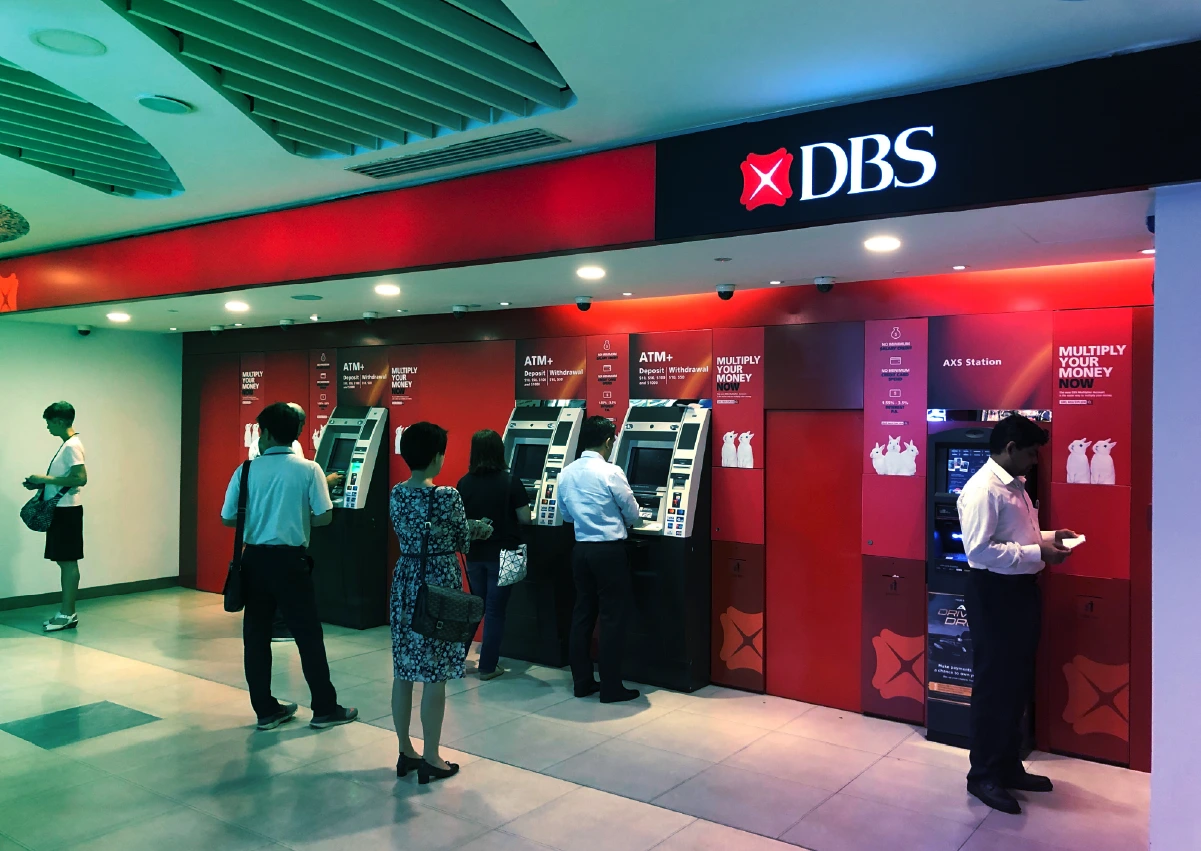
Example 3: DBS Bank - Cultural Transformation
The Challenge: Singapore's DBS Bank needed to compete with digital-native fintech startups. Their traditional banking culture was slowing innovation.
Model Approach: Cultural transformation first, technology second. They focused on becoming a "28,000-person startup."
What They Did:
- Sent 300 senior leaders to Silicon Valley to experience startup culture
- Reorganized into small, cross-functional agile teams
- Moved 95% of applications to cloud
- Created internal "hackathons" that generated 1,500+ new ideas
- Changed hiring practices to attract tech talent
Results: Named "World's Best Digital Bank" by Euromoney for four consecutive years. Customer satisfaction scores increased 40%. Time to market for new products dropped from months to weeks. Discover more.
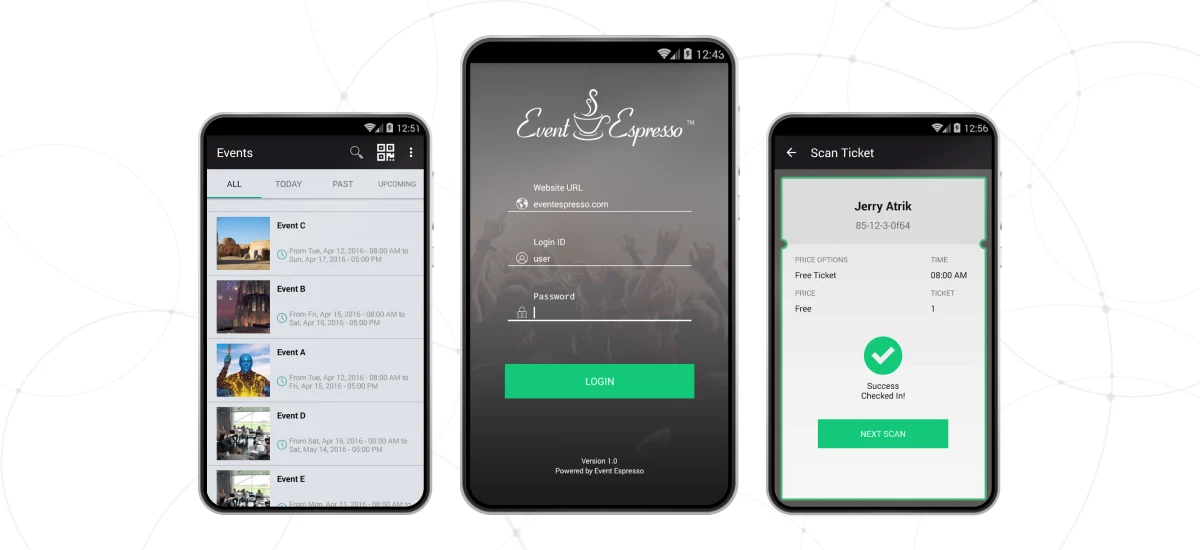
Example 4: IMS Management Services - Business Model Transformation
The Challenge: IMS Management Services had built their own ticket and cash management system for festivals and fairs that served them well for years, but the technology was aging. They needed to modernize to a current tech stack before the legacy system became unreliable.
Model Approach: Business model transformation through a complete software rewrite, moving from legacy desktop application to a modern, scalable platform.
What They Did:
- Conducted comprehensive discovery phase to capture all existing functionality
- Rebuilt the system with modern tech stack (.NET, SQLite, WPF)
- Streamlined reporting workflows with preview and export capabilities
- Added automated backup and restore features
- Created user manual for rapid adoption
Results: Reports now generate faster than the legacy system. Operations improved through ability to preview and export reports. Complete system delivered in 6 months with additional enhancements ongoing. Read more.
Example 5: Technology Services Company - Operational Process Model
The Challenge: A company managing complex hardware systems across multiple locations had adopted a new architecture on their Solution Architect's recommendation, but stakeholders had concerns about scalability, cost-effectiveness, and long-term viability.
Model Approach: Operational process transformation through comprehensive architecture assessment and strategic rebuild.
What They Did:
- Conducted full codebase and infrastructure audit
- Evaluated architectural decisions against business goals
- Determined rebuild was better than refactoring existing system
- Implemented modern stack with AWS, PostgreSQL, and microservices
- Collaborated closely with client's engineering team
Results: Clear strategic direction for technology investments. Modernized, scalable system ready for future growth. Improved collaboration between internal and external teams. Foundation built for market-leading solution. Read more.

Example 6: UPC Open Banking - Data-Driven + Operational (Hybrid)
The Challenge: Ukrainian Processing Center needed to migrate from on-premise infrastructure to AWS to comply with new Open Banking regulations while maintaining PCI DSS compliance for their card processing operations serving banks across 16 European countries.
Model Approach: Hybrid transformation combining operational modernization with data-driven compliance, using phased AWS migration with serverless architecture.
What They Did:
- Migrated infrastructure to AWS using serverless architecture
- Isolated all environments within single AWS account for security
- Implemented Infrastructure as Code through Terraform
- Maintained PCI DSS compliance throughout migration
- Coordinated across multiple stakeholders and partners
Results: Enhanced performance, scalability, and security. Reduced operational costs through serverless technologies. Achieved regulatory compliance for Open Banking requirements. Positioned UPC to serve growing customer base across Europe. Read more.
When to Bring in External Expertise
Most digital transformations benefit from outside perspective at some point. The question isn't whether you need help, but when and what kind.

Signs You Should Consider External Partners
- You lack foundational digital capabilities. If you're at maturity level 1-2 and don't have in-house expertise in cloud architecture, data engineering, or digital product development, trying to learn while transforming is risky. External partners can accelerate your learning curve and prevent costly mistakes.
- Your chosen model requires specialized skills. Ecosystem transformations need platform architecture expertise. Data-driven models require data science and ML engineering capabilities. Business model transformations often need product strategy experience. If these skills don't exist internally, build-vs-buy calculations usually favor bringing in specialists.
- Timeline pressure is real. Internal teams juggle transformation work alongside daily responsibilities. If you need to move faster than internal capacity allows, external resources can maintain momentum without burning out your team.
- Organizational resistance is blocking progress. Sometimes internal advocates lack the credibility to drive change. External consultants bring objectivity and can say difficult truths that insiders can't. The "prophet from out of town" effect is real.
- Stakes are too high to get it wrong. When transformation is existential (your industry is being disrupted, competitors are pulling ahead, or investors are demanding digital progress) the cost of failure exceeds the cost of expert guidance.
Questions to Ask Potential Partners
- What digital transformation models have you successfully implemented, and which was most similar to our situation?
- Can you share client references from our industry?
- How do you measure transformation success?
- What does your capability transfer approach look like?
- At what point do you consider your engagement complete?
- What's the typical team structure and time commitment required from our side?
The right partner accelerates your transformation and leaves you more capable than when they arrived. The wrong one creates dependency and drains resources without building lasting value.
Final Word
The 70% failure rate in digital transformation exists because organizations rush in without clear direction. With the right model, realistic expectations, and sustained commitment, you can join the 30% that succeeds.
Ready to start your digital transformation journey? Whether you need help selecting the right model, implementing your strategy, or navigating complex organizational change, our team has the experience to guide you through every phase. Contact us to get started.
Frequently Asked Questions
A digital transformation model is your overarching strategic approach: it defines what you're transforming and why, such as customer experience, operations, or business model. A digital transformation framework is the structured methodology you use to execute that model, such as TOGAF, McKinsey 7S, or Agile. Think of the model as your "what" and the framework as your "how."
How long does a digital transformation take? Digital transformation timelines vary by model complexity. Operational process transformations typically take 12 to 18 months to reach full deployment. Customer-centric and data-driven models generally require 18 to 24 months. Business model transformation and cultural change usually span 24 to 36 months, and ecosystem models fall in a similar range depending on partner adoption. These timelines assume adequate resources and executive commitment — under-resourcing can double these timeframes.
A digital transformation business model refers to fundamentally rethinking how your organization creates, delivers, and captures value through digital technology. This often involves shifting from traditional revenue models to digital-first approaches like subscriptions, platforms, or services.
Yes. While these models were developed for enterprises, small businesses can adapt them by starting with the operational process model for cost efficiency, focusing on the customer-centric model to compete with larger players, and using the cultural transformation model to build agility from the start. Small businesses often have an advantage: fewer legacy systems and more organizational flexibility to implement change quickly.
The six main types of digital transformation are customer-centric transformation (enhancing customer experience), operational process transformation (improving efficiency and reducing costs), business model transformation (creating new revenue streams), data-driven transformation (leveraging analytics for better decisions), cultural transformation (building innovation and agility), and ecosystem transformation (scaling through partnerships). Most successful transformations combine multiple types in a hybrid approach.
Digital transformation costs vary widely by model. Lower-investment efforts in the range of $250K to $1M typically involve operational process and cultural models. Medium-investment efforts between $1M and $3M cover customer-centric and data-driven models. Higher-investment efforts at $3M or more are common for business model and ecosystem transformations. Costs depend on company size, current digital maturity, technology requirements, and whether you use internal resources or external consultants.
What industries need digital transformation the most? While all industries benefit from digital transformation, certain sectors face the most urgent pressure. Financial services contend with regulatory requirements and fintech disruption. Healthcare faces patient experience demands and operational efficiency challenges. Retail and e-commerce must meet omnichannel expectations amid fierce competition. Manufacturing is navigating Industry 4.0 and supply chain optimization. Traditional enterprises across sectors are working to compete with digital-native startups. The specific digital transformation model needed varies by industry challenges.
Digital transformation strategy defines your specific goals and priorities, such as increasing revenue by 20% or reducing customer churn by 15%. The digital transformation model is the approach you take to achieve those goals, whether customer-centric, operational, data-driven, or another type. Strategy answers "what outcomes do we want?" while the model answers "which transformation approach gets us there?"
Assess your readiness by evaluating your digital maturity level (whether you have basic digital infrastructure), executive commitment (whether leadership is prepared for multi-year investment), change capacity (whether your organization can handle disruption), and resource availability (whether you have the budget and talent). Organizations at digital maturity levels 1 through 2 should start with operational transformation to build foundations, while those at level 3 and above can pursue more complex models.
The most common risks include choosing the wrong model for your business context, underestimating change management requirements, insufficient executive sponsorship and budget, trying to transform everything simultaneously, ignoring cultural resistance to new ways of working, poor data quality undermining analytics initiatives, and vendor lock-in with inflexible technology choices. A clear digital transformation framework and realistic expectations mitigate these risks.