
How to Hire Dedicated Developers in 2026: A Practical Guide for Tech and Business Leaders
Everything technology and business leaders need to know about hiring a dedicated development team in 2026 — model comparisons, nearshore vs. offshore tradeoffs, vendor vetting, contract essentials, and how to manage remote teams for real results.

"Let's hire a dedicated development team."
It seems like a simple enough request, right? All you need are a few more engineers for your team. Perhaps you're trying to scale quickly, your internal team is stretched, or you simply do not have months to spare on a full in-house hiring cycle.
But "hire a dedicated development team" covers a lot of ground. It can describe a startup plugging a three-person engineering team into their first product build or an enterprise contracting a forty-person team for a multi-year platform overhaul! The structure is the same, but the execution, risk level, and what works are completely different.
This guide is for product owners, CTOs, founders, and technical decision-makers who need a clear, practical picture of how to make the dedicated team model work for you in 2026.
In this comprehensive guide, we will cover potential costs and what drives that cost, how to evaluate vendors beyond their polished sales deck, and what managing a remote team actually requires once the contract is signed. We will also describe when hiring a dedicated development team through a third party is not the right fit, and what you can do instead.

What Is a Dedicated Development Team?
Let's start with the basics. A dedicated development team is an engagement model where an external vendor assembles a group of software professionals who work exclusively on your project.
Unlike project-based outsourcing, where a vendor owns delivery and you receive an output, a dedicated team functions as an extension of your own organization.
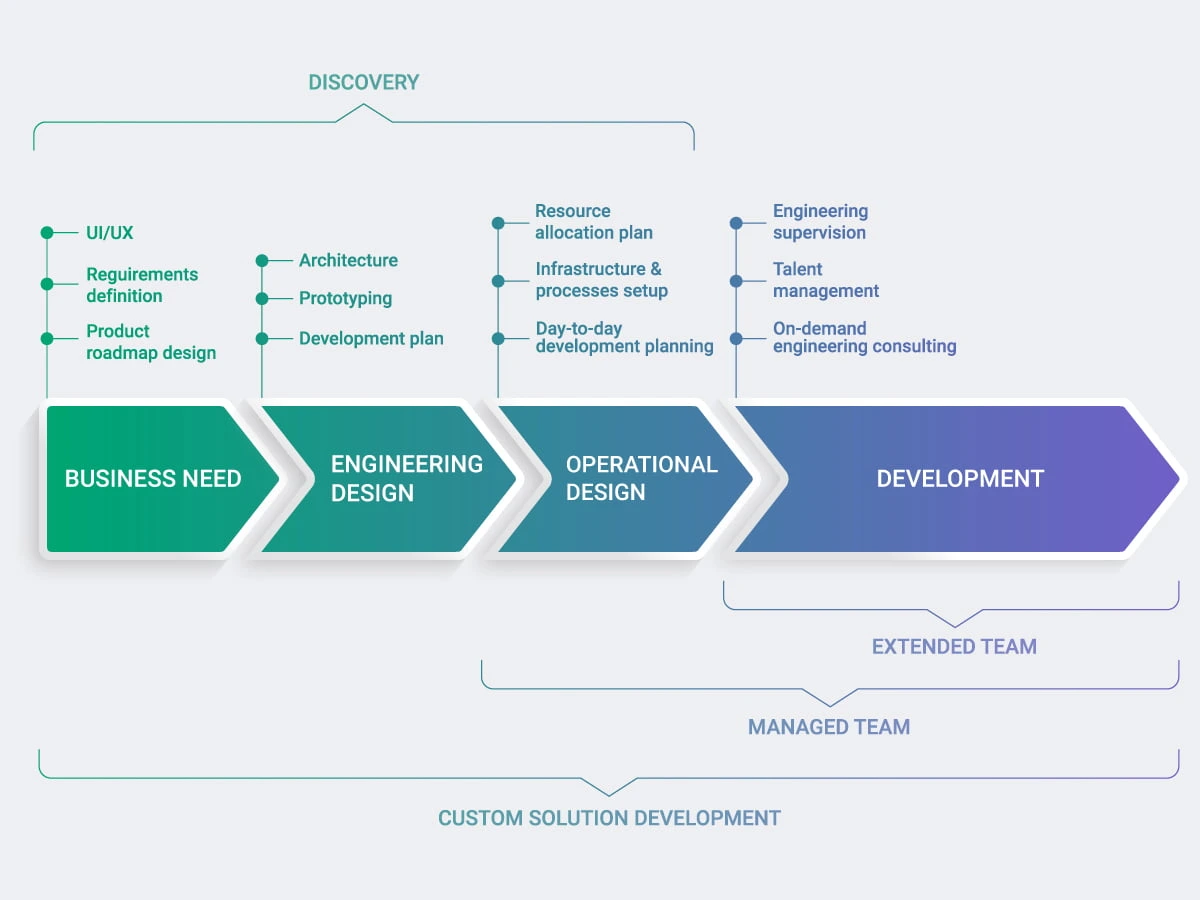
You set the priorities, run the sprints, and make the product decisions. The vendor handles hiring, HR, payroll, office infrastructure, and talent replacement.
The practical result: team-level engineering capacity without the overhead of direct employment.
This model sits in a specific spot on the outsourcing spectrum. On one end is staff augmentation, where you hire individual contractors to fill skill gaps on a team you already manage directly.
On the other end is fully managed outsourcing, where a vendor takes responsibility for the entire delivery, and you evaluate the output.
A dedicated team occupies the middle ground. You have real management control and direct access to the engineers; the vendor takes responsibility for the operational side of running a team.
Dedicated Team vs. Other Engagement Models: Which Is Right for You?
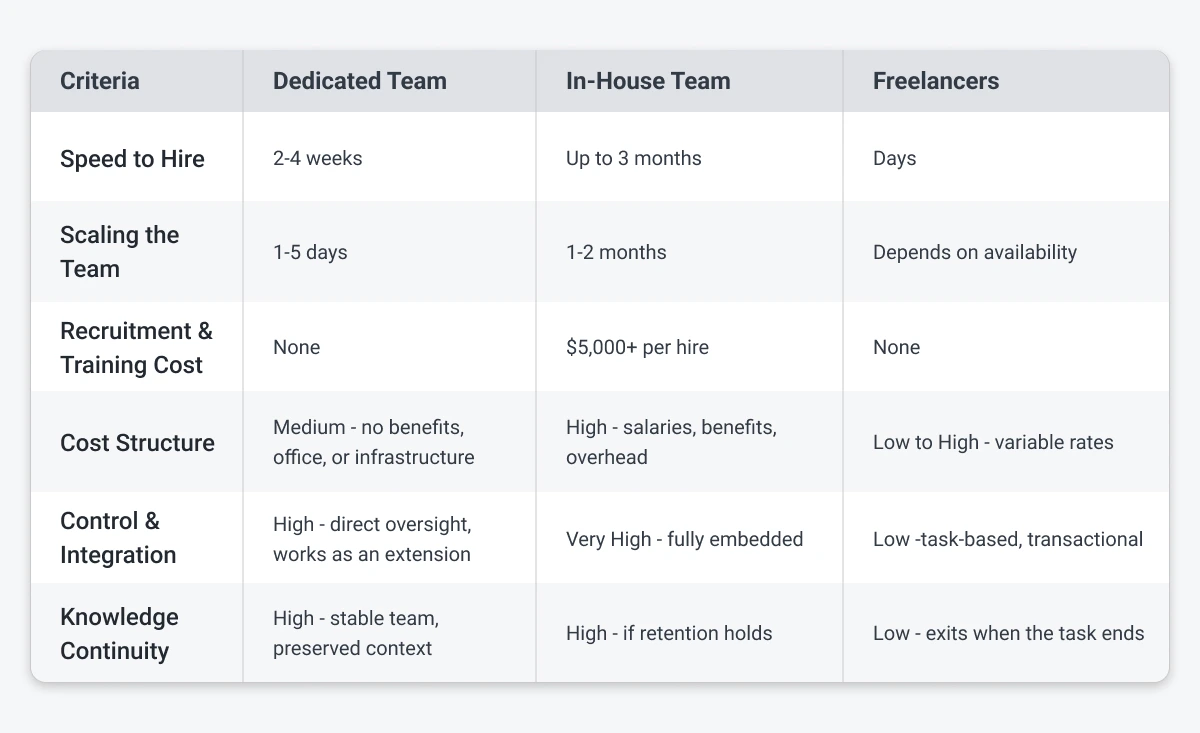
Most companies considering a dedicated team are also weighing other options. Here is how the main models differ in practice:
Fixed bid works when requirements are stable and unlikely to shift. If you can fully document what you need before development starts, a fixed bid provides cost predictability. The downside is that any deviation from scope triggers renegotiation, which can stall projects and inflate costs in ways that are hard to anticipate at signing.
Time and materials offers flexibility, but costs can drift without tight scope discipline. For most scaling companies, it turns out to be less predictable than expected.
Staff augmentation is the right choice when you have a strong internal team and need one or two specialists to supplement it for a defined period. A dedicated team makes more sense when you need a cross-functional group that can own significant portions of your roadmap with meaningful independence.
Read more: Engagement Models Explained: Fixed Bid vs. Dedicated Team vs. Time and Materials
Who Is Responsible for What: Client vs. Vendor in a Dedicated Team Model
One of the most common sources of friction in dedicated team engagements is unclear ownership. Both sides bring specific responsibilities to the arrangement, and the cleaner that boundary is from day one, the less time is spent on mismatched expectations.
The Vendor Is Responsible For
- Recruiting, vetting, and hiring the engineers on the team
- Payroll, benefits, HR administration, and local labor law compliance
- Office space, hardware, and infrastructure for the team
- Replacing team members when someone transitions out, and managing the knowledge transfer that follows
- Ensuring the team has what it needs to work effectively day-to-day
You Are Responsible For
- Defining the product vision, priorities, and roadmap
- Running sprint planning, backlog grooming, and review cycles
- Approving team composition before the engagement starts
- Providing timely feedback and making product decisions
- Granting access to systems, documentation, and internal stakeholders
- Evaluating whether the team's output meets your expectations
The lines that often get blurry in practice are around escalation and technical decision-making.
A good vendor will ask you to clarify upfront: who has authority to approve architectural changes, what is the escalation path when the team hits a blocker, and how quickly can your side respond to questions that require product input?
Teams that spend 24 to 48 hours waiting for a decision on either side lose a meaningful amount of productive time over the course of a long engagement.
When to Hire a Dedicated Development Team (and When Not To)
The dedicated team model delivers the most value in specific conditions. Your next step is gaining clarity on whether those conditions match your situation to avoid frustration and wasting time and money.
Situations Where a Dedicated Development Team Makes Sense
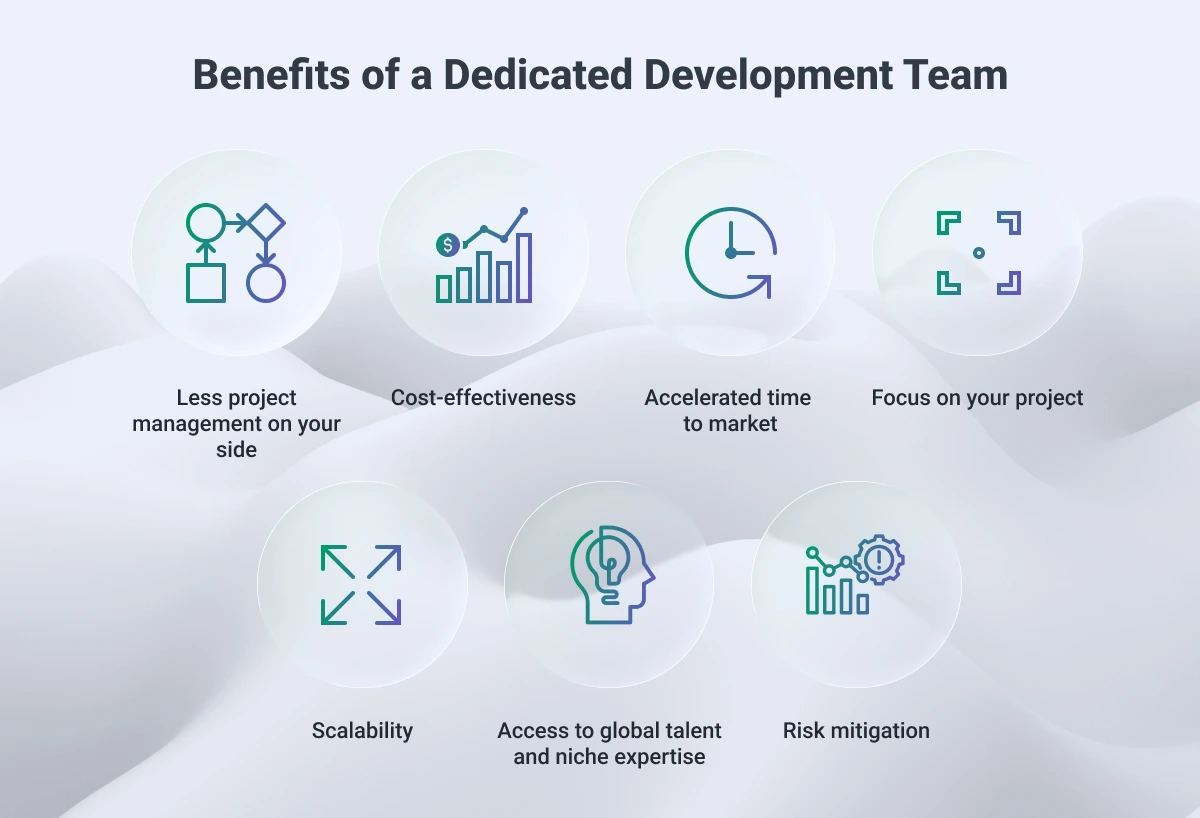
- Your project will run for six months or more with scope that will shift: Dedicated teams accumulate knowledge over time, so the longer the engagement, the more that institutional knowledge pays off in faster decisions, fewer re-explanations, and stronger architectural judgment.
- Your requirements are likely to change: If you are building a product that depends on user feedback, market signals, or internal pivots, you need a team that can adjust sprint-by-sprint without contract renegotiations.
- You need a cross-functional group, not just developers: Most meaningful product work requires engineers, QA, design input, and often DevOps and product management working together. Pulling together a coherent team of individuals through staff augmentation is harder than it looks.
- Local hiring is too slow or too expensive: In competitive talent markets, senior engineering hires can take months. The median time-to-hire in technology sits at 48 days — 26% slower than the global median across all industries. For software engineering roles specifically, that stretches to 40 or 50 days on average, with senior positions running nearly 20% longer and the slowest hires approaching three months. For companies with a roadmap that cannot wait, that kind of timeline is simply not workable.
- You want to retain engineering knowledge across the project lifecycle: Rotating contractors or project-based outsourcing creates knowledge gaps every time someone transitions off. A stable dedicated team carries your architectural decisions and codebase history forward.
Situations Where a Dedicated Team May Not Be the Right Fit
- You have a clearly defined, fixed scope with no expected changes: A fixed bid or project-based engagement will likely be cheaper and faster for bounded work.
- The engagement will last fewer than three months: Short timelines do not leave enough room for a dedicated team to reach full velocity, making the onboarding investment difficult to justify.
- Your organization does not have internal bandwidth to manage an external team. Dedicated teams require a real point of contact on your side who can run sprints, review work, and make product decisions. Without that, even an excellent team will have trouble performing.
Nearshore vs. Offshore vs. Onshore Dedicated Development Teams: How to Choose
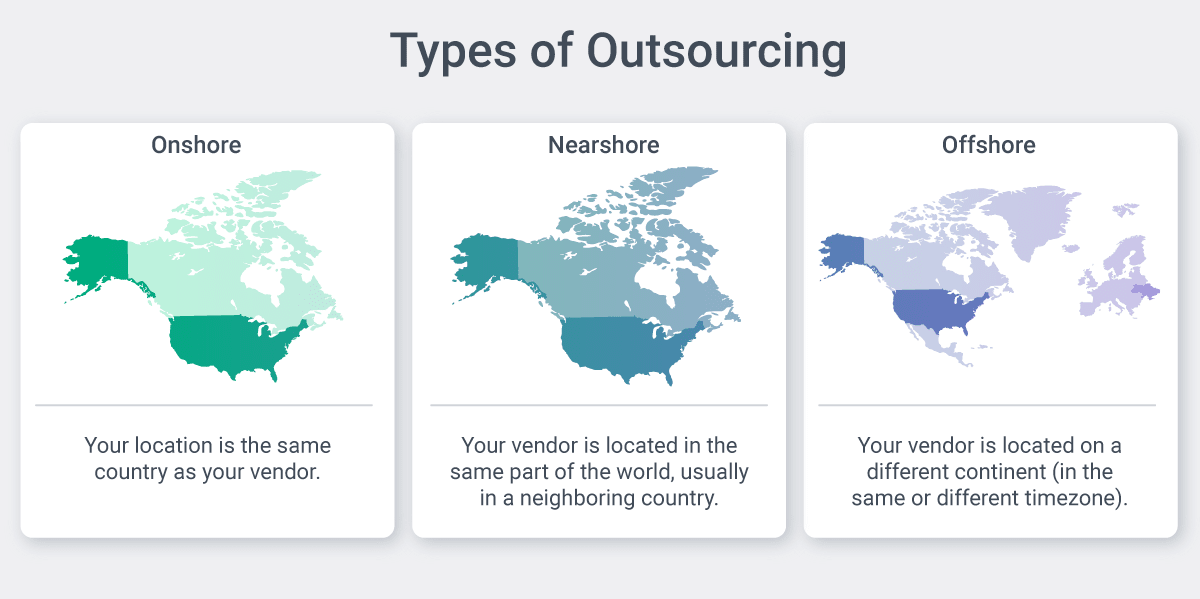
Location is one of the first decisions companies face when hiring a dedicated development team, and it involves more than cost. Where your team is based affects communication quality, decision-making speed, legal considerations, and the kind of working relationship you can realistically maintain.
Onshore Dedicated Development Teams
Onshore teams are based in the same country as your organization. Hiring onshore gives you full time zone alignment, no language or cultural friction, and the easiest path to occasional in-person collaboration. The tradeoff is cost: onshore engineering rates in North America and Western Europe are the highest in the world, and local talent scarcity in many technical domains makes finding the right people more difficult as well.
Nearshore Dedicated Development Teams
Nearshore teams are based in a neighboring region, close enough to share significant time zone overlap. For US-based companies, this typically means Latin America. For companies based in Western Europe, it often means Eastern Europe. The appeal of the nearshore model is that you can get four to six hours of genuine real-time collaboration daily while benefiting from lower rates than you would pay domestically. Cultural proximity tends to be stronger with nearshore arrangements as well, which reduces the communication friction that comes with significant geographic and cultural distance.
Offshore Dedicated Development Teams
Offshore teams are based in a more distant region, often Southeast Asia or South Asia. Offshore arrangements can offer significant cost reduction, though the savings sometimes come with tradeoffs that are harder to see in a proposal than they are to feel six months into a project. The time zone gap is substantial — often ten to twelve hours — and cultural differences in communication style and feedback norms can create friction that compounds quietly alongside it. Engineering quality also varies more widely across offshore markets than vendors tend to advertise. Effective offshore collaboration requires structured asynchronous workflows, detailed documentation, and a disciplined handoff process.
Where Softjourn's Dedicated Teams Are Based
Softjourn operates primarily in the US, Ukraine, Poland, and Brazil — a footprint that gives clients something most vendors cannot offer: round-the-clock development capacity across multiple time zones, so your project never has to sleep.
For North American and European clients, our Ukrainian and Polish engineers typically share four to six hours of overlap with US East Coast business hours and a full working day with European clients. Eastern Europe has produced generations of strong software engineering talent, and Ukraine specifically has one of the highest concentrations of IT specialists per capita in Europe.
For North American clients who want closer time zone alignment for real-time collaboration, our Brazilian team works within one to three hours of US East Coast business hours; close enough for daily standups, code reviews, and fast feedback cycles without the scheduling acrobatics that wider gaps require.
The combination of engineering depth, competitive rates relative to North America and Western Europe, and meaningful time zone overlap is a significant part of why clients in fintech, payments, ticketing, and expense management have built long-term dedicated team relationships with Softjourn.
What a Dedicated Software Development Team Actually Looks Like
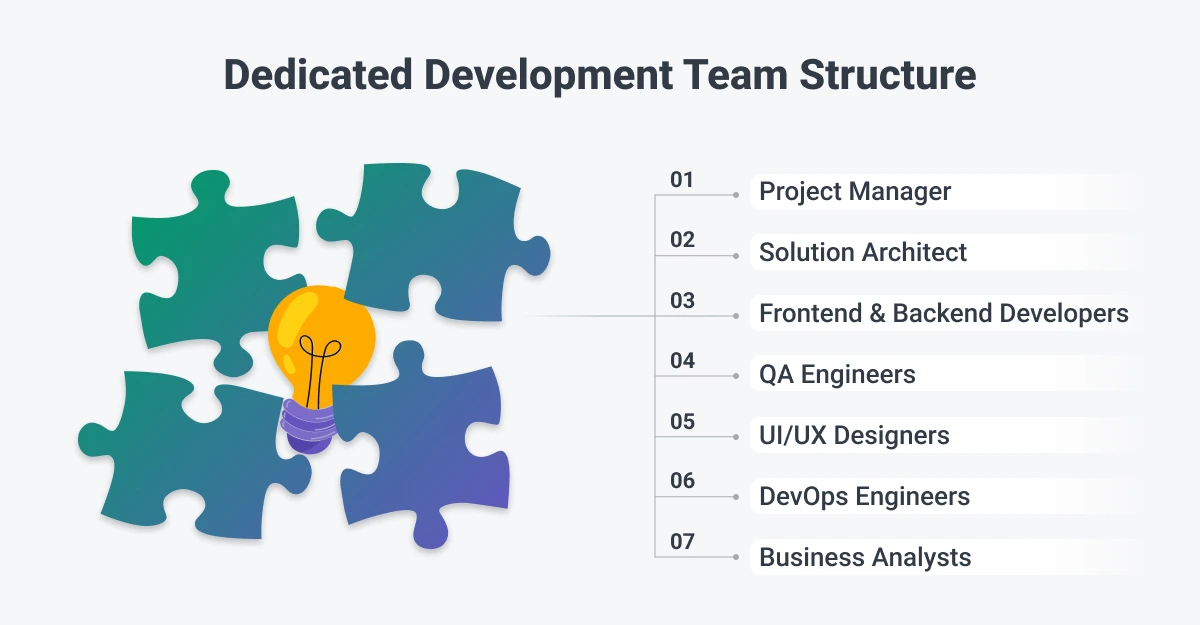
Team composition varies based on your product stage, technical requirements, and budget. A typical early-stage product team might include two or three backend developers, a frontend developer, a QA engineer, and a part-time project manager. More mature platforms often add DevOps capacity, solution architects, and dedicated business analysts.
Core Roles on a Dedicated Development Team
Project Manager: The operational center of the team. A good PM translates priorities into sprint structure, tracks delivery against timelines, manages communication with your internal stakeholders, and surfaces risks before they become problems. In distributed team setups, this role often carries more responsibility than it would on a co-located team.
Business Analyst: Not every dedicated team includes a BA, but for products with complex requirements, this role prevents a lot of expensive rework. Business analysts translate your business requirements into technical specifications, validate that development work aligns with actual goals, and serve as a buffer between what stakeholders want and what engineers build.
Frontend and Backend Developers: These developers will be the core of your team. Seniority mix matters significantly here. A team weighted toward junior developers will need more direction and produce more technical debt. A team with more senior engineers will ask better questions, make stronger architectural decisions, and produce more maintainable code — usually at a higher per-person cost.
QA Engineers: Quality assurance is often the first role cut when budgets tighten, and typically the one teams most regret cutting. QA engineers build test plans, run both manual and automated testing, and catch issues before they reach production. This role is likely not optional for platforms where bugs carry real consequences, such as ticketing systems, healthcare platforms, payment processing, and financial tools.
DevOps Engineers: DevOps specialists manage deployment pipelines, infrastructure configuration, monitoring, and release automation. For teams building cloud-native products or working with complex infrastructure, dedicated DevOps capacity often pays for itself in reduced downtime, faster deployments, and lower infrastructure costs over time.
Solution Architect: On some projects, you’ll want a solution architect. These are the experienced team members who make the structural decisions that shape how well your codebase scales. Investing in this expertise at the start of an engagement is significantly cheaper than refactoring poorly designed architecture twelve months later.
Dedicated Development Team Size by Project Stage
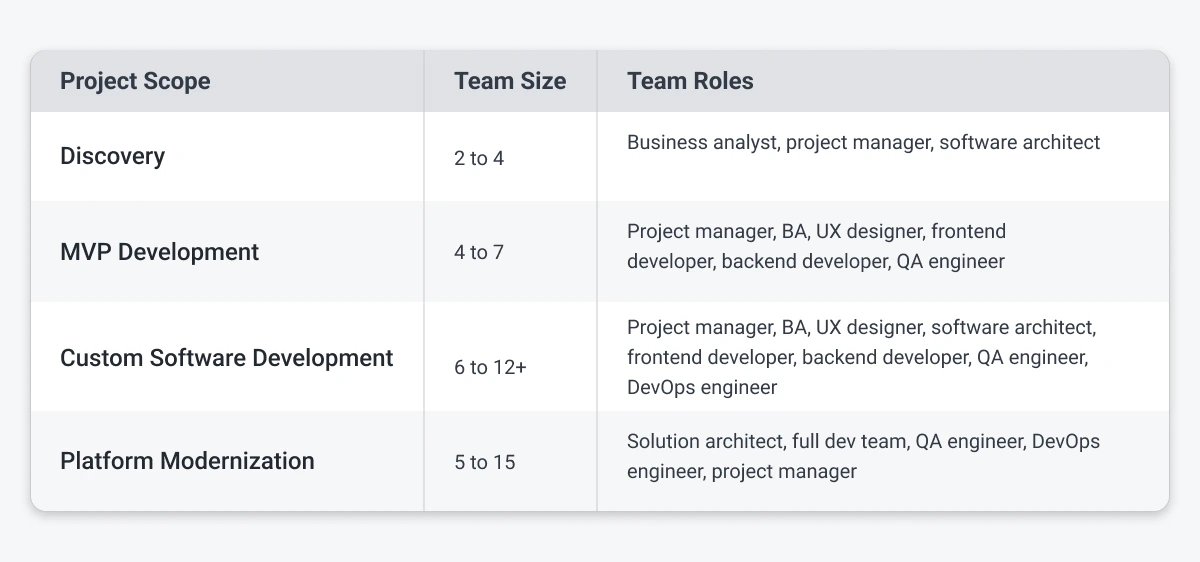
The right structure for your situation depends heavily on what you already have internally and where the gaps are.
How Much Does It Cost to Hire a Dedicated Development Team?
Cost is one of the most frequently cited reasons companies pursue a dedicated team model, and also one of the areas where expectations most often diverge from reality. The headline rate per developer tells only part of the story.
Geography Is the Biggest Cost Driver

Where your engineers are based is the single biggest cost lever in a dedicated team engagement. Companies that hire dedicated teams in Eastern Europe, Latin America, or Southeast Asia can typically achieve savings of 40 to 60 percent compared to equivalent in-house hiring in the US, without sacrificing quality when the vendor selection process is handled carefully.
That said, choosing a region on cost alone is a poor decision framework. A team with lower individual rates that requires more direction, produces more defects, and depends heavily on your internal engineers for review may end up costing more in practice than a higher-rate team that operates with genuine independence.
Regional rates are one input among several; the vendor's vetting standards, their approach to team stability, and the domain knowledge they bring to your industry all shape what an engagement actually costs to deliver.
Other Factors That Influence the Total Cost
- Team composition and seniority mix: A team balanced between senior and mid-level engineers costs noticeably less than an all-senior team. The right mix depends on how much architectural guidance the project needs versus pure execution capacity. Rushing to fill a team with junior talent to reduce spend usually creates technical debt that costs more to address later.
- What is and is not included in the quoted rate: Some vendors include project management, QA, and infrastructure in their rates. Others bill for each separately. Before comparing proposals from different vendors, ask specifically what is and is not covered. An apparently low per-developer rate from one vendor may not include PM time, QA engineering, or tooling costs that another vendor has folded in.
- Engagement duration: Longer contracts typically come with better rates. A vendor investing in recruiting, onboarding, and team setup for a three-month engagement has proportionally higher overhead than one building a team for a two-year relationship. If you anticipate an engagement extending beyond six months, it is worth negotiating that commitment upfront.
- Project complexity and compliance requirements: Work that involves regulated data (payments, healthcare, financial services) requires engineers and processes that meet specific security and compliance standards. That expertise comes at a premium, and it is also the kind of expertise where cutting corners has concrete downstream consequences.
- Time zone overlap: Teams with minimal daily overlap require more asynchronous coordination, which slows decision cycles and increases the total calendar time required to deliver a given scope. The cost of a ten-hour time zone gap shows up in delivery timelines, not line items.
Dedicated Development Teams by Industry: Where Domain Knowledge Makes the Difference
The dedicated team model works across industries, but some domains have characteristics that make it a particularly strong fit: long product cycles, strict compliance requirements, and technical complexity that takes years to develop fluency in.
Dedicated Development Teams for Fintech and Payments
Financial technology products carry a combination of requirements that is difficult to staff for through conventional hiring: technical complexity, strict regulatory obligations, and the kind of industry-specific knowledge that takes years to develop. Payment processing, treasury management, expense platforms, and trading systems all require engineers who understand not just the code but the business rules, compliance requirements, and failure modes specific to financial products.
Softjourn has worked with payments and fintech companies since our founding in 2001. That accumulated domain knowledge means our dedicated teams in this space arrive with context that shortens ramp-up time and improves the quality of technical decisions throughout the engagement.
For example, Vanco, a payments technology company, chose Softjourn specifically for this expertise when they needed a team to rewrite a core system from Java to .NET. Their project manager noted that our dedicated team "really knows their stuff regarding payments" — not a phrase that applies to generic software developers.
Read more: Vanco Payments: Elevating Dedicated Team Collaboration with Domain Expertise
Dedicated Development Teams for Ticketing and Event Technology
Ticketing systems operate under conditions that most software does not face: simultaneous high-volume transactions, strict inventory management requirements, integration with access control hardware, and the reality that a software failure during an on-sale or live event has immediate, visible consequences for thousands of people. The technical and operational requirements of this industry are specific enough that general-purpose software teams often struggle with them.
Softjourn has been building and maintaining ticketing platforms for over two decades. Our dedicated teams in this space have direct experience with box office systems, point-of-sale applications, mobile ticketing, and the integration landscape that connects them.
Spektrix, a UK-based ticketing and CRM platform, is one of those long-running partnerships. Over the course of the engagement, Softjourn has worked with Spektrix on Apple and Google Wallet integrations, a Custom Pass Builder that allows event organizers to design and modify ticket passes independently, and a proof of concept for venue mapping and reserved seating — each project building on the last.
That kind of accumulated context, where the team already understands the industry, the platform's architecture, its edge cases, and the business logic behind product decisions, is exactly what the dedicated team model is designed to produce.
Dedicated Development Teams for Expense Management and Enterprise Finance
Enterprise expense and accounts payable platforms serve thousands of users daily, process sensitive financial data, and carry compliance obligations that touch PCI, SOC, and other regulatory frameworks. They also tend to be products that grow through continuous feature development over many years rather than discrete releases — which makes the continuity of a dedicated team arrangement particularly valuable.
Softjourn has maintained long-running dedicated team relationships with multiple expense management platforms, some stretching more than a decade. For example, Softjourn has worked with PEX over the last ten years, across a wide range of initiatives — from DevOps infrastructure and cloud migrations to security hardening, PCI compliance, and ongoing platform development.
The relationship has grown consistently because the team already understands the system, the business, and the standards PEX operates under, which means new initiatives move faster and require far less hand-holding than bringing in someone new would.
Read more: PEX: A Leader in Innovation After a Decade of Partnership
Dedicated Development Teams for EdTech and Assessment Platforms
Learning management systems, edtech, corporate training tools, and skills-based assessment platforms share several requirements that make dedicated teams well-suited for their development: complex user hierarchies, content standards like SCORM and xAPI, integration with HR and identity systems, and often stringent accessibility and compliance requirements.
Myers-Briggs, a longtime Softjourn client, brought our dedicated team in to modernize an assessment platform that had grown into a legacy system. The engagement has continued for over a decade because consistent delivery builds the kind of trust that makes long-term technical partnership possible.
How to Hire a Dedicated Development Team
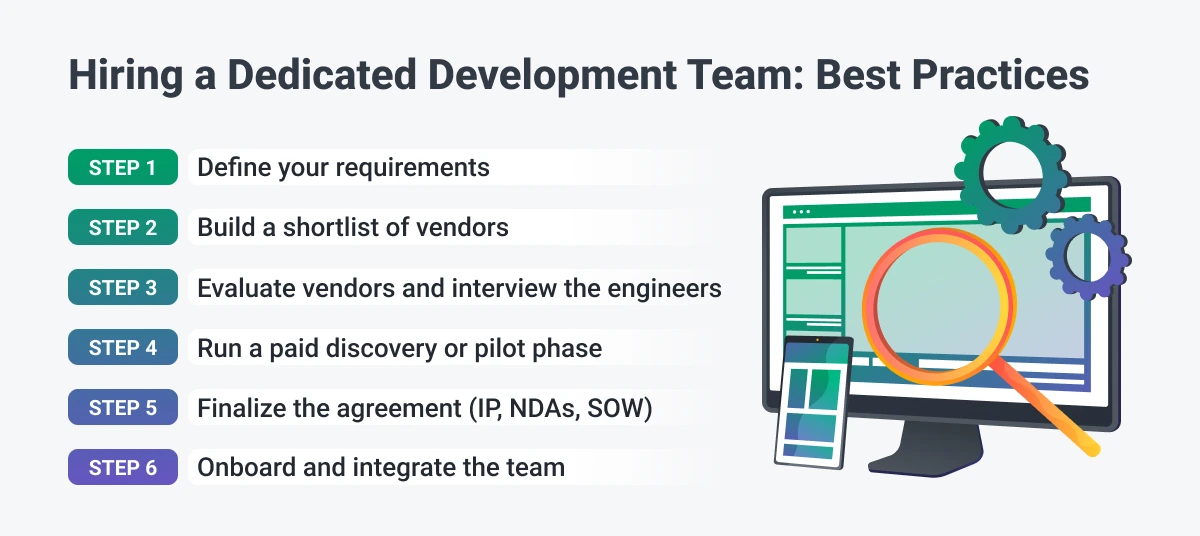
Finding a dedicated development vendor is not difficult. However, finding a good one requires some preparation and a structured process.
Step 1: Define Your Requirements Before You Talk to Anyone
Before contacting any vendor, document your requirements clearly. These include:
- The technical scope of what you are building or maintaining
- What technologies are involved
- What roles you need and at what seniority level
- The expected engagement duration and major milestones
- Your budget range (even a rough one)
- Time zone requirements and daily overlap expectations
- Any compliance or security requirements relevant to your industry
Keep in mind that vague briefs produce vague proposals, and this means that vendors will fill in the blanks however suits them best. The more specific you are upfront, the more accurately you can compare what different vendors are actually offering.
Step 2: Build a Shortlist of Dedicated Development Vendors
Start with industry-specific directories and review platforms. Clutch and GoodFirms both aggregate verified client reviews and allow filtering by industry, service type, and location.
Referrals from peers who have managed similar engagements are often more useful than any directory listing. Look specifically for vendors with demonstrable experience in your industry or with your technology stack — domain knowledge is worth weighting heavily in the evaluation.
Step 3: Evaluate Vendors Thoroughly
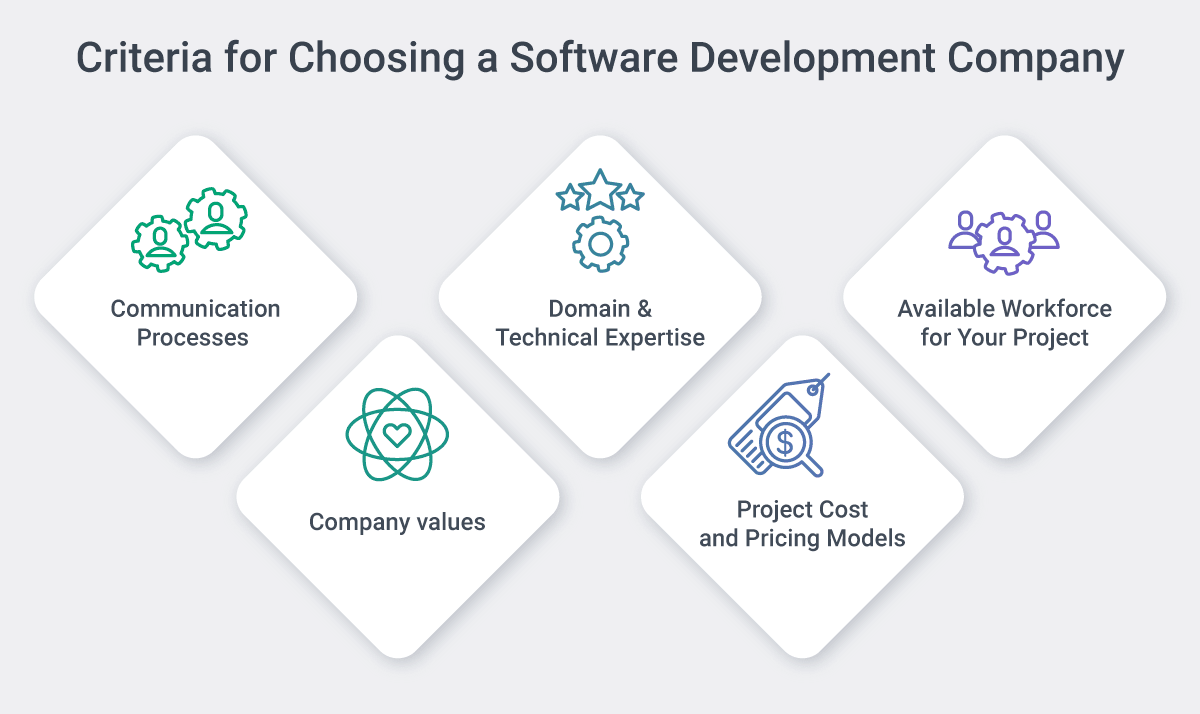
- Ask for the actual team profiles: The engineers featured in a vendor's portfolio are not always the ones who will work on your project. Ask for CVs and profiles of the specific people being proposed for your engagement.
- Conduct technical interviews yourself: Do not rely solely on the vendor's internal vetting. Run your own technical interviews with the proposed engineers, and evaluate both technical depth and communication quality. Engineers who struggle to explain their thinking clearly in an interview will face the same challenge in a distributed working environment.
- Ask about team stability: High engineer turnover is a serious risk in long-term engagements. Knowledge built over months leaves with the people who built it. Ask vendors directly what their average engineer tenure is on client projects and how they handle replacements when someone transitions out.
- Pay attention to how they communicate during the sales process: Response speed, clarity, and willingness to ask clarifying questions during evaluation often predict what working with that vendor will feel like once you are a client.
Step 4: Run a Paid Discovery Phase
Before committing to a long-term contract, consider starting with a paid discovery or pilot engagement. Typically running two to four weeks, this phase gives both sides a chance to evaluate fit in a real working context. You will learn more about a vendor's communication, code quality, and responsiveness in two weeks of actual collaboration than in months of proposal calls.
Barracuda FX, a New York-based foreign exchange trading platform, took exactly this approach when they decided to hire Softjourn for their first-ever distributed development partnership.
Rather than committing upfront, they proposed a trial period to test whether remote collaboration could actually work for their team. It did. COO Maurice Curran described the experience as working with a team that was "proactive and agile" and "focused on doing their best to make the relationship work."
What began as a cautious trial became a full partnership that gave Barracuda FX access to fintech expertise they could not have assembled internally in the same timeframe.
Read more: Barracuda FX: Foreign Exchange Trading & Risk Management Software Solutions
Step 5: Finalize the Agreement
Once you have identified a vendor worth working with, make sure the formal agreement covers the right ground. The legal section below details the specific provisions that matter most.
Legal Considerations When Hiring a Dedicated Development Team
Contracts for dedicated team engagements have a few specific areas that require careful attention. Reviewing these before you sign will prevent the most common and most costly problems.
- Intellectual property ownership. All code, designs, and documentation produced by the dedicated team should belong to you from the moment it is created. This must be stated explicitly — "work for hire" language gives you clear ownership of deliverables. Without it, there is meaningful legal ambiguity about what you actually own if the relationship ends.
- Non-disclosure agreements. Every team member, not just the vendor organization, should sign an NDA before accessing your systems, code, or business information. Confirm that the vendor has a process for obtaining individual NDAs rather than relying solely on a company-level confidentiality clause.
- Master Services Agreement. An MSA establishes the framework for the relationship: payment terms, invoicing protocols, dispute resolution, liability limits, and general obligations. It is typically signed once and governs multiple individual statements of work over the life of the engagement. Review the liability and indemnification clauses carefully.
- Statement of Work. Each engagement phase or project milestone should be documented in an SOW specifying deliverables, timelines, team composition, and costs. The SOW should be specific enough that both sides can evaluate at the end of each period whether expectations were met.
- Data handling and compliance. If your product handles sensitive user data, payment information, or health records, the contract should specify the vendor's data handling responsibilities and compliance obligations. For products in regulated industries, ask for evidence of relevant certifications and processes, not just a clause.
- Termination and transition provisions. The contract should define what happens when the engagement ends — how much notice is required, who owns the code and documentation at termination, and what the knowledge transfer process looks like. This is covered in more detail in the transition section below.
How to Onboard and Manage a Remote Dedicated Development Team
Signing the contract is the beginning of the work, not the end of it. How a dedicated team is onboarded and managed determines whether you get sixty percent or the full value it is capable of producing.
The First 30 Days: Setting Up for Success
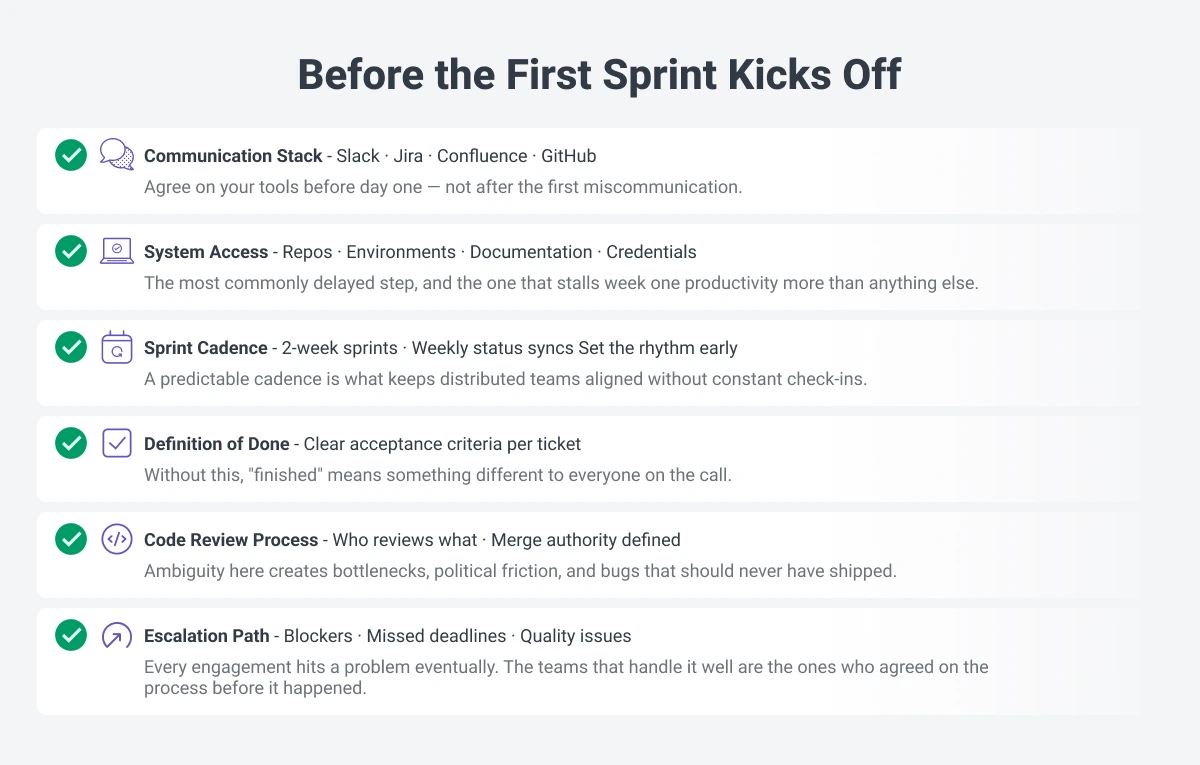
Week one priorities: Grant access to all relevant systems: version control, project management tools, communication channels, staging environments, and documentation. Run an architecture overview session where your existing team walks the new team through the current state of the codebase, the decisions that shaped it, and the known technical debt. Introduce the dedicated team to your internal stakeholders and establish clear communication lines.
Weeks two through four priorities: Assign the team meaningful but relatively low-risk work first. First-sprint output should demonstrate the team's working style without putting critical releases at risk. Establish sprint cadence, review processes, and your definition of "done" explicitly; do not assume these will be obvious. Identify gaps in communication or technical understanding early, before they create delivery problems.
Building an Effective Communication Structure
Distributed teams run on a communication infrastructure. Daily standups, kept short, maintain alignment and surface blockers before they compound. Weekly reviews or demos let stakeholders see progress and provide feedback without requiring constant involvement. Sprint retrospectives give the team a structured way to improve how they work together over time.
One thing that consistently distinguishes high-performing distributed partnerships: the client-side contact who manages the relationship has genuine context about the product and is available to make decisions. A dedicated team that spends hours or days waiting for product direction loses that time permanently.
Managing a Dedicated Development Team for Outcomes, Not Hours
Tracking hours is a poor proxy for progress. What actually matters is whether the team is delivering against roadmap commitments, whether code quality meets your standards, and whether communication is clear enough that problems surface before they become expensive. Practical metrics worth tracking:
- Sprint completion rate: What percentage of committed work gets done within each sprint? Consistently below 70% signals estimation problems, unclear requirements, or context gaps.
- Defect escape rate: How many bugs surface in production versus being caught in QA? This is a more meaningful quality signal than raw velocity.
- Blocker resolution time: How quickly do questions and impediments get resolved on both sides? If blockers regularly sit for more than 48 hours, the process has a problem.
- Team stability: Track team member turnover from day one. A significant turnover event in the first six months means meaningful context has been lost.
Transitioning and Offboarding a Dedicated Development Team
No engagement runs forever, and very few guides cover this part of the process — which is exactly why it sometimes catches companies unprepared. Whether you are winding down a completed project, transitioning work back in-house, or ending a relationship that is not working, the quality of the offboarding process determines how much of the value built during the engagement you actually keep.
What a Proper Dedicated Team Transition Looks Like
A vendor worth working with will include transition provisions in the original contract, not just address them when you announce you are leaving.
Specifically, the agreement should define the notice period required to end the engagement, the timeline and deliverables for the handoff process, and who bears the cost of knowledge transfer activities.
The knowledge transfer itself is the substantive work. At a minimum, it should cover:
- A documented architecture review covering all major components, the decisions that shaped them, and known technical debt
- Runbook documentation for deployment processes, incident response, and routine maintenance procedures
- A codebase walkthrough with the receiving team, either internal engineers or a successor vendor
- Transfer of all credentials, environment access, and administrative accounts
- Resolution or documentation of all open items in the sprint backlog
Protecting Continuity During the Handoff
Run the transition process with overlap time, not a hard cutoff. If your incoming team or internal engineers can shadow the departing team for two to four weeks before the formal handoff, the knowledge transfer is significantly more effective than documentation alone.
Prioritize documentation of the things that are hardest to rediscover: architectural decision records, integration specifications, the logic behind non-obvious business rule implementations, and any workarounds for known third-party limitations.
Request a final security review as part of the offboarding checklist: confirm that all external access has been revoked, credentials have been rotated, and no active connections from vendor infrastructure remain.
Handling Unplanned Engineer Transitions
Not every offboarding is planned. Vendors occasionally lose engineers to attrition, or a relationship ends earlier than expected because delivery has not met expectations. In both cases, the question of what happens to institutional knowledge becomes urgent.
When evaluating vendors before you sign, ask specifically how they handle mid-engagement engineer transitions. A vendor with a clear answer — including a defined timeline for replacement and a structured knowledge transfer process — has thought through this problem. A vendor who gives a vague response about "seamless transitions" has not.
How to Vet a Dedicated Development Team Vendor
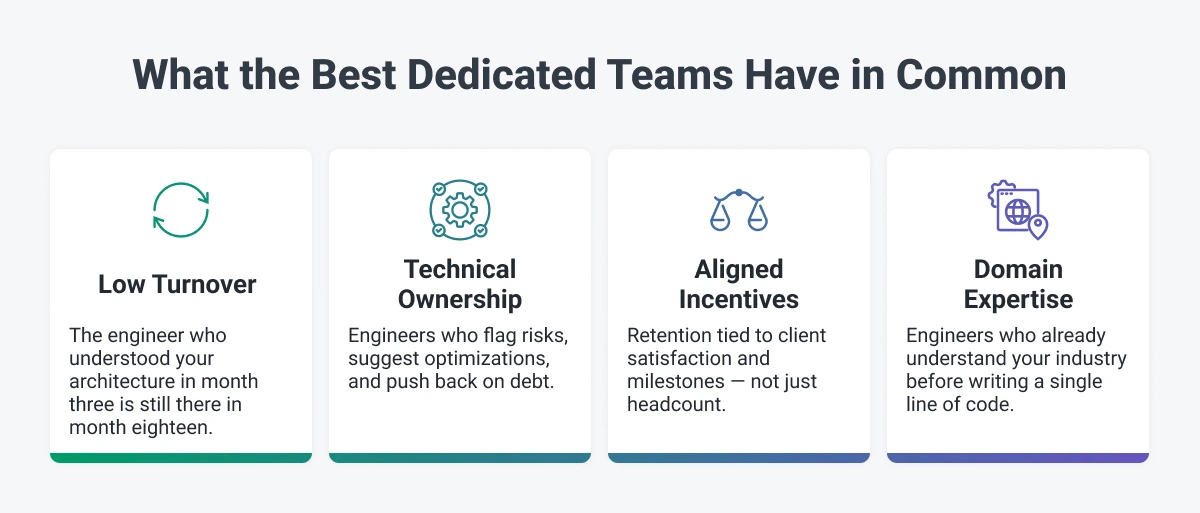
Signs of a Reliable Dedicated Development Partner
- They ask detailed questions about your business goals, not just your technical requirements. A vendor focused entirely on technology stack and headcount is optimizing for closing a deal.
- They have been in business long enough to have a track record worth examining — and especially if they have clients who have stayed with them across multiple projects and years. Longevity in this industry is not accidental.
- Their case studies include specifics about problems solved, decisions made, and measurable outcomes — not just client logos and success language.
- They introduce you to the engineers who will work on your project before the contract is signed.
- As every vendor has gaps, they should be direct about what they cannot do. Honest vendors will tell you where they are not the right fit, because they know a mismatched engagement damages both parties.
- Their references address communication quality and delivery accuracy, not just technical output.
Red Flags When Evaluating Dedicated Development Vendors
- Prices are noticeably below market rate for the region. This usually signals less experienced engineers, high turnover, or costs that surface in other ways after the contract is signed.
- They are difficult to verify. Limited time in business, sparse or unverifiable client reviews, and an absence of long-term client relationships are worth taking seriously. A vendor with genuine staying power will have references that span years, not just recent projects.
- Resistance to technical interviews with proposed team members. If a vendor discourages you from meeting the engineers before committing, that is significant.
- Vague SLA language. Phrases like "we will replace underperforming developers" are meaningless without a specific timeline and a defined process for doing so.
- No documented process for transitions. On any long engagement, someone will eventually leave. A vendor without a clear replacement and knowledge transfer process is passing that risk to you.
- Agreement to your timeline without detailed scope analysis. Vendors that commit to your deadline without working through scope are either not taking the scoping process seriously or prioritizing the sale over the delivery.
Common Mistakes When Hiring a Dedicated Development Team
- Starting without clear internal ownership: Every dedicated team engagement needs a named person on your side who owns the relationship. Decisions routed through committees or requiring multiple approval layers will slow your team to a crawl. Before the engagement starts, designate someone with real authority to make product and priority decisions.
- Under-investing in onboarding: Engineers who start writing code before they understand the codebase, the architectural principles, or the business context will make decisions that create expensive problems later. Two weeks of structured onboarding is a small investment against twelve or eighteen months of cleaner delivery.
- Treating the team as order-takers: The best engineers on any dedicated team will have opinions about architecture, approaches, and priorities. Create space for the team to push back and suggest alternatives. You are paying for engineering judgment, not just execution, and a relationship that only flows one direction leaves significant value on the table.
- Ignoring time zone friction: Minor time zone gaps become significant coordination problems on complex work. If your overlap with the vendor is fewer than four hours per day, plan around it deliberately rather than hoping it will not matter.
- Letting scope changes go unmanaged: The flexibility of the dedicated team model is a feature, but it requires discipline. Scope changes that are not tracked, prioritized, and scheduled against existing commitments quietly compress the time available for committed work. Maintain a clear backlog, prioritize changes explicitly, and communicate the trade-offs when priorities shift.
What Long-Term Dedicated Development Team Partnerships Actually Look Like
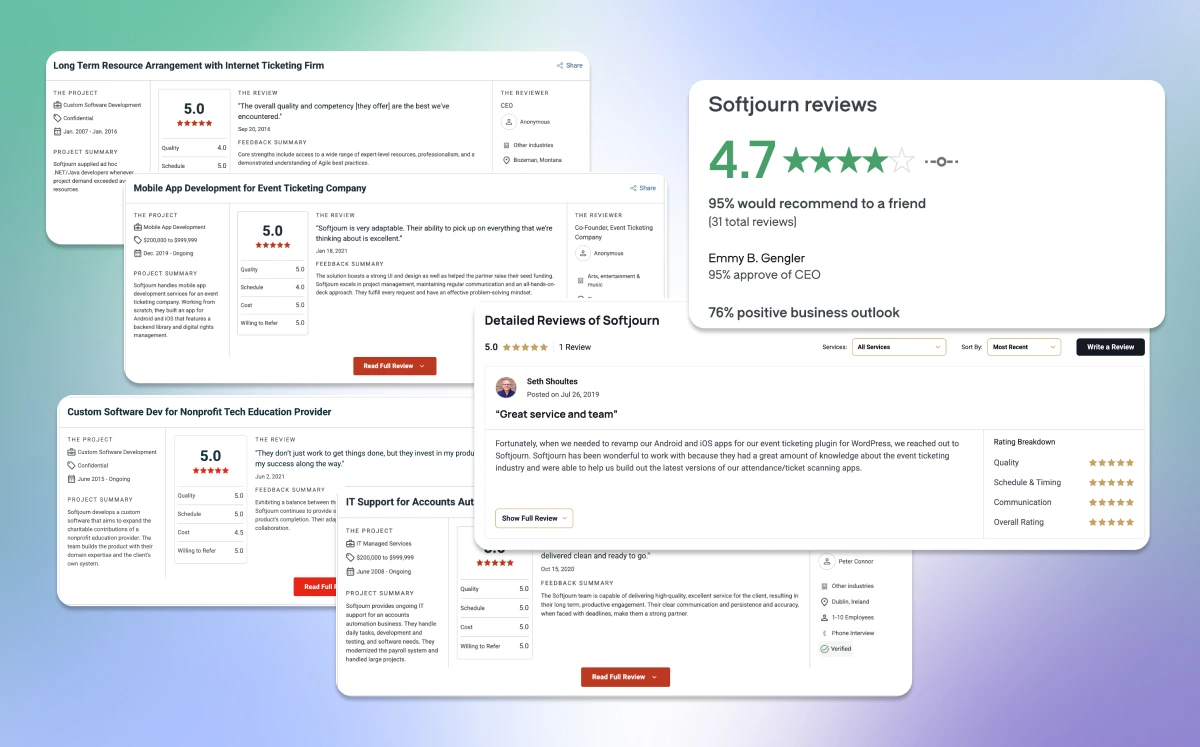
It's worth stepping back from the mechanics of hiring and management to look at what this model produces when it works well over time, because the cumulative value of a stable, long-running, dedicated team relationship is difficult to quantify in a single engagement but becomes very clear over the years.
How a Dedicated Team Partnership Matures
In the first few months of an engagement, the dedicated team is learning: the codebase, the business logic, the team's communication style, and the product decisions that have already been made. This is the period where the investment feels highest and the return feels lowest.
By month six, a well-managed team is contributing independently on most work items, asking better questions, and making architectural micro-decisions that used to require your review. The back-and-forth on requirements is faster because the team has built enough context to fill in the gaps.
By year two, the dedicated team often has deeper knowledge of specific parts of the codebase than your internal engineers do. Their judgment about technical trade-offs improves because they have seen the consequences of earlier decisions play out. This is where the model delivers returns that no short-term engagement can match.
“Softjourn included us as part of the team, not just as clients, which we loved.”
Cinewav, a Singapore-based startup, came to Softjourn with an idea that had no existing blueprint: synchronizing audio delivered through audience members' personal earphones to video projected on a screen, across variable outdoor environments and wildly different devices.
Softjourn built the proof of concept, validated the synchronization algorithm, and then developed the full platform: iOS and Android apps, a desktop video player, and an event management portal. The relationship continued as Cinewav grew internationally, with Softjourn later helping them reduce AWS infrastructure costs by 30 percent through multi-regional cloud optimization.
Co-founder Jason Chan reflected on the partnership:
"Softjourn’s team always exhibited a ‘never-say-never’ attitude. They also included us as part of the team, not just as clients, which we loved."
“The Softjourn relationship will remain an important and strategic part of our team as we grow."
Pivot, a data and analytics platform, reached a point where their legacy architecture was slowing down feature delivery and limiting what the product could do. Rather than a full rebuild, they needed a structured modernization path that would unlock new capabilities without destabilizing what was already working. Softjourn worked through phased modernization, redesigning key parts of the system, improving performance, and delivering configurable dashboards that gave users more control over their experience.
The result was a platform the team could move quickly on again. Co-Founder Eric Rauch reflected:
"In a little over a year, together, we have delivered the foundation of what has the potential to be a market-leading solution. The Softjourn relationship will remain an important and strategic part of our team as we grow."
“Softjourn is my team, and I count on them as if we were all working in the same office.”
Tacit, a Toronto-based food ordering and payments platform, came to Softjourn in 2013 for backend development work. What started as a team of three has grown to twenty people over more than a decade of continuous collaboration, expanding across white-label applications, POS integrations, kiosk solutions, Apple Pay integration, and in-seat ordering for live events.
CTO Brenda Crainic put it simply:
"Softjourn’s developers continue to impress me with their expertise, knowledge, and dedication to our project. They are my team, and I count on them as if we were all working in the same office."
Final Word
Finding the right dedicated development team is not easy, as the market is crowded, proposals can overpromise, and the differences between vendors are not always visible until you are already six months into an engagement.
But when you find a team that genuinely fits, the return on that investment is hard to overstate. A great dedicated team helps you scale faster, make better technical decisions, and build products and features you are proud of.
If you are evaluating whether a dedicated team is the right fit for your project, contact Softjourn to start the conversation. We have spent over two decades building dedicated teams for companies in fintech, payments, ticketing, expense management, and beyond — and we pride ourselves on hiring incredible technical talent.
We will ask the questions that help both sides arrive at an honest answer, bring the domain knowledge that shortens the time to real contribution, and stay engaged long enough to become the kind of partner our clients describe when they talk about what a great dedicated team actually looks like.
Even if the answer turns out to be a different engagement model than the one you initially had in mind, we would rather tell you that upfront than win a contract we are not the right fit for. Get in touch today.
Frequently Asked Questions
Staff augmentation adds individual contractors to an existing internal team. You get specific people to fill specific skill gaps, and your internal managers oversee their work directly. A dedicated team is a complete, cross-functional group that operates as a unit. The vendor takes responsibility for the team's operational management, while you direct the work and own the product. Staff augmentation makes sense when you have a strong internal team and need targeted additional capacity. A dedicated team makes more sense when you need a group that can work with significant independence on substantial portions of your roadmap.
Nearshore refers to teams located in regions with meaningful time zone overlap with your organization — for US companies, this typically means Latin America; for European companies, it often means Eastern Europe. Offshore refers to teams in more distant regions, typically Southeast or South Asia, where the time zone gap can reach ten to twelve hours. Both can deliver excellent work, but they require different communication structures. Nearshore arrangements allow for daily real-time collaboration, which simplifies decision cycles and reduces the documentation burden. Offshore arrangements require more structured asynchronous workflows to function well.
A reputable vendor can typically present shortlisted candidates within one to two weeks of receiving a detailed brief. Technical interviews, agreement on team composition, and contract finalization usually add another one to two weeks. For straightforward engagements with clear requirements, a team can be operational within three to four weeks of initial contact. Complex requirements or highly specialized technical needs take longer.
IP protection comes from the contract, not from assumptions. Your agreement should include explicit "work for hire" language assigning ownership of all deliverables to your company, individual NDAs for all team members, and clear data handling obligations if your product involves sensitive user information. Review these provisions specifically before signing, and ensure the contract includes clear terms for what happens to IP and access at the end of the engagement.
Starting lean is almost always the right approach. A team of three or four people who reach full velocity quickly will outperform a larger team that spends the first month getting organized. You can scale once the team is functioning well and the roadmap genuinely demands it. Scaling down after over-hiring is more disruptive and more expensive than building up gradually.
This is worth asking every vendor before you sign. A good vendor has a documented replacement process that minimizes knowledge loss and gets a replacement engineer productive quickly. Ask specifically: what is the typical timeline, who conducts knowledge transfer, and who bears the cost of the ramp-up period for the replacement?
What should the offboarding process look like when a dedicated team engagement ends? A properly structured offboarding should include documented architecture reviews, runbook documentation for deployment and maintenance processes, a codebase walkthrough with the receiving team, transfer of all credentials and administrative access, and resolution or documentation of all open backlog items. Running the transition with overlap time — where the incoming team shadows the departing team before the formal handoff — significantly reduces knowledge loss compared to a documentation-only transfer.
When a project reaches a point where requirements are highly stable, fully documented, and unlikely to shift, a fixed bid may be more cost-efficient for bounded phases of work. Some organizations transition from a dedicated team model to building an internal team once they have validated the product and have the runway to support full-time hires. The dedicated team model works best as a sustained investment, not as a stopgap.
Dedicated team costs vary widely depending on where the team is based, the seniority mix you need, and what the vendor includes in their rate. As a general framework: teams based in Eastern Europe typically cost 40 to 60 percent less than equivalent in-house hiring in the US, without the quality tradeoff that assumption often implies. Teams in Latin America offer similar savings with the added benefit of closer time zone alignment to North American clients. The total monthly cost for a full team — developers, QA, a project manager, and DevOps — can range from a few thousand dollars a month for a lean nearshore team to significantly more for a larger, senior-heavy group based in a higher-cost region.